






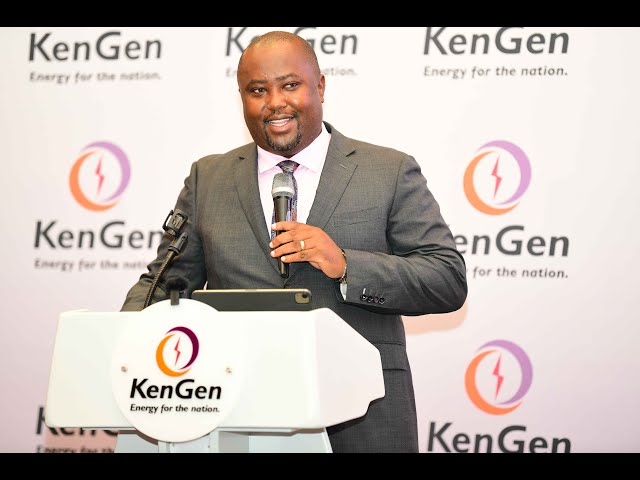

KenGen has unveiled an ambitious plan to expand its electricity generation pipeline to 5,500 megawatts (MW), presenting it as a major step in strengthening Kenya’s energy future.
While the announcement paints a picture of progress and growth, it has also sparked serious questions about whether the plan is realistic, affordable and capable of solving the problems that matter most to ordinary Kenyans.
One of the biggest concerns is how much of the proposed capacity is backed by actual projects.
A long-term pipeline does not mean power plants are already under construction, and feasibility studies do not guarantee that electricity will reach homes and businesses.
Many Kenyans have seen ambitious government announcements before, only for projects to face years of delays or fail to move beyond the planning stage.
The inclusion of 2,000MW of nuclear power has also drawn attention. Although nuclear energy produces low-carbon electricity, it is not classified as renewable energy.
Kenya has never operated a commercial nuclear power plant, making this one of the most complex and expensive parts of the proposal.
Critics argue that such a major shift deserves a deeper public discussion instead of being presented alongside geothermal, wind and solar projects.
Questions are also being asked about how the massive expansion will be financed.
Developing thousands of megawatts of new capacity will require enormous investment running into hundreds of billions, if not trillions, of shillings.
So far, little information has been shared on where the money will come from, whether investors have been secured or how much of the financial burden could eventually fall on taxpayers.
Even if the projects are completed, many believe Kenya’s biggest challenge is no longer electricity generation.
The country has invested heavily in geothermal energy over the years, yet households continue to struggle with high electricity bills. Businesses also complain about costly power and unreliable supply, forcing many to invest in backup generators and solar systems despite the country’s growing generation capacity.
There are also concerns about whether Kenya’s transmission network can handle such a significant increase in electricity production.
Past projects have faced delays because transmission lines were not completed on time, leaving some power generation capacity underused.
Without matching investment in the national grid, additional megawatts may not translate into better service for consumers.
Demand is another issue that cannot be ignored. Kenya’s current electricity consumption remains well below the proposed generation pipeline. If new power projects come online faster than demand grows, the country could end up paying for idle capacity, with consumers and taxpayers eventually carrying the cost.
KenGen has played an important role in making Kenya a leader in geothermal energy, and expanding the country’s energy sector remains an important goal.
However, many believe the public now needs clear timelines, financing details and measurable progress rather than ambitious projections.
For most Kenyans, the true measure of success will not be the number of megawatts announced, but whether electricity becomes more affordable, more reliable and better able to support economic growth.














Add Comment