





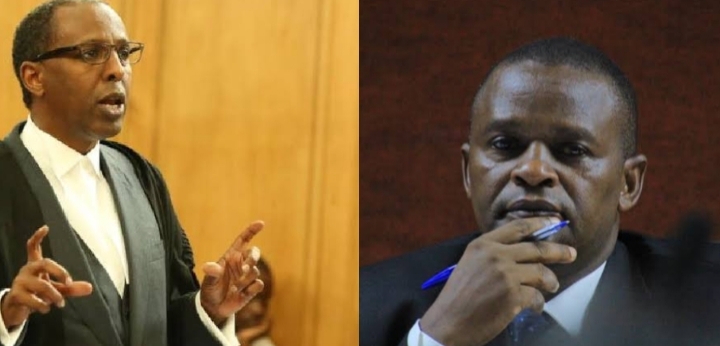

Ahmednasir Abdulahi has once again called out what he sees as a deeply flawed court decision, this time targeting Justice Peter Mulwa’s recent ruling that stays the full operation of Section 44 of the Banking Act.
In a sharp post, the senior counsel dismissed the order as nonsense and a classic example of how the justice system is played, even asking whether banks themselves have now joined what he calls JurisPESA games.
The facts are straightforward.
In December 2025, the same High Court judge dismissed a petition by the Kenya Bankers Association. He held that Section 44, which requires banks to get prior approval from the Cabinet Secretary before raising interest rates or other charges on loans, does not clash with the Constitution or the independence of the Central Bank.
The bankers appealed. Then, on 13 August 2026, Justice Mulwa granted a conservatory order stopping the enforcement of that very provision while the appeal is pending.
Banks can now raise rates without the approval the law still demands, at least for the time being.
Ahmednasir’s criticism cuts to the heart of public distrust. He has long used the term JurisPESA to describe what he believes is the monetisation of court decisions.
In his view, this latest order fits the pattern: a ruling that appears to favour powerful financial interests after the court had already upheld the protective law.
The original decision recognised that Section 44 exists to shield borrowers from sudden and unchecked rate hikes. By freezing it, the court has handed banks temporary freedom to adjust rates as they wish, with ordinary Kenyans left exposed.
The timing raises questions. Banks have faced growing pressure and lawsuits after courts ordered refunds for unapproved rate increases.
A stay of the law removes that immediate constraint. Ahmednasir is not alone in noticing the irony.
The same judge who found the law constitutional has now suspended its effect. To many observers, this looks less like careful interim protection and more like the system bending under pressure.
Borrowers already struggle with high interest costs. A law that requires transparency and approval before banks can raise those costs exists for a reason. Freezing it, even temporarily, shifts the risk onto ordinary people who have little power to negotiate with large financial institutions.
If the appeal eventually fails, the damage of interim rate increases may be hard to reverse. Damages rarely restore what families and businesses lose when loan costs spike.Ahmednasir’s blunt language reflects wider frustration.
For years he has insisted that some court decisions follow money rather than principle. Whether or not every allegation holds, the pattern he highlights matters. When a court first upholds a consumer-protection rule and then suspends it at the request of the regulated industry, confidence erodes.
People begin to believe that justice is not blind but selective.
The banks will argue that the stay is temporary and necessary to prevent disruption if the appeal succeeds. That argument has some legal form. Yet the public sees something else: a powerful lobby obtaining quick relief from a law that limits its profits.
In a country where many citizens already view the courts with suspicion, such outcomes only deepen the cynicism.
Ahmednasir’s intervention forces a hard look at the process. A justice system that appears to play games with protective laws invites the very distrust that JurisPESA has come to symbolise.
Kenyans deserve courts that apply the law evenly, not rulings that shift with the interests of those who can afford to keep litigating. Until that standard is met, sharp criticism like Ahmednasir’s will continue, and with good reason.












Add Comment