






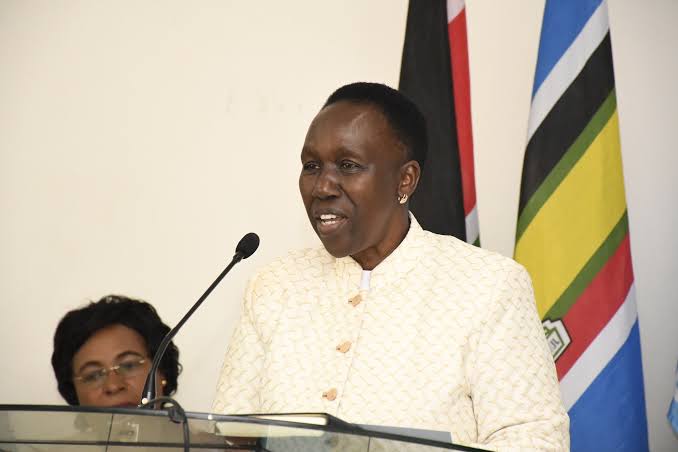

According to a viral letter making rounds on social media, the Ethics and Anti-Corruption Commission (EACC) of Kenya has launched a probe into the University of Nairobi over allegations of irregular and unlawful leasing of several parcels of land.
Dated April 3, 2025, the letter, addressed to Prof. Margaret Jesang Hutchinson, the Acting Vice Chancellor of the University of Nairobi, demands documents and information related to nine specific land parcels, raising serious questions about transparency and accountability in the university’s management of public assets.
The EACC’s investigation targets a range of properties allegedly leased under questionable circumstances.
These include 10 acres in Kanyariri farm, 40 acres behind ANP hostels, 100 acres in Kibwezi field station, 20 acres leased to Shamba Cafe Hotel, 6 acres next to Dusit Hotel, land in Spring Valley near a shopping centre, and residential houses along Ngong Road, Arboretum Drive, and in Lavington.
The commission has requested lease agreements, minutes approving these leases, correspondence between the university and lessees, proof of any change in land use, and other relevant documents, with a deadline for submission set for April 7, 2025, at 10:30 a.m.
Prof. Margaret Jesang Hutchinson, who has been at the helm of the university since October 2024 following the termination of Prof. Stephen Kiama’s tenure as Vice Chancellor, now finds herself at the center of this controversy.
While Hutchinson has a distinguished academic background, with over 30 years of experience in agriculture and a PhD in Horticulture from the University of Guelph, her leadership is under scrutiny.
Her appointment as Acting Vice Chancellor was meant to steer the university through a transitional period, but the EACC’s investigation suggests potential mismanagement that may have predated or persisted into her tenure.
The University of Nairobi, a premier public institution, has long been entrusted with significant land holdings for academic, research, and residential purposes. However, this isn’t the first time the university has faced allegations of financial or administrative irregularities.
In December 2024, reports highlighted the university’s cash shortfalls and alleged financial mismanagement, which may have set the stage for the current investigation.
The parcels in question, such as the Kibwezi field station a known research facility and properties in prime Nairobi locations like Ngong Road and Lavington, are valuable public assets, making the allegations particularly concerning.
The EACC, tasked with combating corruption in Kenya, has a history of investigating land-related graft involving public institutions. For instance, in 2023, the commission recovered Sh1.6 billion worth of Egerton University land that had been illegally grabbed, demonstrating its focus on protecting public resources.
However, the EACC’s track record is not without criticism some cases drag on for years, and there are whispers of selective enforcement influenced by political pressures.
In this case, the involvement of entities like Shamba Cafe Hotel and the proximity to Dusit Hotel (likely DusitD2 Nairobi, infamous for the 2019 al-Shabaab attack) raises questions about the beneficiaries of these alleged leases and whether they have connections to powerful figures.
What’s particularly troubling is the lack of transparency surrounding these land deals. Kenya has a long history of land-related corruption, often involving public institutions and influential individuals.
The University of Nairobi’s opaque land governance practices, as highlighted during its Faculty of Law’s Research Fair on March 13, 2025, mirror broader systemic issues in the country.
At the fair, experts like Mr. Gershom Otachi of the National Land Commission emphasized the need for digitizing land registries to curb fraud, a point that resonates with the EACC’s current investigation.
If the university’s leadership, including Prof. Hutchinson, cannot provide clear documentation for these leases, it suggests either gross negligence or deliberate malfeasance.
Critics might argue that Prof. Hutchinson, who has been in her role for less than a year, is being unfairly targeted for issues that may have originated under previous administrations.
However, as the current Acting Vice Chancellor, she bears responsibility for ensuring transparency and accountability.
The EACC’s demand for documents is a test of her administration’s integrity if the university fails to comply or if the documents reveal irregularities, it could severely damage her reputation and the institution’s credibility. This investigation also underscores broader challenges in Kenya’s fight against corruption.
While the EACC’s efforts are commendable, the slow pace of justice and the potential for political interference often undermine public trust. The University of Nairobi case could be a litmus test for whether the commission can hold powerful institutions accountable, or if it will become another drawn out saga with no tangible outcomes.
For now, the spotlight is on Prof. Hutchinson and her team to provide answers and on the EACC to ensure that justice is served, not just promised.













Add Comment