







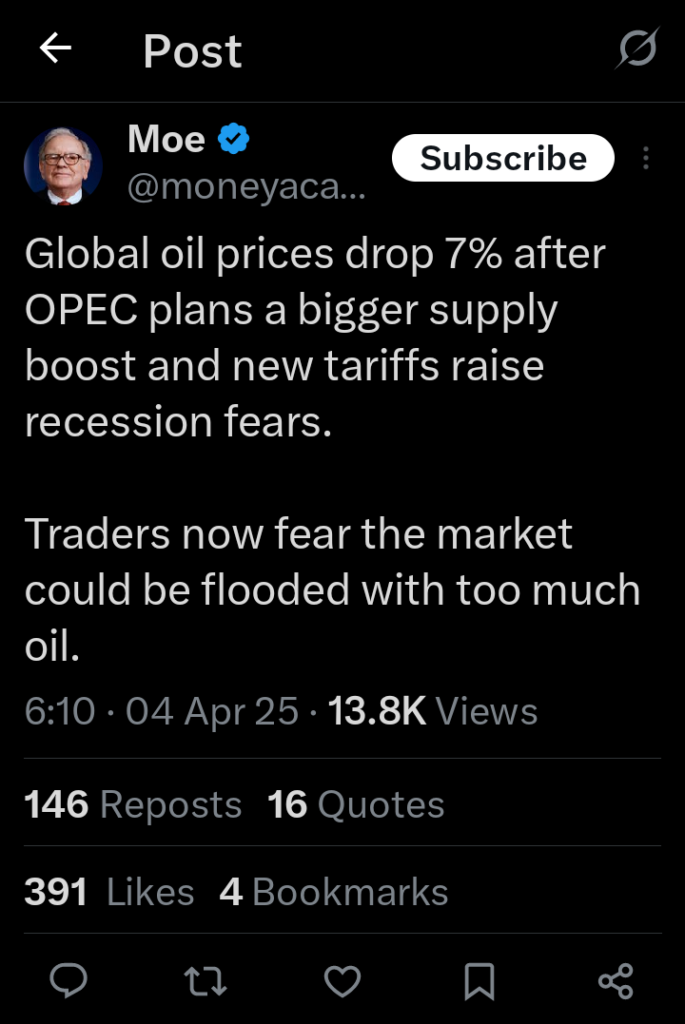
Global oil prices have fallen sharply, dropping by 7% after news broke that OPEC is planning to increase its oil supply. At the same time, new tariffs introduced in global markets have raised fears of a possible recession.
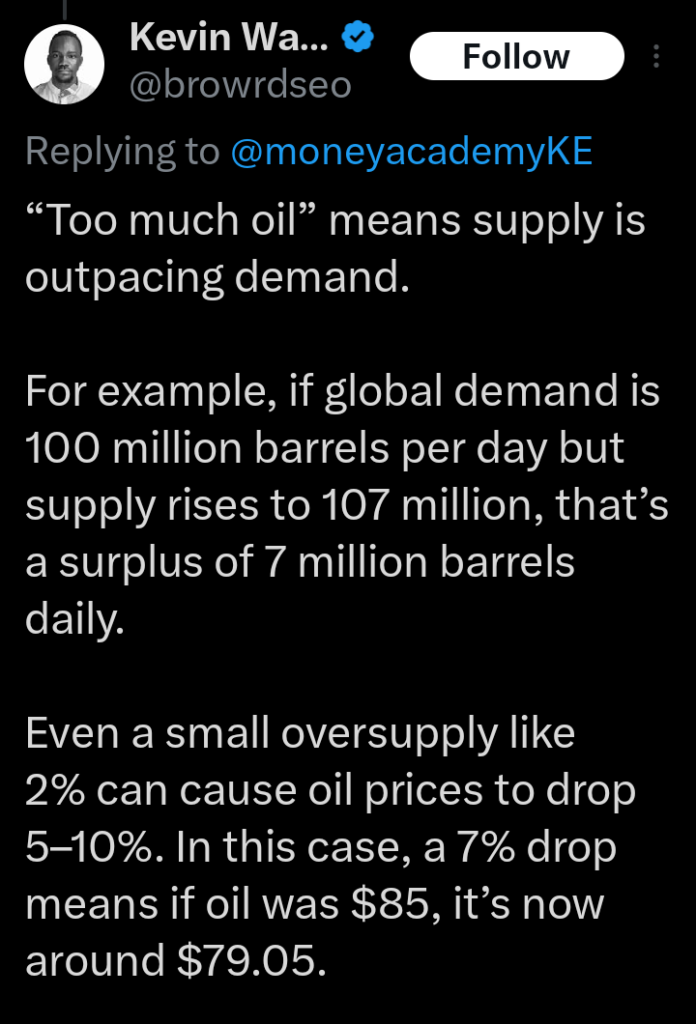
These two developments have shaken confidence in the oil market, with traders now worried that too much oil might enter the market at a time when demand is under pressure.
OPEC, which stands for the Organization of the Petroleum Exporting Countries, has a strong influence on global oil prices because it controls a large share of the world’s oil production. When OPEC decides to boost supply, it usually means more oil is available in the market, which can drive prices down.
This time, the supply boost is expected to be bigger than usual, which is causing concern among investors and traders. They fear the market will be flooded with oil, pushing prices lower than expected and hurting the profits of oil-producing countries and companies.
On the other hand, the new tariffs placed by several countries are making the situation even worse. Tariffs are taxes on imported goods, and when they increase, they make trade more expensive and difficult.
This leads to slower economic growth because businesses face higher costs and consumers reduce their spending. As a result, demand for oil, which powers industries and transportation, may fall.
This combination of rising oil supply and falling demand is bad news for oil prices. Experts say the timing of these events could not be worse. The global economy is already facing challenges like high inflation, rising interest rates, and political instability in some regions.
Adding more oil to the market while the economy slows down only adds more pressure on oil prices. If prices stay low for too long, oil-exporting countries that rely heavily on oil revenue might face budget problems.
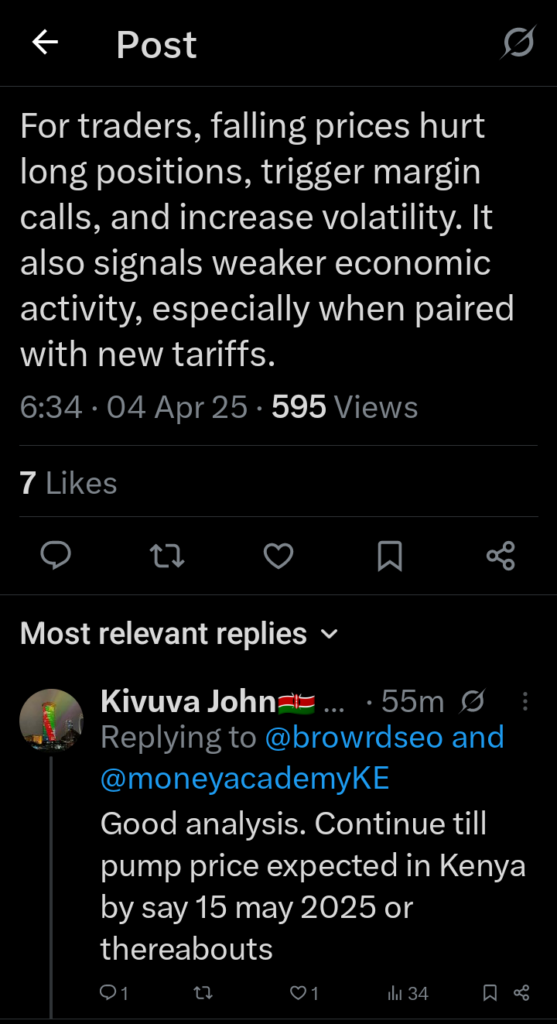
Companies in the oil industry could also be forced to cut spending, delay projects, or even lay off workers.Some traders are now taking a cautious approach, selling off oil futures and shifting their investments to safer assets. This has led to more downward pressure on prices.
Market analysts are watching closely to see if OPEC might change its mind and reduce the planned supply increase if prices continue to fall.
For now, oil markets remain uncertain. The fear of too much oil in a weakening global economy is real, and unless there are changes either in production plans or global economic policies, oil prices could remain unstable in the coming weeks.














Add Comment