




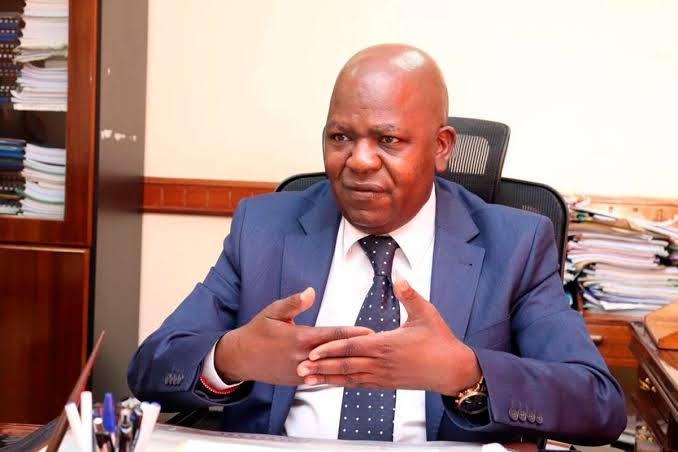

Kenya Railways Managing Director Phillip Mainga is facing a fresh legal challenge that could put both his leadership and the management of the Standard Gauge Railway (SGR) project under greater public scrutiny.
The case questions whether his continued stay in office is lawful and seeks a full audit of contracts linked to one of Kenya’s biggest infrastructure projects.
The petition was filed by Wahome Mucunu, who argues that Mainga was appointed on a permanent basis in 2018 instead of being given a fixed-term contract, as is common for heads of state corporations.
According to the petition, Mainga’s tenure should have come to an end in 2024, and his continued leadership raises legal and governance concerns.
Mucunu is asking the court to declare that Mainga’s term has expired and direct the Kenya Railways board to begin the process of appointing a new managing director.
The petition also seeks a declaration that the continued failure to release key SGR contract documents violates the Constitution by denying the public access to important information.
The case goes beyond Mainga’s tenure and focuses heavily on transparency in the SGR project. Mucunu argues that the railway has remained at the center of public debate for years because of questions surrounding procurement, accountability, value for money, and the country’s growing debt burden.
He says Kenyans have a constitutional right to know how public funds and borrowed money were used since they ultimately bear the cost through taxes and national debt.
The petition comes after Transparency International earlier this year rated the SGR as a high corruption risk, giving it a score of 4.9 out of 5.
The organization also raised concerns that public institutions, including Kenya Railways, have repeatedly failed to provide information requested by the public and oversight groups.
According to the report, this lack of transparency makes it difficult to hold public institutions accountable.
To address these concerns, Mucunu wants the court to order a comprehensive audit of all SGR-related contracts.
He argues that an independent review would help establish whether procurement laws were followed and whether public resources were properly managed.
The case is expected to attract significant public attention as it raises questions about leadership, transparency, and accountability in the management of one of Kenya’s most expensive and closely watched public projects.
A court decision could have far-reaching implications for Kenya Railways and future oversight of major government-funded infrastructure projects.








Add Comment