






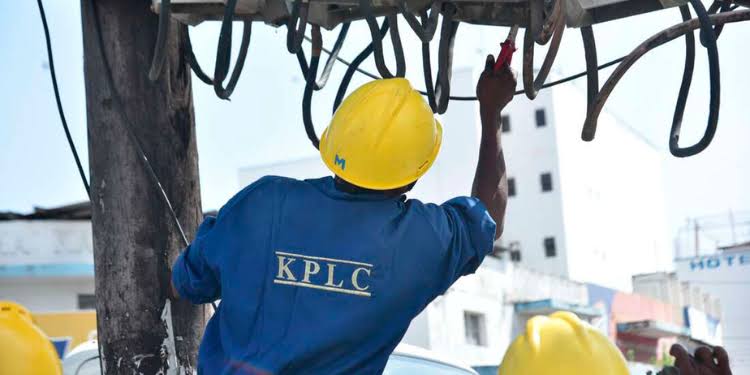

In a scene that captures the raw frustration of countless Kenyan households, an enraged woman stormed Kenya Power and Lighting Company (KPLC) offices this week, demanding answers over a staggering Ksh 200,000 electricity bill she says was caused by the company’s own negligence.
The woman, whose monthly usage normally stays under Ksh 300, discovered that a faulty meter she reported repeatedly had been left unrepaired for two full years.
Only after that prolonged delay did Kenya Power present her with the massive back-bill. In a viral video that has since spread across social media, she confronts staff and bystanders, her voice sharp with disbelief and anger.
“I am not the one who is supposed to change the meter. It is Kenya Power that is supposed to change the meter,” she says.
“They took two years to change a meter. What am I supposed to do? It’s not my job.” She goes further, accusing the utility of systemic failure and corruption.
“What do I do if a meter is faulty? My only thing is to come and complain… These guys are so corrupt… you should stand up against these people!”
Her complaint is not an isolated outburst. It is the latest flashpoint in a long-running pattern of consumer grievances against Kenya Power: delayed responses to faulty meters, opaque billing practices, and a tendency to shift the financial burden of its own inefficiencies onto ordinary citizens.
For two years the company failed to act on a reported fault. Then it demanded payment for the resulting inflated readings.
That sequence raises a basic question of accountability. Who should pay for institutional inaction the customer who reported the problem, or the monopoly utility that ignored it?
Public reaction has been swift and largely supportive of the woman. Social media users have described the incident as emblematic of deeper problems. One commenter wrote that the jump from roughly Ksh 300 a month to Ksh 200,000 after two years of inaction “speaks for every Kenyan who has ever received a ridiculous back-billed invoice.”
Others called on the Energy and Petroleum Regulatory Authority (EPRA) to investigate and demanded clearer rules preventing utilities from billing customers for faults they themselves failed to fix in reasonable time.
Kenya Power has not issued a public statement addressing this specific case. That silence only intensifies the perception that the company operates with little urgency when ordinary consumers are the ones suffering.
For households already stretched by high living costs, a sudden six-figure demand is not a bureaucratic inconvenience it is a potential financial crisis.
The episode underscores a larger failure of service delivery.
When a state-linked utility can leave a known faulty meter in place for 24 months and then present the customer with a ruinous bill, the system is inverted. The customer becomes the one held responsible for the company’s delay.
Until Kenya Power demonstrates consistent, timely response to reported faults and transparent mechanisms for resolving disputed bills, scenes like this one are likely to keep repeating each one eroding public trust a little further.
Ordinary Kenyans deserve reliable electricity and fair billing. What they are getting instead, in cases like this, is prolonged neglect followed by aggressive recovery of costs that should never have accumulated in the first place.











Add Comment