





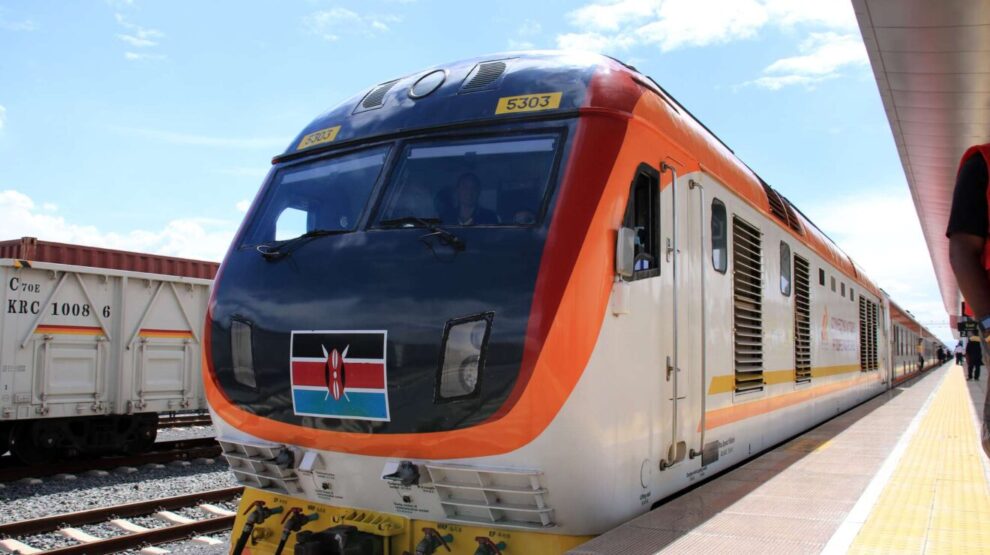

Kenya could have saved up to KSh117 billion during the construction of its Standard Gauge Railway (SGR) if the project had been implemented at costs comparable to similar railway developments in the region, according to a new World Bank report.
The November 2026 Kenya Economic Update places the cost of constructing the Mombasa-Nairobi railway above comparable projects in Tanzania and Ethiopia-Djibouti, raising questions about how public funds were spent during the development of the country’s flagship transport project.
According to the report, Kenya spent approximately US$7.6 million (about KSh980 million) per kilometre to construct the Mombasa-Nairobi section of the SGR. This was significantly higher than the cost recorded in neighbouring countries that implemented similar railway projects.
Tanzania’s electrified Dar es Salaam-Dodoma railway cost approximately US$5.7 million per kilometre, while the Djibouti-Addis Ababa railway was constructed at an estimated US$5.3 million per kilometre.
The World Bank used Tanzania’s construction costs as a benchmark to estimate how much Kenya could have saved if the Mombasa-Nairobi section had been developed at a similar price.
The comparison suggests that Kenya could have spent up to US$900 million less, equivalent to approximately KSh116 billion to KSh117 billion.
The report, however, clarifies that the estimated amount represents potential savings based on regional construction costs and should not be interpreted as money confirmed to have been stolen or funds that can automatically be recovered.
The global lender also identified governance weaknesses as a major factor behind the higher expenditure. It estimated that at least 30 per cent of the excess costs could be linked to problems in public administration rather than differences in geographical conditions or technical requirements.
Among the issues highlighted were the use of non-competitive contracting methods instead of open and competitive tendering.
The report also pointed to land speculation along the railway corridor, alongside irregularities involving land ownership documents, property valuations and compensation payments.
These weaknesses are believed to have increased the overall cost of the project by creating opportunities for inflated payments and inefficient use of public resources.
The World Bank also acknowledged differences in the railway systems when comparing the three projects. Kenya’s SGR operates using diesel locomotives, while the railway lines in Tanzania and along the Ethiopia-Djibouti corridor are electrified.
Despite these technical differences, the bank observed that the gap in construction costs remained substantial even after accounting for the different railway technologies.
The findings add to wider concerns about the cost of major infrastructure projects in Kenya, particularly those financed through public borrowing and government expenditure.
The Mombasa-Nairobi SGR was developed to improve the movement of passengers and cargo between the Port of Mombasa and the capital. It was also intended to reduce pressure on the country’s road network, improve transport efficiency and strengthen Kenya’s position as a regional logistics hub.
However, the latest analysis suggests that weaknesses in procurement and land administration may have increased the financial burden of delivering the project.
The report forms part of a broader assessment of Kenya’s public spending and the impact of governance challenges on economic performance.
It argues that improving procurement procedures, strengthening land administration and ensuring transparency in public projects could help the government reduce unnecessary expenditure.













Add Comment