




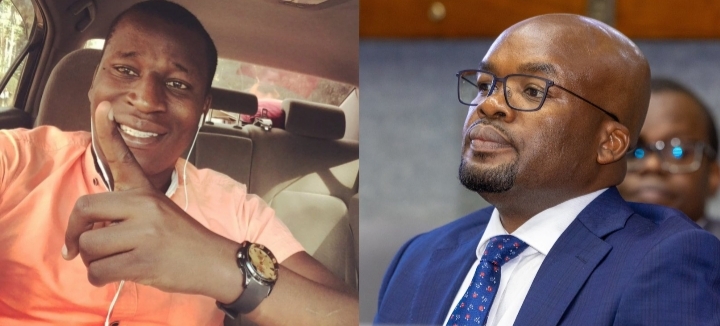

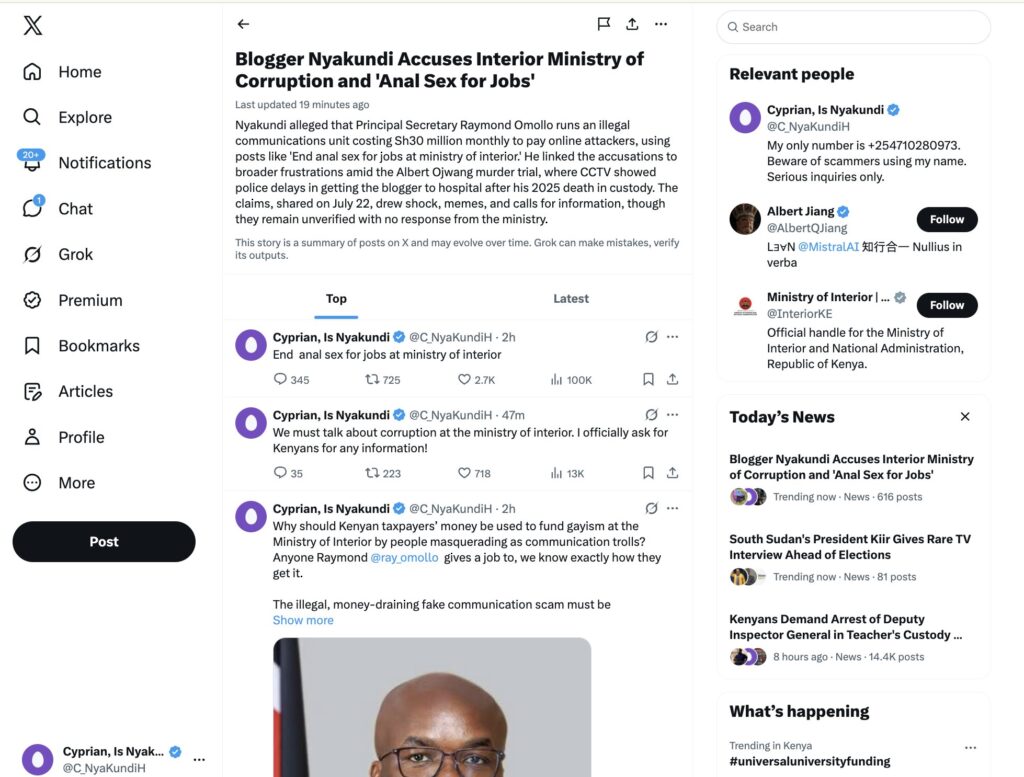
Cyprian Nyakundi, a well-known Kenyan blogger and whistleblower, has been raising questions about Raymond Omollo, the Principal Secretary in the State Department for Internal Security and National Administration.
Nyakundi has used his platform to point out what he sees as problems in how public money is used under Omollo’s watch.
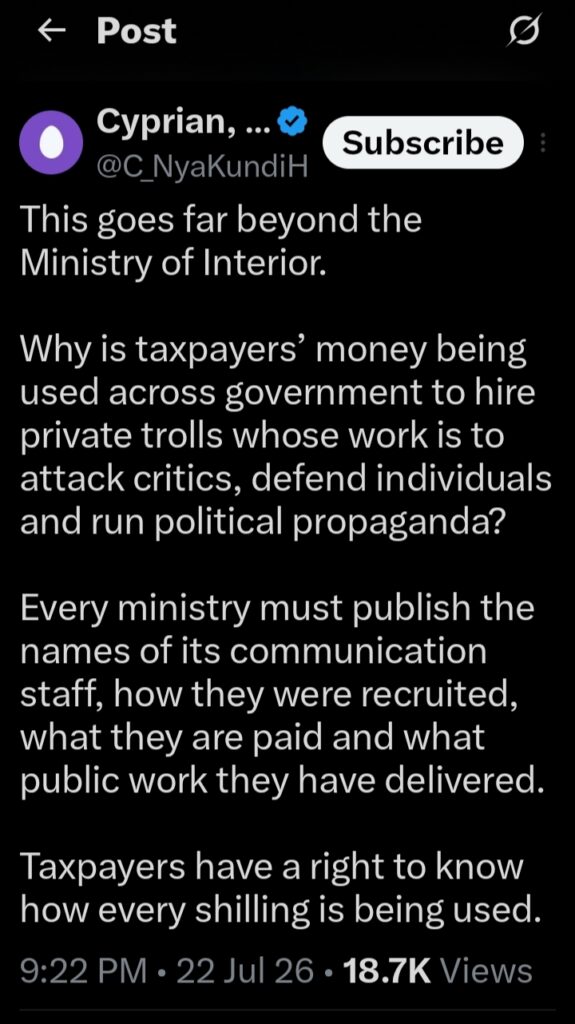
These include claims of corruption, funding online trolls, and wasting taxpayers’ money on personal promotion.
Omollo, who holds a PhD in Applied Statistics, was appointed to this key position in 2022. He has defended the government’s work in regions like Nyanza, noting large investments in roads and other projects.
Supporters see him as a technocrat focused on security reforms and development. But critics, including Nyakundi, say there are serious issues that need attention.
One main point Nyakundi has highlighted is the branding of public projects. He has said that some officials, including Omollo, put their names and images on work funded by taxpayers.
Nyakundi welcomed advice from the Ethics and Anti-Corruption Commission (EACC) against this practice. He argued that public projects should not become personal billboards. This habit, he claimed, shows a desire for praise and visibility using money that belongs to Kenyans.
Nyakundi called for the EACC to take stronger action and summon those involved to explain.
Other posts and reports have looked at spending in the Interior ministry. There have been questions about how funds are managed, with claims that millions have gone to people close to Omollo through various channels like procurement and payments.
Nyakundi and others have talked about possible wastage of taxpayers’ money and lack of proper checks. These claims suggest a pattern where public resources may not always reach the intended goals.
Nyakundi has also accused some officials of funding trolls online. This, he says, is another way public money is misused to attack critics or shape public opinion.
Such actions take attention away from real service delivery and add to the cost for ordinary Kenyans who pay taxes.
Omollo has faced political pressure too. There have been reports of tensions with some leaders in Nyanza, including debates over appointments and influence.
Elders in his home area have defended him, while others push for changes. Despite this, Omollo has continued to speak about government achievements, such as projects worth billions in different counties.
These exposures by Nyakundi bring attention to the need for better accountability in public office. Kenya has many challenges, from security to development, and citizens expect leaders to manage resources carefully.
Bodies like the EACC have an important role in investigating claims fairly.
Nyakundi’s work often stirs debate. Some see him as a voice for transparency, while others question his methods or sources.
His posts on Omollo fit into a larger conversation about how senior officials should serve the public without mixing personal interests with duty.







Add Comment