





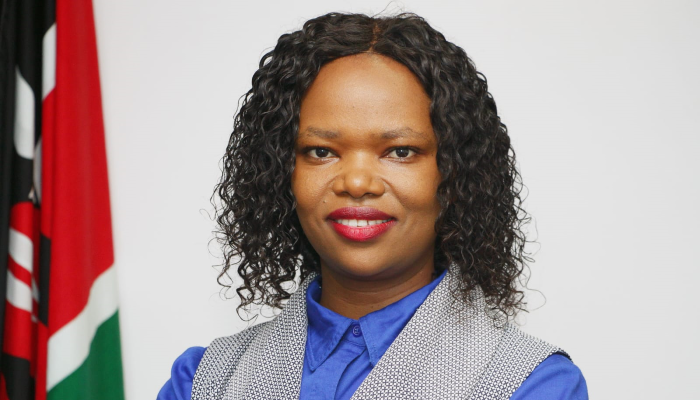

A report obtained by Leaked.co.ke from Western Insight has exposed serious concerns over financial management, budget control, and programme implementation at the National Gender and Equality Commission (NGEC), with Chief Executive Officer Dr. Purity Ngina coming under scrutiny over expenditure decisions, budget reallocations, and activities implemented outside approved work plans.
The Internal Audit Report reveals that 20 activities valued at Sh10 million were not supported by activity reports or back-to-office reports, making it impossible for auditors to verify whether the activities were actually undertaken or whether they contributed to the commission’s mandate.
According to the report, auditors repeatedly requested the required documentation through follow-up emails, but the information was never submitted for review.
The absence of supporting evidence meant that the implementation and outcomes of the activities could not be established.
The report recommends that NGEC management strengthen documentation and reporting procedures to ensure that all activities are fully supported by evidence, including activity reports and back-to-office reports, before public resources are spent.
Beyond the missing documentation, auditors identified major weaknesses in programme implementation, budget performance, and expenditure management.
The report states that the commission failed to consistently follow approved work plans and budgets, resulting in spending on activities that had not been planned and expenditure that lacked budgetary support.
Dr. Ngina was particularly put on the spot over a budget variance exceeding Sh30 million.
Auditors established that Sh24,137,429 was diverted from programme departments to Executive Offices that had no approved budget allocation during the period under review.
According to the findings, Executive Offices spent more than Sh24 million despite not having any approved budget, forcing resources to be redirected from departments that had planned programmes and approved allocations.
The review of expenditure between July 2025 and March 2026 showed that NGEC spent Sh40,892,869 against an approved budget of Sh71,607,844, leaving an unutilised balance of Sh30,715,300.
While some departments failed to utilise their allocations, others exceeded approved spending limits.
The Special Interest Group Department recorded one of the largest variances after utilising only a small portion of its allocation, leaving more than Sh53 million unspent.
Auditors said the low absorption rate pointed to under-implementation of planned activities.
The Legal Complaint and Redress Department was allocated Sh3.38 million but spent only Sh616,440.
The Monitoring, Evaluation and Knowledge Management Department also recorded under-expenditure, leaving part of its allocation unused.
The audit identified over-expenditure in the Research Department and the Regional Coordination Department.
The Regional Coordination Department exceeded its approved allocation by more than Sh2.2 million, while Executive Offices spent over Sh24 million despite having no approved budget at all.
The report concluded that the significant variances, underutilisation of funds, and overspending reflected weak budgetary controls that affected the commission’s ability to achieve its objectives.
A separate Special Audit Review on programme implementation and expenditure raised further concerns. Auditors found that activities worth Sh14,668,157.72 were implemented outside the approved work plan and budget allocation.
The review established that Executive Offices initiated 21 activities costing Sh24,138,429.12 during the financial year. Out of those activities, only two had been included in approved programme work plans.
The remaining 19 activities were not part of the approved plans.More troubling for auditors was the finding that 11 of those unplanned activities were approved by the CEO despite confirmation from the Finance Department that available funds had already been exhausted.
Among the activities cited in the report were participation in an international conference in Moscow costing Sh2.22 million, attendance at COP30 in Brazil costing Sh2.34 million, election observation activities in South Africa and meetings in Angola costing Sh1.75 million, and a series of local events that auditors said were approved despite depleted budgets or the absence of budget provisions.
The audit also highlighted expenditure on official visits, conferences, stakeholder forums, youth summits, public events, prayer gatherings, and commemorative activities that were either not budgeted for or were approved after available funds had been exhausted.
Other activities flagged included projects in Kajiado, Machakos, and Baringo counties, a high-level sector workshop, the development of a report on equity and inclusion in boards and top management, International Women’s Day celebrations, activities marking the Day of Persons with Disabilities, and commemorations for the International Day of Zero Tolerance Against FGM.
According to the report, implementing activities outside approved plans resulted in the diversion of resources from programmes that had already been approved and budgeted for.
The auditors concluded that the commission failed to comply with its approved work plans and the requirements of the Public Finance Management Act.
The report cited Section 68(1) of the Act, which requires accounting officers to ensure public resources are used lawfully, efficiently, economically, and transparently.To address the issues, the report recommends that all activities be implemented strictly within approved work plans and budgets.
It further calls for any changes to be formally approved and supported by proper budget reallocations to improve accountability and prevent future budget overruns.











Add Comment