







Kenya is facing an alarming wave of abductions and enforced disappearances, targeting individuals critical of the government.
Human rights advocates are raising serious concerns, pointing fingers at high-level state complicity in these incidents.
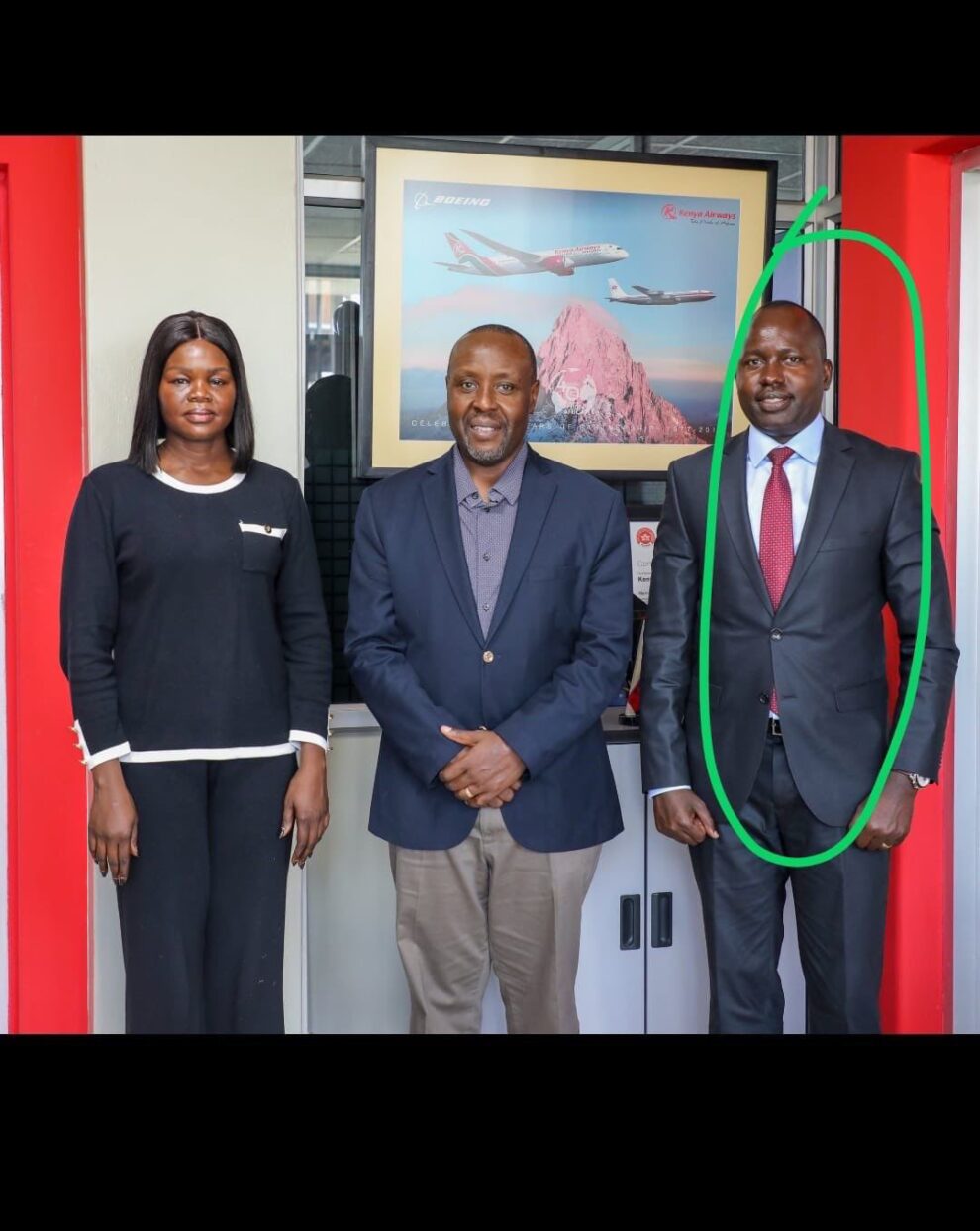
Among those implicated in these disturbing cases is Major Retired Abel Rotich, allegedly the architect of these covert operations.
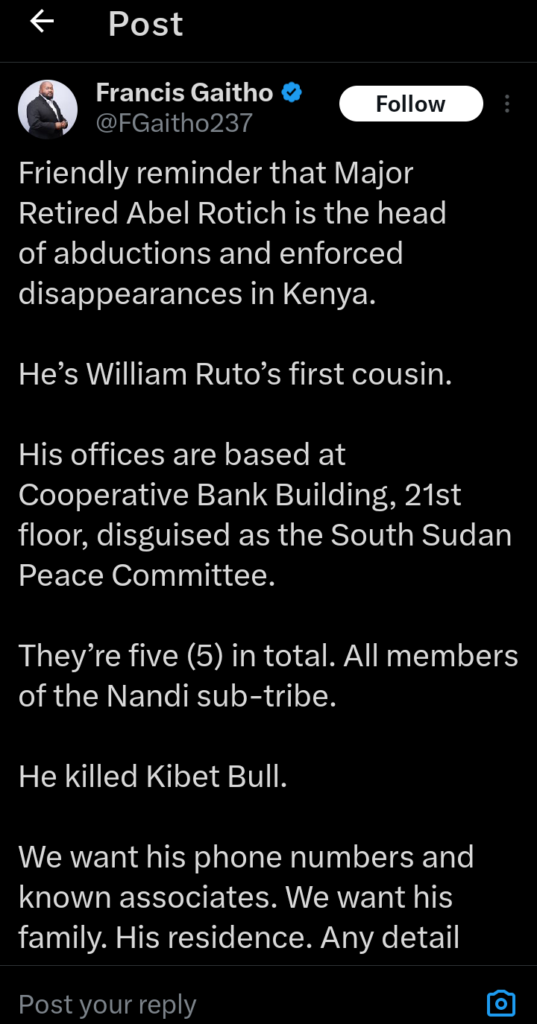
Major Retired Abel Rotich, a first cousin of President William Ruto, has been identified as the head of abductions and enforced disappearances in Kenya.
His office, operating under the guise of the South Sudan Peace Committee, is reportedly located on the 21st floor of the Cooperative Bank Building in Nairobi.
The team under his command consists of five members, all allegedly from the Nandi sub-tribe, raising questions about ethnic bias in these operations.
One of the most shocking cases tied to Rotich’s alleged network is the murder of Gideon Kibet, also known as “Kibet Bull.”
Kibet, a renowned cartoonist and social media influencer, disappeared after meeting Senator Okiya Omtatah in December 2024. Days later, his lifeless body was found, sparking outrage across the nation.
Witnesses claim he was forcibly taken by unidentified men, fitting a pattern seen in other cases of enforced disappearances.
Human rights organizations, including Amnesty International and the Kenya Human Rights Commission, have condemned these acts, describing them as state-sponsored terrorism.
They argue that Rotich’s operations are designed to silence dissent and intimidate critics of President Ruto’s administration.
The government, however, has remained silent, with the Directorate of Criminal Investigations (DCI) consistently denying any involvement in such disappearances.
The abductions and killings have drawn international attention.
The African Commission on Human and Peoples’ Rights has demanded an immediate investigation into the matter, urging President Ruto to dismantle what appears to be a shadowy network targeting activists, bloggers, and opposition voices.
Calls for accountability are growing louder. Social media is awash with demands for information on Rotich’s associates, family, and operations.
Activists argue that exposing these details could protect potential victims and bring an end to the atrocities.
Despite the risks, many Kenyans are determined to fight back, using the hashtags #RutoMustGo and #EndAbductionsKE to amplify their voices.
The government’s inaction has not only eroded public trust but also tarnished Kenya’s image internationally.
The nation stands at a crossroads, with the safety of its citizens and the preservation of human rights hanging in the balance.










Add Comment