






As Kenya shifts its healthcare system from the National Health Insurance Fund (NHIF) to the Social Health Authority (SHA), which includes the Social Health Insurance Fund (SHIF) and Healthcare Fund, a massive deal involving hundreds of billions is underway, with a network of elites poised to benefit.
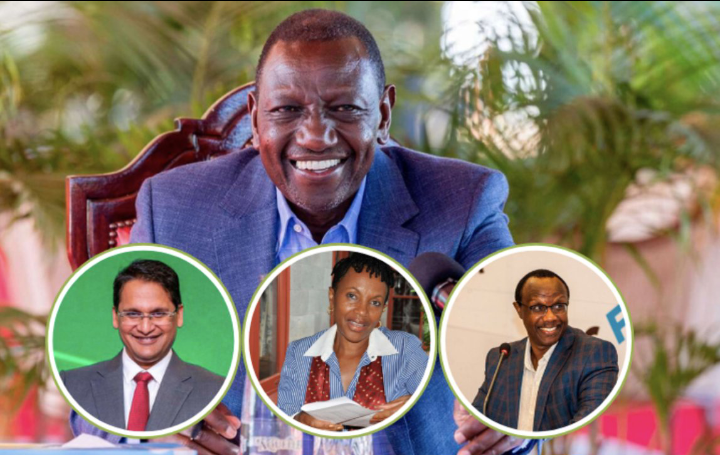
Those set to gain include close associates of President William Ruto, such as Adil Khawaja, influential businessmen like Jayesh Saini, and powerful corporate figures, all with connections to the Ministry of Health.
They will oversee the SHA, which manages three funds: the Primary Healthcare Fund, receiving Sh50 billion from the government; the Social Health Insurance Fund, which collects Sh148 billion annually through member contributions; and the Emergency, Chronic and Critical Illnesses Fund, which requires Sh75 billion annually.
The SHIF deal, which takes effect on October 1, 2024, is designed to replace the NHIF with a new system that mandates all households to contribute 2.75 per cent of their monthly income.
Wealthier households will experience a major increase, with some paying up to Sh27,500 monthly compared to the NHIF’s capped contributions of Sh1,700.
At the center of the deal is Apeiro Ltd, which holds the largest share of 59.5 per cent in the consortium tasked with implementing the UHC technology-based system.
Other stakeholders include Safaricom, with a 22.6 per cent share, and Konvergenz Network Solutions, with 17.9 per cent.
Apeiro, a newly registered Kenyan company, has strong connections to international corporate giants and key members of President Ruto’s inner circle.
Apeiro is a subsidiary of Sirius International Holdings, which is part of Abu Dhabi’s International Holding Company (IHC), a company linked to India’s Adani Group.
Among its directors is Mwende Gatabaki, wife of President Ruto’s economic adviser, David Ndii.
“Our goal is to ensure that everyone can access high-quality medical care, contributing to financially sustainable universal health coverage,” the company states on its website, adding that they offer assistance to countries throughout their healthcare transformation journey.
David Ndii, a figure often embroiled in controversy, has faced public dissatisfaction for his comments on Kenya’s governance.
He recently remarked, “We will leave Kenya as corrupt as we found it,” when discussing corruption.
Apeiro is effectively owned by Nairobi West Hospital owner Jayesh Saini, who also owns Bliss Medical, Lifecare Medical, Kitengela West Hospital, Medicross Hospitals, among others.
Interestingly, the same director of Apeiro Kenya Technologies Ltd, who holds the largest share in the deal, is also a director and partner at Jayesh Saini’s Medicross Hospital Rufus Marundu Maina, whose address is P.O. Box 3421 Nyayo Stadium.
This is no coincidence, as these appear to be proxies.
The address linked to Rufus Marundu is the same as that of Jayesh Saini’s MAKL and of Mr. Madni Ali Asif Ansari, who is also a director of both MAKI Limited and Bliss Healthcare (K) Limited.
Adil Khawaja, President Ruto’s personal lawyer, whose law firm is the legal provider in the Sh104 billion SHA-Safaricom deal, is also implicated.
He and Ruto have reportedly purchased a hill within Great Rift Lodge, displacing neighboring residents, with the area now designated as a conservation zone.
Safaricom, a major player in the SHIF deal, is Kenya’s leading telecommunications company, and its board is chaired by lawyer Adil Khawaja.
The SHIF deal is not the only one under scrutiny.
Silas Simotwo, linked to an insurance firm with ties to President Ruto, has been appointed to chair the Digital Health Fund, a critical component of SHA that will oversee SHIF operations.
The Digital Health Fund manages several healthcare funds, including the Primary Healthcare Fund (allocated Sh50 billion) and the Emergency, Chronic, and Critical Illnesses Fund, requiring Sh75 billion annually.
The transition from NHIF has raised public concerns regarding the increased cost of contributions to the new fund and the transparency of the deal.
Households across the country are expected to contribute a percentage of their income to SHIF, with wealthier families seeing a significant rise in their contributions, unlike the NHIF’s flat-rate model.










Add Comment