




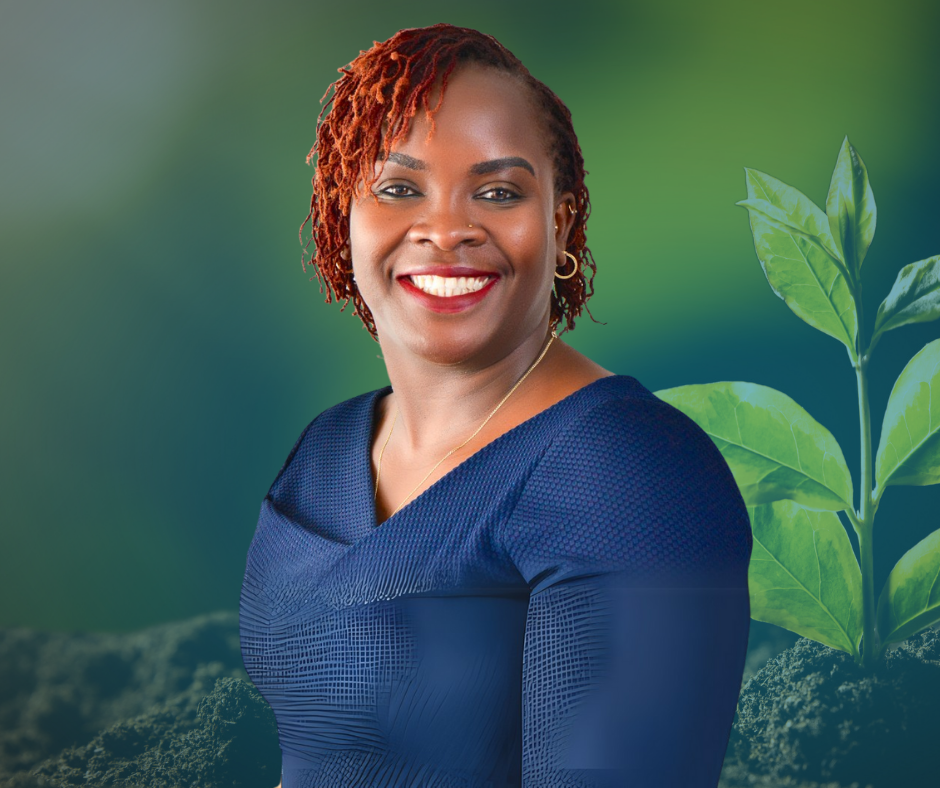

Karen Basiye occupies a central position in one of Kenya’s most significant corporate giving operations. Safaricom Foundation names her Director of Sustainable Business and Social Impact. M-PESA Foundation lists her in the same capacity, expanded to cover that foundation as well.
An academic profile from Lund University’s International Institute for Industrial Environmental Economics states that she leads the work of both foundations in determining which projects receive funding.
This places her near the heart of programmes that build schools, equip hospitals, finance water systems and channel tens or even hundreds of millions of shillings into communities. The interventions themselves often meet genuine needs. Precisely because the sums carry substantial social and political weight, the mechanisms that decide their destination require rigorous examination.
The Core Transparency Gap
An institution that frequently invokes sustainability, equality and life-changing impact should readily explain how communities are chosen to receive foundation resources and what degree of influence Kenya’s politicians exercise over those choices.
The issue is not whether the foundations have delivered useful projects their presence across the country is well documented. The sharper question is whether the selection system is transparent enough to show that political access, personal connections or proximity to power play no role.
Illustrative Cases and Their Optics
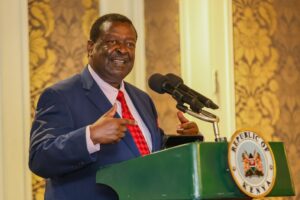
In July 2023 the Safaricom Foundation committed KSh35 million to Naitiri Primary School and Naitiri RC Primary School in Tongaren. National Assembly Speaker Moses Wetang’ula appeared with Basiye at the launch; parliamentary records note their joint presence.
A politician’s attendance at a development event is not inherently improper, nor does it prove influence over the allocation.
Yet when a foundation able to inject large sums into single communities operates in an environment dense with powerful office-holders, assertions of pure merit-based selection fall short without supporting documentation.In June 2025 the M-PESA Foundation announced a further KSh151 million for education projects in Bungoma, Homa Bay and Baringo.
KSh55 million went to new facilities at Toroso SA Primary School in Bungoma, another KSh55 million to Ligongo Primary School in Homa Bay, and KSh41 million to facilities in Baringo. The company framed the work as part of its Citizens of the Future programme and stated that investments target the country’s neediest cases.
That standard supplies a clear test. If need is decisive, the foundations should release the underlying needs assessments. The public should be able to see why one school received KSh55 million while another equally deteriorated facility did not, and whether factors such as poverty levels, classroom congestion, water access, health indicators and existing public infrastructure were systematically scored.
Political Capital and the Need for Safeguards
Kenya’s political culture routinely converts development projects into electoral assets. A politician photographed beside a new classroom can claim credit for progress even when the funds did not come from taxpayers. A KSh50 million corporate project can therefore acquire political value far exceeding the cost of the buildings. Safaricom and Basiye should recognise why appearances matter. Corporate giving must not function as an informal extension of political patronage. Radical transparency not polished public-relations language is the surest demonstration that this is not occurring.
Disclosure should cover whether politicians nominate, recommend or lobby for projects and what concrete safeguards prevent such representations from becoming an unofficial route to funding.
Diversity of Locations Does Not End the Inquiry
Available records do not support a blanket claim that foundation resources systematically avoid opposition-held areas. Documented programmes span counties including Trans Nzoia, Marsabit, Makueni, Bungoma and Kisumu.
The KSh151 million package itself included a substantial allocation in Homa Bay, a county long linked to opposition politics. That fact precludes any responsible assertion that money is reserved exclusively for constituencies aligned with the national government.
The political-favouritism question nevertheless remains relevant; it simply shifts from accusation to audit.
What Full Disclosure Would Look Like
Safaricom should release the geographical distribution of its charitable projects in full not selective press releases, ribbon-cutting photographs or promotional videos, but the actual allocation data.
For every project approved under Basiye’s leadership the company should publish:
– constituency and county
– amount committed
– dates of application and approval – beneficiary institution
– person or organisation that proposed the project
– selection criteria applied
– final approving authority
Where an MP, governor, Cabinet Secretary, Principal Secretary or other political office-holder made supporting representations, that involvement should also be recorded.Once such information is public, independent analysis becomes straightforward.
Journalists and citizens could compare total funding and project numbers in government-aligned versus opposition constituencies, then adjust those figures against population, poverty and infrastructure indicators.
Absence of meaningful political disparity would constitute stronger evidence than any corporate statement.
Persistent patterns of larger or more frequent awards to connected constituencies without corresponding need indicators would raise serious questions about governance and selection integrity.
Professional Background and the Governance Distinction
Basiye’s published profile emphasises experience in governance, sustainability reporting, social policy, environmental compliance and corporate philanthropy.
That background should render disclosure of funding criteria a routine rather than exceptional step. There is a clear difference between producing beneficial outcomes and governing the process that produces them.
A classroom can improve children’s lives while the reasons for choosing that particular school still warrant scrutiny.
A hospital wing can save lives while the pathway that secured its funding remains open to examination. Corporate philanthropy does not escape accountability simply because its end results help vulnerable people.
The Standard of Political Neutrality
As the foundations’ footprint expands, the demand for accountability intensifies. Both organisations describe capital-intensive work in health, education, environmental conservation and economic empowerment aimed at reducing poverty and marginalisation. Those goals require political neutrality.
A child in an opposition constituency is not less entitled to a classroom because of the local MP’s party.
A mother needing maternity care should never have to consider whether her county’s relationship with the centre affects access to foundation-funded services.
A community without clean water should not need a politically connected intermediary to register on a foundation’s radar.
No one should depend on political connections to enter Safaricom’s philanthropic consideration.
Records Already Exist
The company holds the complete picture: where every shilling was directed, who approached the foundations, which communities applied, which succeeded and which were turned down, which politicians attended meetings or launches, and which projects originated from community requests rather than political offices.
Publishing that material would answer legitimate questions, set a higher standard for corporate giving in Kenya, and protect the foundations from politicians seeking to claim charitable projects as personal achievements.
Until the data appear, multimillion-shilling announcements and photographs alongside influential politicians will continue to invite scrutiny.
Basiye is entitled to assessment based on evidence rather than conjecture. Occupying a role that shapes the distribution of substantial social investment, however, also means accepting examination of how that influence is used.
Silence or another polished campaign about transformed lives is not a sufficient response.
The necessary answer is the data itself. Once Kenyans can examine where the millions went, how beneficiaries were chosen and whether political connections played any part, the figures not statements will settle the question of whether foundation resources follow demonstrated need or political access.












Add Comment