






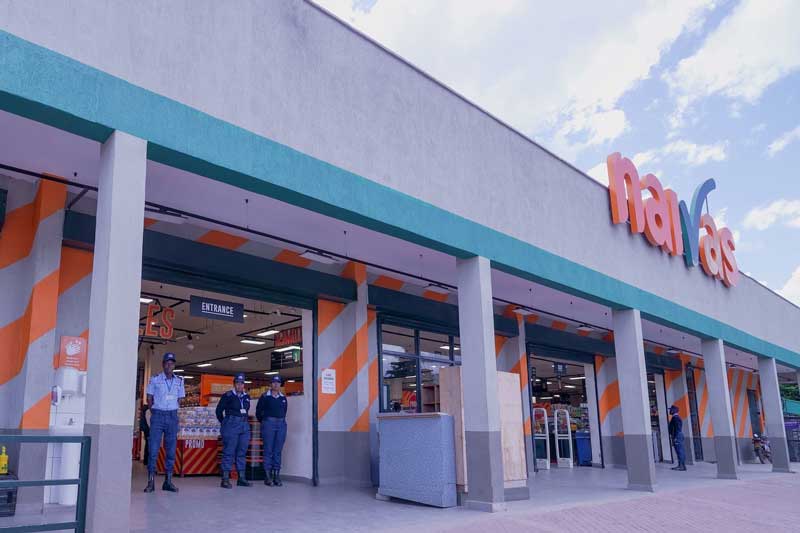

A commercial disagreement involving more than Sh3 billion in shopper payments has escalated into a High Court battle, with Naivas Limited accused of turning a Sh31.2 million financial dispute into a criminal case against the leadership of fintech company FlexPay.
Flexitech Group Limited, the company operating FlexPay, together with four of its directors, has accused the supermarket chain of involving police investigators and prosecutors in an effort to recover money arising from their business relationship.
The directors are Dennis Karanu Mwangi, Richard Machomba, Martin Kariuki Maina and Johnson Gituma Mwangi. They have approached the court seeking to stop their planned prosecution for stealing by an agent before the matter proceeds to trial.
However, on Thursday, Justice Roseline Aburili declined to suspend the arrests and prosecution as the petition awaits a full hearing.
The judge ruled that the petitioners had not provided sufficient grounds to warrant immediate protection from the criminal proceedings.
Justice Aburili cautioned that stopping prosecutions merely to protect the reputation or commercial interests of individuals and businesses would create a situation where prominent people could avoid facing trial.
She indicated that intervention would be justified where a matter was clearly civil and commercial in nature on the face of the case.
She further observed that reputational damage and loss of business are normal possible consequences of prosecution and do not, by themselves, establish an abuse of the legal process.
Despite the decision, the petition challenging the prosecution will still be heard in full.
The case names the Director of Criminal Investigations (DCI), the Inspector-General of Police, the Director of Public Prosecutions (DPP) and the Attorney-General as respondents.
Naivas Limited has been included as an interested party and has firmly disputed the claims made against it.In an affidavit filed in response to the petition, Naivas Head of Loss Control Paul Njoroge Minai maintains that FlexPay was entitled to retain only five per cent of the money generated from each transaction as commission.
According to him, the remaining 95 per cent was the property of Naivas, and Flexitech was never authorised or instructed to use that portion of the funds for any other purpose.
The competing accounts centre on a partnership agreement executed on February 10, 2021, and scheduled to remain in force until February 2028.
The arrangement allowed customers to purchase goods from Naivas through instalment payments facilitated by FlexPay.
Once the required process was completed, customers would collect their purchases from supermarket branches using a release code.
Naivas maintains that the financial disagreement became apparent in February 2026, when it began making formal demands for the money it says was outstanding.
According to the retailer, its initial demand was issued on February 19 for Sh24.9 million. By March 3, the amount had increased to Sh29.5 million.
On March 9, Naivas’ lawyers issued another demand requiring payment of Sh30.2 million by March 13.The supermarket further claims that Flexitech acknowledged the outstanding amount in writing on February 25 but continued receiving payments from customers.
When lawyers representing Flexitech requested additional time to settle the debt on March 11, Naivas says it rejected the request. The amount subsequently rose to Sh31.2 million.
Naivas terminated the partnership on March 17 before reporting the matter to the police on March 23. Court documents filed by the retailer indicate that approximately Sh3 million was transferred on May 5, after the complaint had already been lodged.
FlexPay, however, disputes the financial account presented by Naivas and argues that the relationship involved obligations on both sides.
The company says an amendment to their agreement in December 2023 introduced loyalty points for Naivas customers.
According to FlexPay, it paid for the loyalty points upfront and is now seeking reimbursement of more than Sh24 million from the supermarket chain.
FlexPay also claims that Naivas attempted to reduce its commission towards the end of 2025. The retailer is said to have proposed a commission rate ranging between 0.5 per cent and one per cent, while FlexPay responded with a counterproposal of three per cent.
The two parties did not reach an agreement on the proposed change.
A separate issue raised by FlexPay concerns transactions that its systems allegedly identified as having unusually high values before being reversed as errors.
The fintech firm says its systems flagged purchases worth Sh10,000 that appeared on the platform as transactions of Sh100,000 before the entries were reversed. It claims the pattern involved more than Sh300 million in transactions and may have had implications for incentives paid to Naivas employees.
The court papers provided do not show Naivas responding to this particular claim.
Dennis Karanu Mwangi, one of the directors, argues that the financial relationship between the two companies was that of a debtor and creditor operating through a running account that allowed mutual set-off of amounts owed by either side.
He maintains that the disputed funds constituted a trade debt rather than money held in trust for Naivas.The criminal investigation has already progressed beyond the initial complaint.
The DCI forwarded its investigation file to the Office of the Director of Public Prosecutions (ODPP) on May 26. On August 11, prosecutors recommended charges of stealing by an agent.
Martin Kariuki Maina and Johnson Gituma Mwangi were arrested on September 1 and released on police bond the following day.
Their lawyers subsequently requested a review of the prosecution decision, prompting the file to be held back for further consideration.
The review application is scheduled for an oral hearing on October 23.
The proceedings are expected to advance the legal contest over whether the disputed Sh31.2 million should be treated as money allegedly stolen by an agent or as an outstanding commercial debt arising from the parties’ business dealings.













Add Comment