






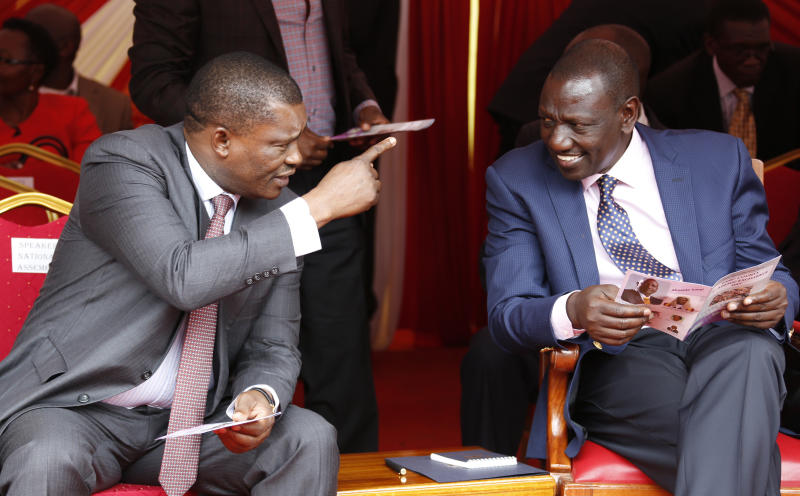

An insider from State House recently confirmed on February 2 that Public Service and Human Development Cabinet Secretary JB Muturi is unlikely to be fired anytime soon.
However, there is speculation that a resignation might be pending for him. This revelation, as reported by Nation Africa, has sparked discussions about the political dynamics within President William Ruto’s administration.
The insider noted that tension is running high in Ruto’s camp, with many questioning how the President can continue to keep Muturi in the Cabinet while enduring his frequent and sharp criticisms of the government.
Muturi’s outspoken nature has become a concern for the administration. As a Cabinet Secretary, his position grants him a level of credibility that makes his criticisms particularly damaging.
He has repeatedly attacked the Ruto administration over issues such as abductions and extrajudicial killings, which are sensitive topics that resonate deeply with the public.
These attacks are seen as eroding public trust in President Ruto’s leadership, which is already facing widespread discontent.
The insider suggested that Muturi’s critiques are not just personal grievances but are contributing to a broader narrative that undermines the government’s credibility.
One of the key worries within Ruto’s camp is the potential fallout from firing Muturi. There is a fear that removing him from his position could create a situation similar to that of former Deputy President Rigathi Gachagua. Gachagua, after being sidelined, emerged as a political hero in some circles, dealing a blow to Ruto’s efforts to consolidate support.
The concern is that Muturi, if dismissed, could follow a similar path, using his removal as a platform to rally opposition against the President.
This scenario would be particularly damaging for Ruto, who is already going through a complex political reality.
The insider’s comments highlight the delicate balance Ruto must maintain in managing his Cabinet.
On one hand, retaining Muturi risks allowing his criticisms to continue unchecked, further damaging the administration’s reputation.
On the other hand, firing him could create a political martyr, someone who could galvanize opposition and weaken Ruto’s position.
This dilemma poses the challenges of leadership in a politically charged environment, where every decision has far-reaching consequences.
It remains to be seen how President Ruto will address the growing tension within his administration. The outcome of this political standoff could have implications for his presidency and the broader political scene in Kenya.
For now, the focus remains on whether Muturi will resign or be forced out, and how his departure or continued presence will shape the future of Ruto’s leadership.
The story, as reported by Nation Africa, serves as a reminder of the complexities of governance and the high stakes involved in managing political relationships.














Add Comment