







Questions have emerged over the award of tenders for road and school projects in Mukurweini Constituency, Nyeri County, following allegations that a lorry allegedly owned by the wife of area MP John Kaguchia was contracted to supply construction materials for several public projects.
The concerns have prompted calls for the Ethics and Anti-Corruption Commission (EACC), Directorate of Criminal Investigations (DCI), Office of the Auditor-General and Public Procurement Regulatory Authority (PPRA) to launch independent investigations into the constituency’s procurement processes.
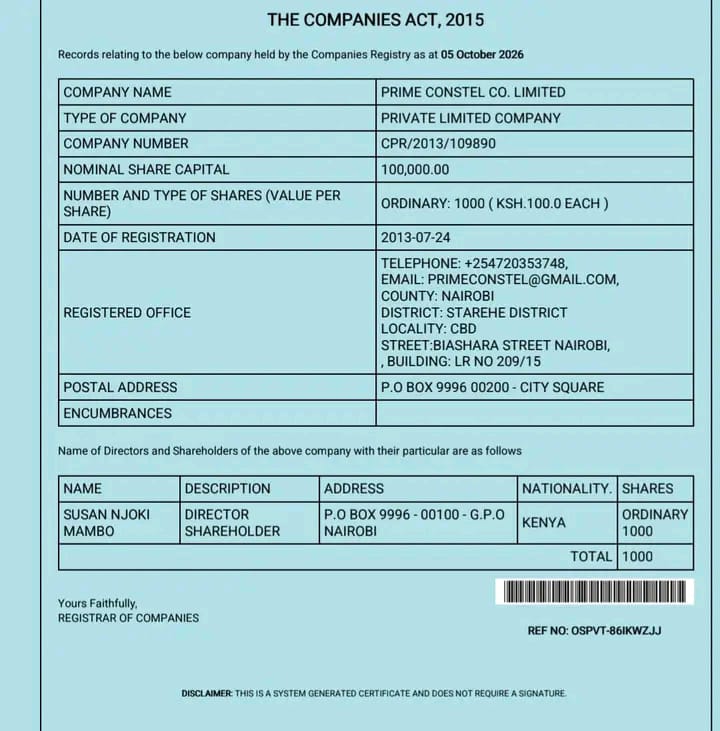
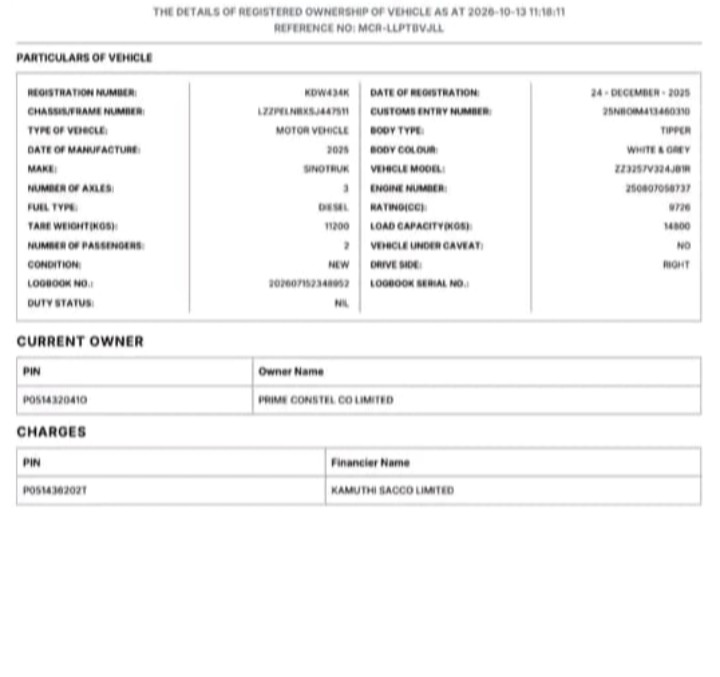
At the centre of the concerns is lorry registration number KDW 434K, which is allegedly owned by Susan Kaguchia, the wife of Mukurweini MP John Kaguchia.
According to an open letter addressed to the four government agencies, the vehicle reportedly secured tenders to supply murram for Kangurwe Wachee Road, Gathuki Mudu Primary School, Thangathi Primary School and other constituency development projects.
The reports have raised questions about how the tenders were awarded, whether the procurement process followed the law and whether any potential conflict of interest was properly declared and addressed.
The agencies have been asked to establish the actual ownership of the vehicle, examine the tender documents and determine whether the contracts were awarded in accordance with public procurement regulations.
The request also seeks an audit of the payments made for the supply of murram and whether public funds were used appropriately in the implementation of the projects.
Of particular concern is whether the alleged connection between the vehicle’s owner and the area MP could have influenced the awarding of public contracts.
The authorities are expected to establish whether the procurement process was competitive, transparent and free from any form of favouritism.
The involvement of the four institutions is being sought to ensure that the matter is examined from different angles, including possible corruption, procurement breaches and the accountability of public funds.
The EACC is being called upon to examine any possible conflict of interest or corruption, while the DCI could establish whether there is evidence of criminal conduct.
The Auditor-General is also being asked to scrutinise the expenditure, while PPRA is expected to assess whether procurement procedures were followed.
The letter stresses that the claims should not be treated as established wrongdoing before investigations are conducted.
It calls for an impartial process that allows the relevant parties to respond to the concerns and ensures that any findings are supported by evidence.
It also warns against political interference, arguing that the investigations should be guided by facts rather than political interests.
The matter places renewed attention on how constituency development projects are procured and how individuals connected to elected leaders may be involved in supplying goods and services paid for using public resources.
Public procurement laws are intended to ensure fairness, competition and accountability in the use of taxpayers’ money.
Any breach, particularly where a potential conflict of interest exists, requires proper scrutiny by the responsible institutions.





Add Comment