







A high-stakes corporate power struggle has erupted in Kenya’s transport sector, putting a major commercial bank’s debt recovery practices under intense scrutiny once again.
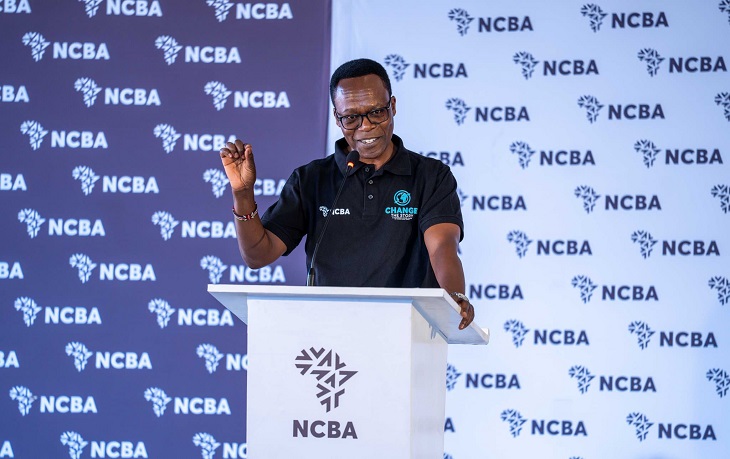
At the center of the battle is Multiple Hauliers East Africa Limited, a troubled logistics company fighting for control, and NCBA Bank Kenya, one of the nation’s largest financial institutions.
The transport firm has launched a aggressive legal pushback against the lender, accusing it of executing an unlawful attempt to seize control of its business operations through unauthorized appointments.
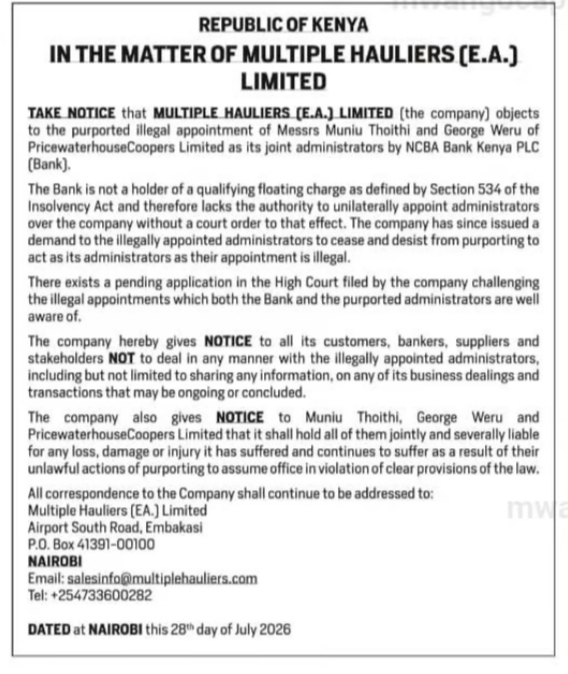
The confrontation escalated following a public notice released on July 28, 2026, in which Multiple Hauliers formally objected to the installation of Muniu Thoithi and George Weru from PricewaterhouseCoopers as joint administrators.
According to the haulage firm, NCBA lacks the legal standing to enforce such a takeover. Under Section 534 of the Insolvency Act, a lender must hold a valid qualifying floating charge to appoint administrators without first securing permission from a court.
Multiple Hauliers insists that NCBA possesses no such charge, meaning the bank was legally required to obtain a court order before attempting to put the business under third-party management.
Refusing to yield control, the logistics company has issued cease-and-desist demands to both Thoithi and Weru, demanding that they immediately stop presenting themselves as administrators.
Multiple Hauliers maintains that every action, decision, or agreement executed under these contested appointments is completely illegal and open to legal challenge.
To protect its daily operations, the company explicitly warned its clients, suppliers, bankers, and other corporate partners against sharing operational information or engaging in business transactions with the disputed administrators.
Furthermore, it cautioned that the two individual appointees and PricewaterhouseCoopers itself will be held personally and corporately accountable for any financial losses caused by their actions.
The timing of NCBA’s action has raised sharp questions regarding procedural fairness. The fresh takeover attempt came just days after the High Court halted proceedings linked to the company’s ongoing administration and liquidation matters.
That order was grounded in an existing Court of Appeal stay covering the consolidated insolvency cases. By attempting to install new administrators while higher courts were actively handling the broader legal dispute over debts and control, NCBA appears to have moved ahead despite ongoing judicial pauses.
The financial stakes driving this conflict are massive. NCBA is currently pursuing approximately Sh7.2 billion from Multiple Hauliers. The transport operator faces overall debts exceeding Sh31.4 billion, offset by assets valued at roughly Sh17 billion.
This is also not the first time the bank has taken direct action against the logistics firm; back in June 2021, NCBA placed Multiple Hauliers under administration and assigned Ernst & Young officers Anthony Makenzi Muthusi and Julius Mumo Ngonga to manage the firm’s affairs.
This latest fight fits into a wider pattern of harsh debt collection practices and ongoing public controversies involving NCBA.
Although the bank manages a major asset financing business, it has drawn repeated complaints from borrowers who claim the lender moves too aggressively to repossess and auction vehicles during periods of financial distress.
Borrowers have routinely raised concerns over disputed loan balances, steep penalty charges, auction procedures, and low resale prices that leave distressed clients without their working assets while still saddled with unpaid debts.
Beyond debt collection, the bank has faced regulatory scrutiny and high-profile tax disputes.
NCBA was previously drawn into data protection proceedings before the Office of the Data Protection Commissioner concerning the processing and accuracy of customer financial information.
Even more damaging to its reputation was the controversial tax relief granted during the 2019 merger between Commercial Bank of Africa and NIC Bank.
The High Court later quashed a Sh384.5 million stamp duty exemption given to NCBA, ruling that the decision to excuse the bank from the tax was not made in the public interest, leaving the bank exposed to tax demands and raising questions about official favoritism.
Now, the High Court must resolve this latest dispute over legal authority and statutory compliance. Judges will be asked to determine whether NCBA actually held a qualifying floating charge, whether the administrative appointments were valid, and whether the PwC officials can legally exercise control over Multiple Hauliers.
Until the court delivers its decision, NCBA remains under pressure to explain why it attempted to take over the transport company during an active legal fight rather than waiting for judicial clarity.













Add Comment