



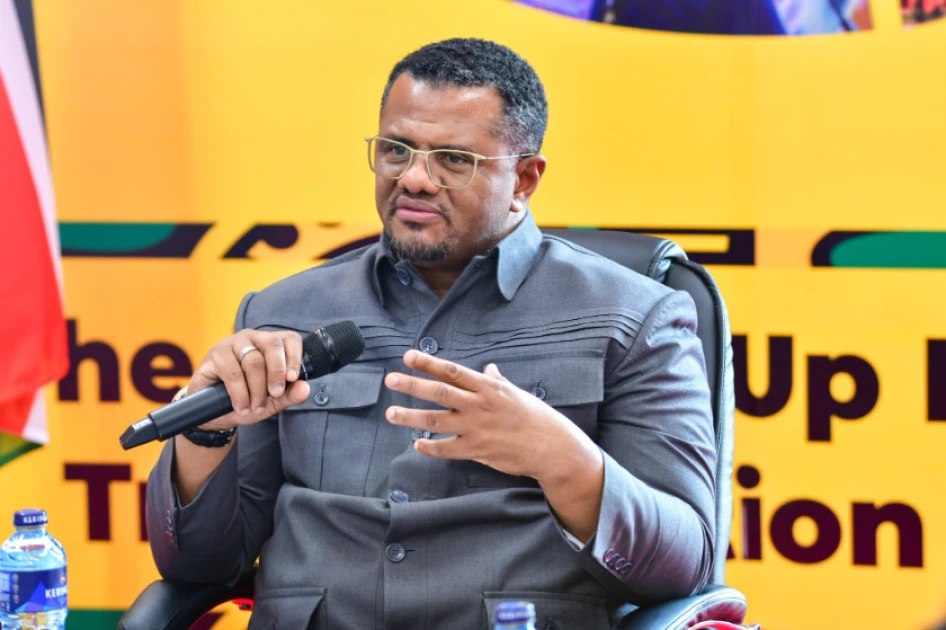

Hassan Omar once stood as a strong voice for human rights in Kenya. As a young lawyer and commissioner at the Kenya National Commission on Human Rights, he spoke out against injustice, pushed for accountability, and earned respect for defending the vulnerable.
He later served as a senator and sat in the East African Legislative Assembly. Those were the days when many saw him as a principled man who put the people first.
Today that image has changed. As secretary general of the United Democratic Alliance, Hassan Omar uses his position to make statements that leave many Kenyans shocked and worried.
His latest comments in Mombasa have drawn sharp criticism from across the political divide. Speaking to supporters, he suggested that even the fingerprints of people who had just died should be taken before burial and used in the biometric voter system so their votes could still count for President William Ruto in the 2027 election.
He described such votes as a bullet, a weapon and a shield that the party needed to keep power and demand more positions and development.
These words did not come from an ordinary politician trying to rally the base. They came from a man who once fought for clean elections and the dignity of every citizen. The contrast is hard to ignore.
A former human rights defender now talks openly about using the dead to inflate numbers at the ballot. Opposition leaders have reacted strongly.
Eugene Wamalwa and Justin Muturi said Kenyans will not allow the dead to vote. Martha Karua called the remarks a grave matter that raises serious questions about the integrity of the next election.
Even within government circles, voices like Musalia Mudavadi have warned politicians against comments that damage public trust in the electoral process.
This is not the first time Hassan Omar’s tongue has caused trouble. Earlier remarks that many interpreted as targeting communities from Mount Kenya forced him to issue an apology after pressure from party members and the public.
The pattern is becoming clear. Once he enters the political arena at the highest levels of the ruling party, the careful language of a rights activist gives way to reckless talk that plays with fire. Kenya has a painful history with disputed elections and ethnic tension.
When a senior party official speaks about capturing the biometrics of the recently deceased, it does more than raise eyebrows. It feeds fears that the system can be manipulated and that some leaders care more about winning at any cost than about fair rules.
The Independent Electoral and Boundaries Commission has been put on the spot, with calls for it to explain how it will clean the voter register and protect the process from abuse. Hassan Omar sits in a powerful position. His words carry weight because of the office he holds and the proximity he has to the presidency.
That power comes with responsibility. When he chooses to use language that treats the dead as political tools, he reveals something larger about the politics he now serves. It shows a willingness to stretch every boundary in the search for numbers and influence.
The man who once wrote reports on extrajudicial killings and demanded justice now talks about taking fingers from the recently departed to secure votes.
Ordinary Kenyans listening to these statements are left to wonder what has happened to the principles he once claimed to hold. Politics in Kenya has always been rough, but comments like these drag the conversation into dark places that threaten the trust people still have in the vote.
Hassan Omar’s journey from human rights champion to the current face of UDA’s hardline rhetoric is a reminder of how power can reshape a person. The poisonous words he has chosen to speak do not just reflect on him.
They expose the dangerous direction some parts of Kenyan politics are willing to take when the prize of another term is on the table.
Kenyans will decide in 2027 whether they accept this kind of politics or demand better from those who claim to lead them.







Add Comment