




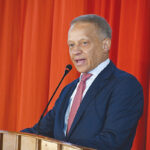


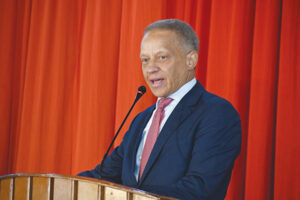
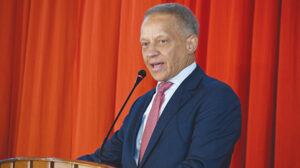
Carl Grindan, widely known to thousands of Kenyan investors as ‘Prof Carl’ or simply ‘Professor’, was the public face of the Quant Vest Stock Exchange (QVSE) scheme that has left many investors unable to access their money and facing heavy losses.
The scheme attracted Kenyans with promises of turning relatively small deposits into much larger amounts within a short period.
Some investors were encouraged to put in Sh65,000, while others deposited Sh129,000, after being told the money would be used to trade shares linked to major United States companies.
The message spread quickly through local agents and investor networks. Teachers, small-scale traders, professionals and boda boda operators were among those drawn to the platform.
For many, the offer appeared simple and attractive. They were asked to deposit money, monitor their accounts as the balances increased and, in some cases, bring in new members in exchange for additional rewards.
The growing figures displayed on the accounts helped build confidence among participants. Investors could see what appeared to be daily gains, giving the impression that their money was actively generating profits. Some members subsequently committed more money, while others encouraged friends, relatives and colleagues to join.
The situation changed when withdrawals were stopped. Investors who had watched their balances grow suddenly found themselves unable to access the funds.
Some were reportedly told to make additional payments before they could withdraw money they believed they had already earned.
That development exposed one of the biggest concerns surrounding the operation: the difference between figures displayed on an online account and money that can actually be withdrawn.
The Capital Markets Authority has listed QVSE among unlicensed and illegal operations soliciting funds from the public. The regulatory warning has raised serious questions about the platform and the basis on which it collected money from Kenyan investors.
Corporate records have also raised questions about the company’s history and structure. Quant Vest Stock Exchange Limited was incorporated in Colorado in June 2025, with records showing a filing fee of only US$50. Marc Hudon is listed as the incorporator and registered agent at a Colorado address.
The corporate record appears to differ from promotional claims that the business was founded in 2022 and had its headquarters in New York. Available public records do not support those earlier claims. No Kenyan licence has been identified for the operation, while Ghana’s securities regulator had already raised concerns about the platform.
The questions surrounding QVSE have also reached Kenya’s Parliament, where lawmakers sought answers about its status and ownership. These developments have added to concerns about how the platform operated and the people behind it.
Throughout the growth of QVSE, Grindan remained a familiar figure to investors. His ‘Professor’ identity became closely associated with the platform, particularly in investor communications and online groups. For participants, the persona appeared to represent knowledge and authority in financial markets.
But the eventual withdrawal problems have forced investors to look beyond the image presented to them and ask harder questions about how their money was actually being handled.
A major issue now is whether the funds deposited by investors were genuinely being used to purchase and trade securities as they had been led to believe. Investors are also seeking answers about who controlled the funds, where the money went and what assets, if any, supported the figures appearing on their accounts.
The referral structure has also come under scrutiny. While recruiting new members was presented as a way to earn additional rewards, the emphasis on bringing more people into the platform raises questions about how much of the operation depended on continued expansion.
For ordinary Kenyans, the consequences are not simply numbers displayed on a screen. Some investors are reported to have used savings, borrowed money or redirected funds meant for businesses and household needs in the hope of earning higher returns.
Those who recruited others may now also face difficult conversations with the people they introduced to the platform.
The QVSE episode is another warning about the risks of placing money into investment platforms without confirming their regulatory status and the identities of those controlling them. Promises of unusually high returns, pressure to recruit new members and restrictions on withdrawals are all signs that require close scrutiny before additional money is committed.
With Grindan having served as the public face of QVSE, his role remains central to the questions surrounding the platform.
However, the full corporate and financial structure of the operation, the movement of investor funds and the actual scale of the losses will require further investigation by the relevant authorities.
For investors who are now locked out of their accounts, the most pressing issue is no longer the profits they were promised. It is whether the money they deposited can be traced, recovered and accounted for.










Add Comment