






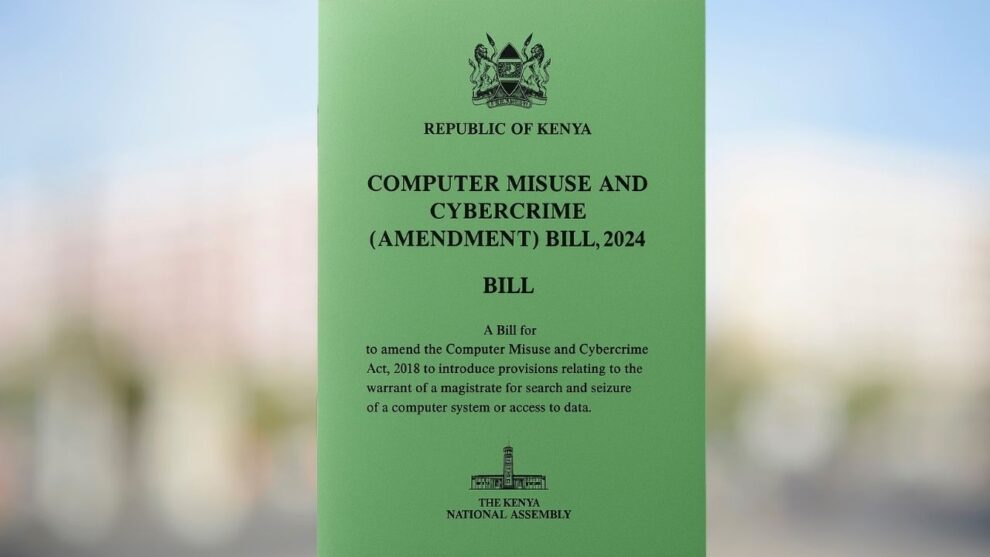

A major legal setback has hit parts of Kenya’s cybercrime law after the High Court declared several provisions of the Computer Misuse and Cybercrimes (Amendment) Act, 2025 unconstitutional.
In a judgment delivered on Thursday, Justice Patricia Nyaundi ruled that Sections 6(1) and 27(1) of the law violated constitutional protections relating to freedom of expression and media freedom.
The court found that the provisions were not clear enough and were drafted in a way that could lead to misuse or arbitrary enforcement.
The ruling means that powers previously granted to the National Computer and Cybercrimes Coordination Committee to direct the blocking of websites and digital platforms have now been invalidated.
Under the challenged provisions, authorities could order restrictions on online platforms considered to be promoting unlawful activities.
The court also struck down the offense of cyber harassment as contained in the amendments.
The provision had criminalized online communication that was considered likely to cause fear, annoyance, intimidation, or that could be viewed as grossly offensive.
According to the judgment, the wording of the law was too broad and lacked the precision required when limiting constitutional rights.
Justice Nyaundi held that any law seeking to restrict fundamental freedoms must meet the standards set out in Article 24 of the Constitution.
The article requires limitations on rights to be reasonable, justifiable, and clearly defined.
The court found that the disputed sections failed to meet that threshold.
The decision follows a legal challenge filed by rights groups and other stakeholders who argued that the amendments threatened free speech and could be used to silence journalists, activists, and ordinary citizens expressing themselves online.
Earlier in the case, the High Court had temporarily suspended enforcement of the contested provisions while awaiting a final determination.
The latest ruling is expected to be welcomed by advocates of digital rights and media freedom, who had raised concerns about the potential impact of the amendments on public debate and access to information in the digital space.
The judgment comes at a time when broader questions about cybercrime regulation remain before the courts.
The Supreme Court is preparing to hear a separate petition challenging provisions of the original 2018 Cybercrimes Act that allow court-approved interception of digital communications.
With Thursday’s ruling, the High Court has reinforced the principle that efforts to regulate online activity must remain consistent with constitutional protections and respect the rights guaranteed to Kenyans under the law.














Add Comment