





On the last working day of June 2026, a deal that had been fought over in courts and debated in public for months was finally completed. South Africa’s Vodacom Group bought a 15 percent stake in Safaricom, Kenya’s most valuable company, in what became the largest single transaction ever seen on the Nairobi Securities Exchange.
In one trading session, more than six billion shares changed hands, pushing the daily turnover to over 208 billion shillings, a staggering jump from the previous day’s four point seven billion.
Vodacom’s effective ownership of Safaricom increased from about 40 percent to 55 percent, while the Kenyan government’s share dropped from 35 percent to 20 percent.
The digital economy of Kenya, which millions of citizens rely on for mobile money, communication, and financial services, now has a new majority owner based in Johannesburg.What made this transaction particularly painful for many Kenyans was not just the loss of control, but the timing and the cost.
The government had originally planned to close the deal by the end of March, but court petitions delayed it. When the deal finally closed on June 30, the government missed the cutoff date for Safaricom’s shareholder register, which determines who receives the final dividend payment.
That dividend was set at one point fifteen shillings per share. On the six billion shares that the government sold, this meant Kenya lost out on sixteen point one billion shillings that would have gone directly to the Treasury.
Instead, that dividend cheque will now be collected by Vodacom just a few weeks after the purchase.
Beyond this immediate loss, there is a much larger figure that has been placed on the court record. A former principal secretary and energy expert named Irungu Nyakera filed sworn evidence before the High Court, calculating the total quantified loss to Kenyan taxpayers from this transaction at 437 billion shillings.
His analysis used five internationally recognised valuation methods, including discounted cash flow and dividend discount modelling.
He found that the fair value of the shares sold was between 57 and 80 shillings each, not the 34 shillings that the government accepted.
At the conservative midpoint of 57.90 shillings, Kenya left 143.7 billion shillings on the table just on the share price. But that was only the beginning.
Nyakera’s affidavit also examined M-Pesa, the mobile money platform that processes over 38 trillion shillings in transactions every year, an amount that is more than twice Kenya’s entire gross domestic product.
By applying the valuation multiple used when Mastercard invested in a similar African mobile money platform, M-Pesa’s value was estimated at approximately 1.27 trillion shillings.
The government sold its share of this platform at a price that effectively ignored this embedded value, adding another 133.8 billion shillings to the loss calculation.
The third component was the dividend stream. The government accepted 40.2 billion shillings upfront in exchange for the future dividends from its remaining 20 percent stake.
Nyakera calculated the present value of that income stream at roughly 200 billion shillings, meaning the government surrendered an additional 159.8 billion shillings. When you add these three numbers together, the total comes to 437 billion shillings, a figure that remains on the court record and has not been challenged by the government.
There was another layer to this story that most Kenyans were not told about until after the deal had already been approved. On May 22, 2026, Vodafone Group, which is Vodacom’s parent company, quietly lodged a new shareholder agreement with the American securities regulator.
This filing contained the real mechanism of control over Safaricom’s leadership. It stated that Safaricom’s board would be required to appoint the chief executive from a list of nominees provided by Vodafone Kenya Limited, the holding vehicle through which Vodacom controls Safaricom, for as long as that vehicle holds more than 50 percent of the company.
The agreement said that the government would be consulted and notified before the board appointed a chairman or CEO, but only insofar as possible, and the language was careful to use words like consult and notify rather than approve or veto.
Parliament had been told that conditions included a Kenyan CEO and chairman, but the SEC filing revealed a different reality.
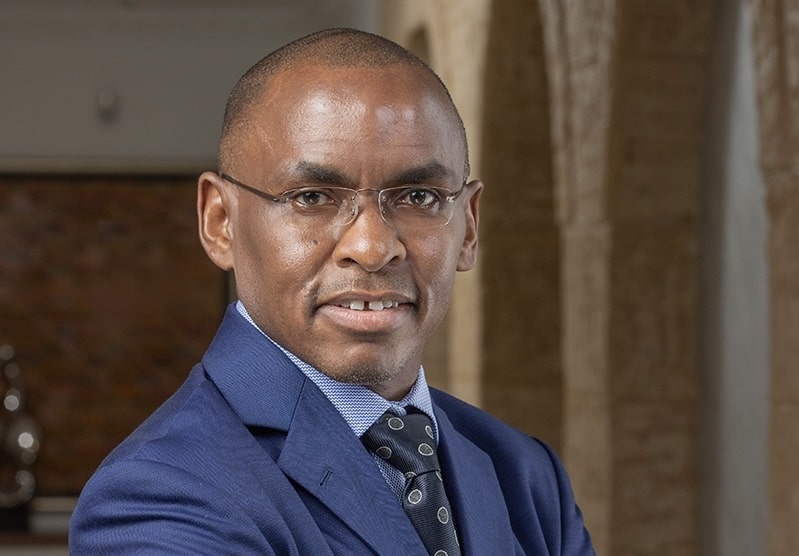
The next CEO of Safaricom will come from a shortlist drawn up in Johannesburg, not from an open field in Nairobi.This brings us to the question of Safaricom’s current chief executive, Peter Ndegwa.
He became the first Kenyan to hold this position in April 2020, ending two decades of expatriate leadership.
His contract was expected to lapse on March 31, 2026, but as of July, there had been no formal announcement of renewal or exit.
The Consumers Federation of Kenya described this information vacuum as having devolved into speculation and guesswork, which is unusual for a publicly traded company of Safaricom’s stature.
Ndegwa has delivered strong financial results during his tenure, with revenue crossing 400 billion shillings and net profit reaching a record 95.61 billion shillings.
The share price, which had collapsed to 13.30 shillings in early 2024, rallied to 31.40 shillings by June 2026. Yet governance concerns remain.
A CEO whose contract status cannot be confirmed to shareholders is presiding over a transaction that hands away the right to choose his own successor, and this is not a coincidence of timing.
The debate over this deal is far from over. The constitutional petitions that challenged the sale are still alive in court, and the High Court will eventually have to rule on whether the transaction was lawfully completed.
If the court finds that it was not, the question of enforcement for a deal that has already been settled will be difficult to answer. In the meantime, the operating system of Kenya’s modern economy is now under new management, and the first dividend cheque from the departed shares will go not to Kenya’s infrastructure fund but to Johannesburg.
The CEO remains in his chair, still without a confirmed contract, and the full accounting of 437 billion shillings in losses remains on the court record, filed under oath, waiting for the government to explain it.








Add Comment