






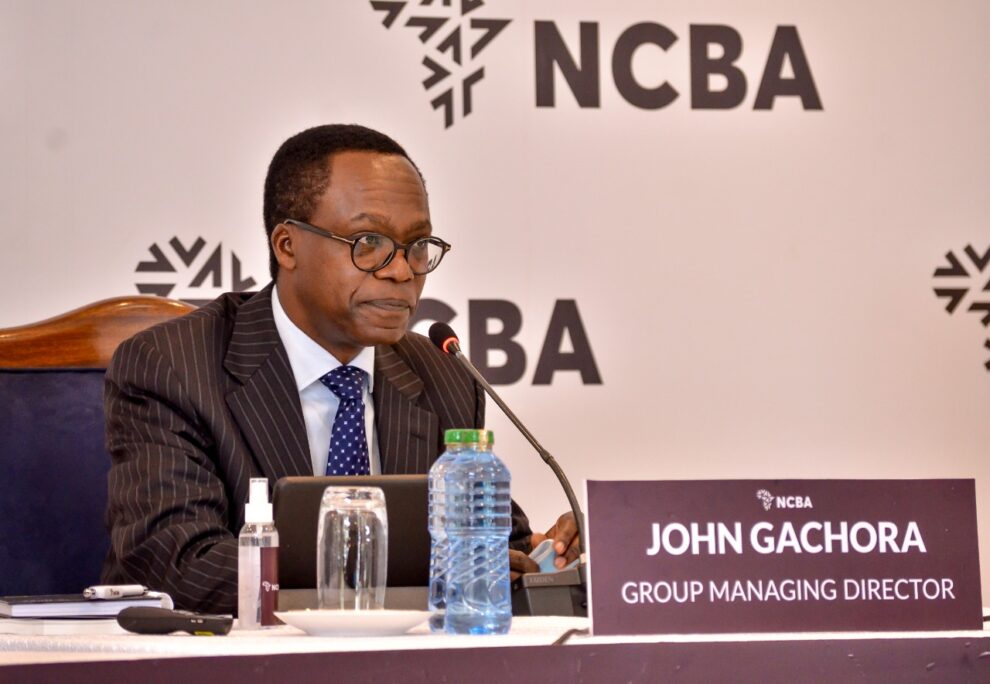

Banking is fundamentally built on trust and mutual benefit, but for NCBA Group, a growing wave of customer complaints on social media is directly challenging its polished corporate image.
Under the leadership of Group CEO John Gachora, the bank has earned significant praise for its quick loan approvals and willingness to finance clients whom other institutions reject.
However, an intense online debate has exposed a much darker reality for borrowers who fall behind on their payments.
What begins as a smooth, efficient relationship often transforms into a aggressive recovery process, leaving many customers feeling trapped, pressured, and penalized.
The public conversation ignited after a simple online inquiry about NCBA’s financing options opened the floodgates for current and former customers to share their raw experiences.
The feedback revealed a stark contrast in how the bank operates. While some users defended the institution as efficient and highly supportive, a louder and far more detailed segment of the commentary painted a picture of an unforgiving lending model.
The criticism was direct and severe, with one user going so far as to describe the bank as “Shylocks with a beautiful name,” suggesting that the polished corporate exterior hides a ruthless debt collection culture.
The most intense complaints center heavily on asset financing and car loans, where the stakes are incredibly high for everyday entrepreneurs and motorists.
Borrowers warned that the bank offers an extremely short grace period allegedly as little as two weeks before an asset becomes a target for auctioneers.
The transition from a valued client to a repossession target appears to happen in the blink of an eye. One customer shared a personal account of delaying a car loan payment by just ten days due to a temporary financial hitch.
Despite informing the bank beforehand, an auctioneer was allegedly dispatched immediately, forcing the borrower to pay the outstanding arrears alongside a steep recovery fee of Sh24,000.
Even after debts are cleared, the frustration does not always end. The same customer reported waiting nearly fifteen months just to complete the logbook transfer process, describing the post-payment experience as deeply painful and frustrating.
This level of systemic delay indicates that the pressure is heavily one-sided; the bank demands instant compliance from borrowers but moves slowly when fulfilling its own administrative obligations to clear ownership documents.
Beyond the immediate threat of repossession, many users raised serious alarms about the high cost of credit at NCBA compared to competitors like Co-operative Bank and Family Bank.
Unsecured lending received particularly harsh criticism, with one borrower describing it as a “slow death” because the accumulating interest can rapidly outpace the actual monthly loan instalment.
Compounding this financial pressure is an alleged breakdown in customer care. Several customers noted that while relationship managers are highly attentive during the initial loan approval phase, they frequently become unreachable ignoring phone calls, emails, and text messages the moment a client experiences financial distress and genuinely needs structural assistance.
To be fair, NCBA still maintains a loyal base of customers who praise its operational efficiency, timely monthly reminders, and vital role in vehicle financing.
Yet, this sharp divide is precisely where the reputational danger lies for CEO John Gachora and his executive team.
When a bank’s efficiency is viewed as excellent by those who pay on time, but experienced as a ruthless recovery machine by those who delay even briefly, public trust begins to erode.
For an average borrower, an asset like a truck or a car is a source of livelihood, not just a line item on a balance sheet. When financial hitches are met with immediate auction threats, heavy recovery fees, and poor relationship management, the issue ceases to be standard customer dissatisfaction.
It becomes a critical systemic problem that NCBA must address if it wishes to sustain its position as a trusted financial partner.














Add Comment