






Questions are emerging over the ownership of De La Rue Kenya after claims surfaced that President William Ruto may have an undisclosed interest in the security printing company through a Mauritius-registered firm that recently acquired a majority stake in the business.
The allegations were highlighted by Nyakundi Report, which pointed to company records showing that Monarch Capital Limited, a company incorporated in Mauritius in October 2025, acquired a 60 percent stake in De La Rue Kenya.
The remaining 40 percent stake continues to be held by the Kenyan government through the National Treasury. While no official company records publicly list President Ruto as a shareholder, the ownership arrangement has triggered fresh debate about transparency and possible conflicts of interest in one of the country’s most sensitive strategic companies.
De La Rue Kenya occupies a unique position because of its involvement in the printing of secure government documents.
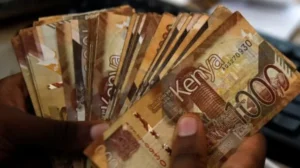
The company previously handled the printing of Kenyan currency before suspending banknote production operations several years ago.
Despite that decision, it is now seeking new business opportunities that could place it at the center of major government contracts worth billions of shillings.
Records from the Mauritius Registrar of Companies show Monarch Capital Limited was registered with directors Coowar Bibi Shaheen, Kaudeerally Mohammad Zeead and Humphrey Arnold Munyamareme Nzeyi.
The company’s registered address is listed in Ebene, Mauritius. Following the acquisition, De La Rue Kenya’s board was restructured, bringing in former Safaricom chief executive Michael Joseph, Humphrey Nzeyi and Andrew Lopokoiyit as directors.
Kenyan company records indicate that Monarch Capital holds 1,200 ordinary shares, representing 60 percent of the company’s 2,000 issued shares.
The National Treasury, through the Cabinet Secretary, holds the remaining 800 shares on behalf of the government.
The controversy intensified after former Deputy President Rigathi Gachagua publicly challenged President Ruto to disclose whether he has any direct or indirect interest in the company.
Gachagua questioned whether ownership of a security printing firm by individuals linked to political power could raise concerns, especially as the country moves closer to future election cycles.
At the heart of the debate is not only who owns De La Rue Kenya, but also the nature of the contracts the company could secure in the coming years.
Government sources indicate that the firm is pursuing opportunities involving passports, examination papers, election materials and other highly protected documents.
Such contracts would place the company in control of some of the country’s most sensitive printing work.
Reports have also linked De La Rue Kenya to examination printing arrangements involving Greece-based Lykos Inform Hellas Limited, which currently holds a contract related to national examinations.
Sources familiar with the matter claim that examination papers could be printed at De La Rue’s facility along Thika Road.
The company is also reportedly positioning itself for future election-related contracts, including the printing of ballot papers and political party nomination materials. These reports have intensified calls for full disclosure regarding the firm’s ownership structure.
By the time the claims became public, neither President Ruto nor the national government had issued a response to the allegations.
The absence of an official statement has left many questions unanswered and fueled further public scrutiny.
Attention is likely to remain fixed on who ultimately controls De La Rue Kenya and whether greater transparency will be provided regarding the company’s ownership and future role in government printing contracts.







Add Comment