






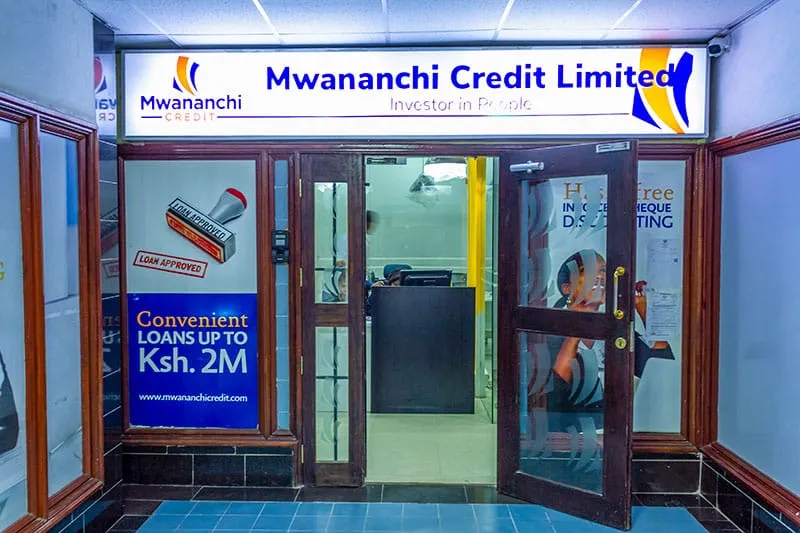

The High Court has struck down a Kshs 15 million claim by Mwananchi Credit Limited, ruling that the company could not demand massive interest on a loan after the borrower had already repaid the full principal amount.
In the case of Elangant & Another v Mwananchi Credit Ltd, the borrowers took a Kshs 7 million loan and cleared the original amount.
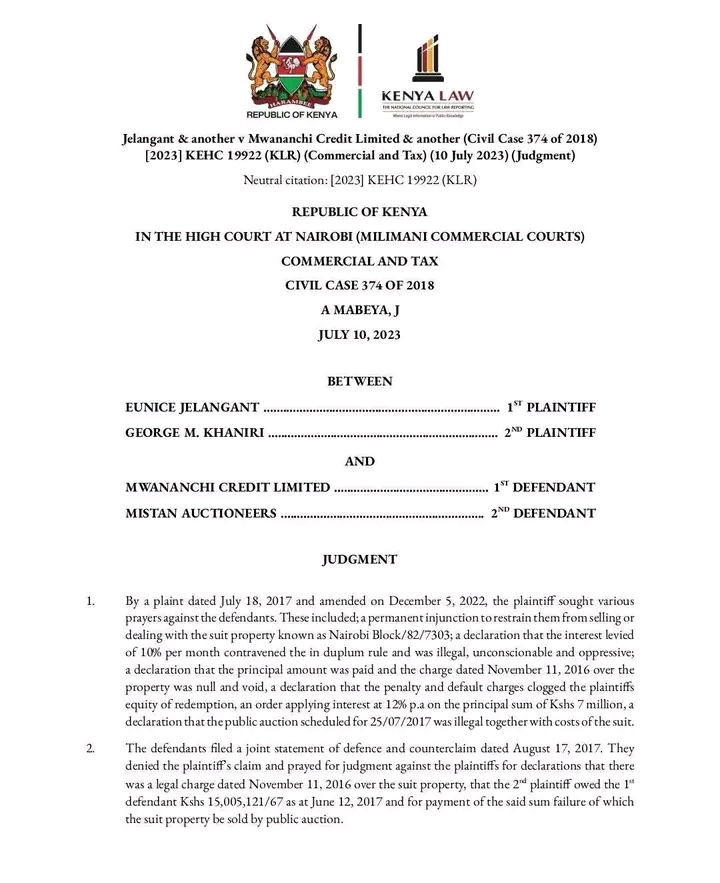
Despite this, the lender pursued an extra Kshs 15 million in interest and charges, bringing the total demand to Kshs 22 million.
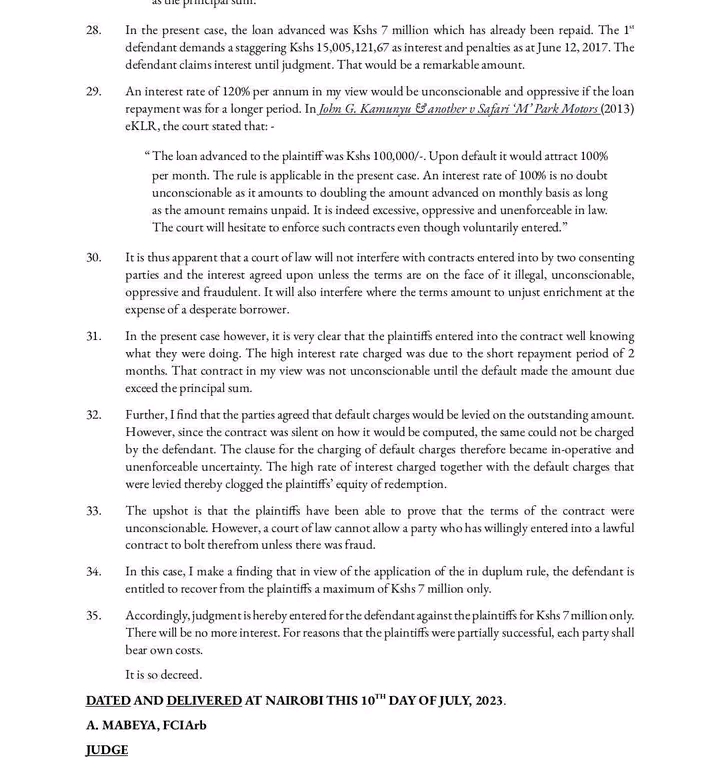
The court found these extra charges unconscionable. It applied the in duplum rule, which limits interest recovery to the principal sum, and restricted Mwananchi Credit to only the Kshs 7 million already paid.
This decision sends a clear message that such aggressive lending tactics will not always succeed in Kenyan courts.
This ruling exposes how some microfinance institutions operate in Kenya. They extend loans to small businesses and individuals in need, but the costs quickly spiral out of control.
Borrowers often face interest rates and default penalties that turn manageable debts into crushing burdens. Many people borrow to pay school fees, buy stock for their shops, or handle emergencies. When payments slow down, lenders add charges that grow faster than the borrowers can repay. Some end up paying several times the original loan without finishing the debt.
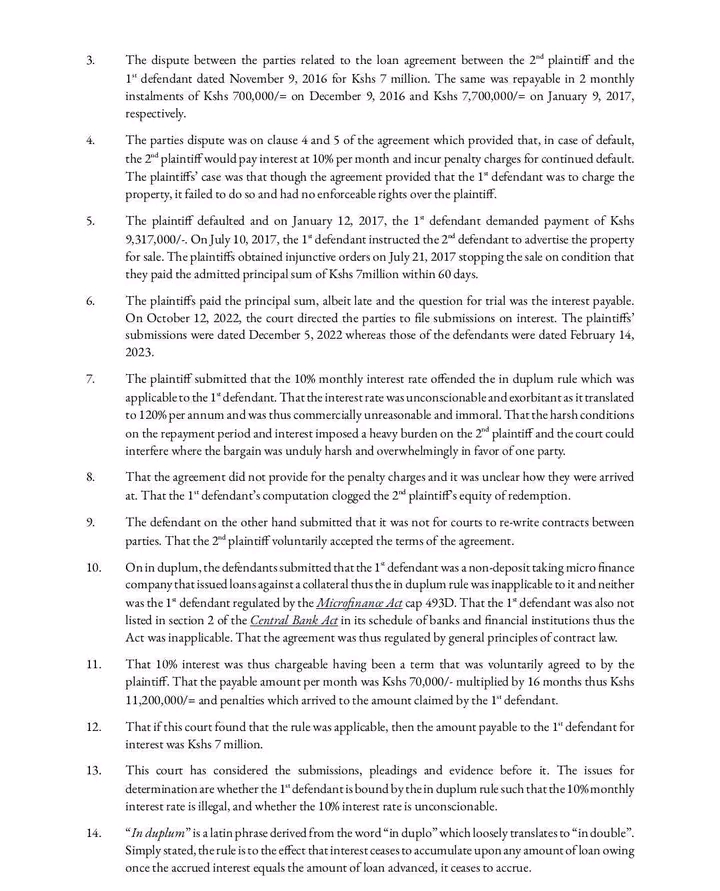
The in duplum rule, found in Section 44A of the Banking Act, is designed to protect borrowers from endless interest accumulation.
It applies to banks and microfinance institutions alike. Yet cases like this show that not every lender respects these protections.
Borrowers without legal knowledge suffer the most. They may sell assets, borrow from friends, or face aggressive recovery agents who seize property and damage reputations.
Families lose homes. Businesses close. Lives are disrupted for years.
Mwananchi Credit is not alone in these practices. Across Kenya, many micro-lenders use similar methods, Mogo finance being just a few.
They promise quick cash with few questions asked, but the real cost appears later in hidden fees and compounding interest. Even institutions regulated by the Central Bank of Kenya sometimes push boundaries until challenged.
This creates fear among ordinary Kenyans who need credit to grow. Instead of building better lives, they spend years fighting debt traps.
The court’s decision in this 2023 case, now highlighted publicly, should encourage more borrowers to know their rights. It proves that courts can and will limit unfair claims.
Legal experts say borrowers should document every payment and seek help early when problems arise. Community education on lending laws can reduce exploitation.Still, one judgment cannot clean up the entire sector.
Regulators need to monitor lending practices more closely. They should investigate complaints quickly and penalize companies that repeatedly ignore the rules. Stronger oversight would protect vulnerable customers while allowing responsible lending to continue.














Add Comment