







Cyprian Nyakundi, a well-known blogger and activist , has recently brought to light a growing issue that has left many borrowers frustrated and angry.
The focus of this concern is Equity Bank, one of the country’s largest financial institutions, which has been accused of charging exploitative interest rates on loans.
This story, exposed by Cyprian Nyakundi, has sparked a heated debate about fairness in the banking sector, particularly as borrowers struggle to make sense of the huge gap between the Central Bank of Kenya’s (CBK) base rate and the rates imposed by Equity Bank.
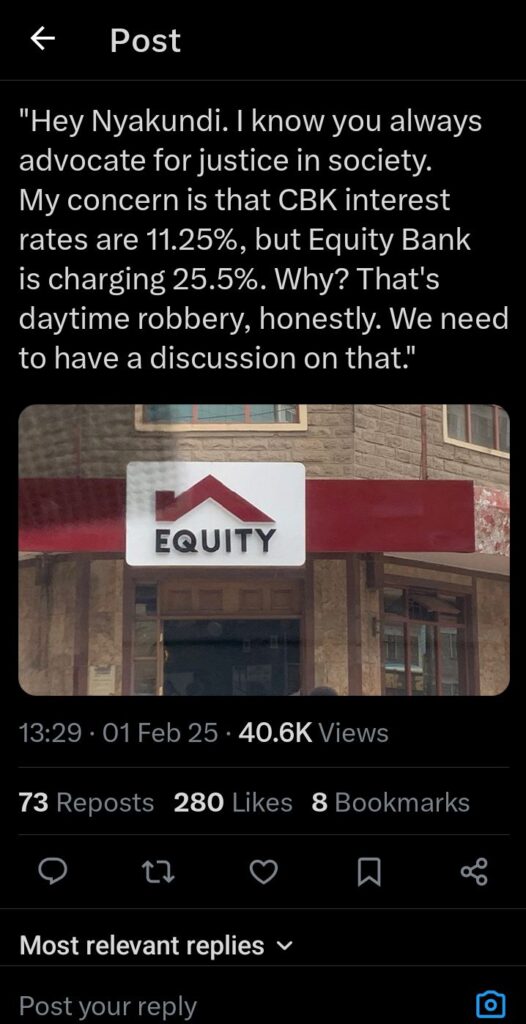
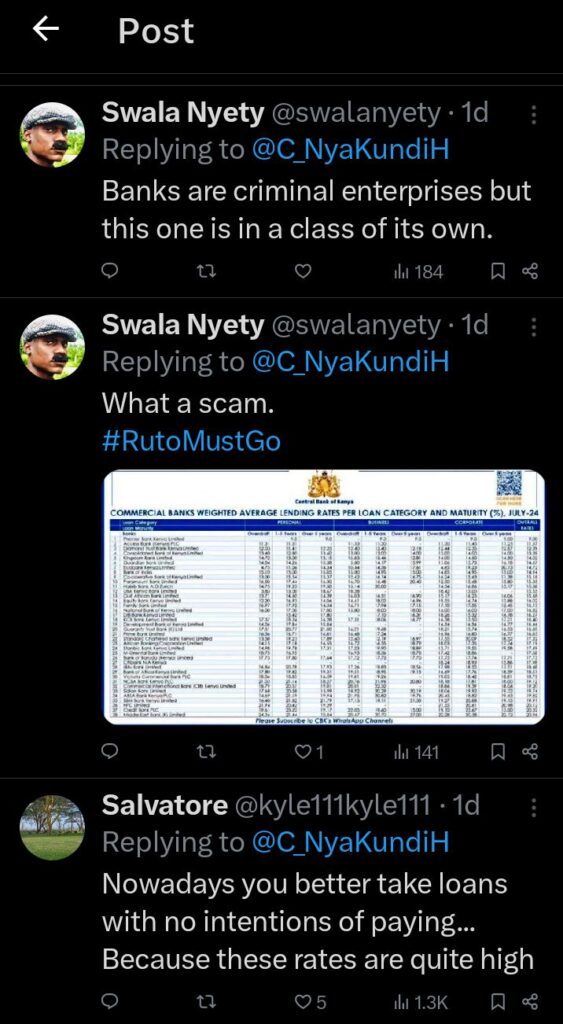
The CBK’s base rate currently stands at 11.25%, a figure intended to guide lending rates across the country. However, Equity Bank has been charging borrowers as much as 25.5% on loans, more than double the CBK’s rate.
This disparity has left many Kenyans feeling exploited, with some describing the bank’s practices as nothing short of “daylight robbery.”
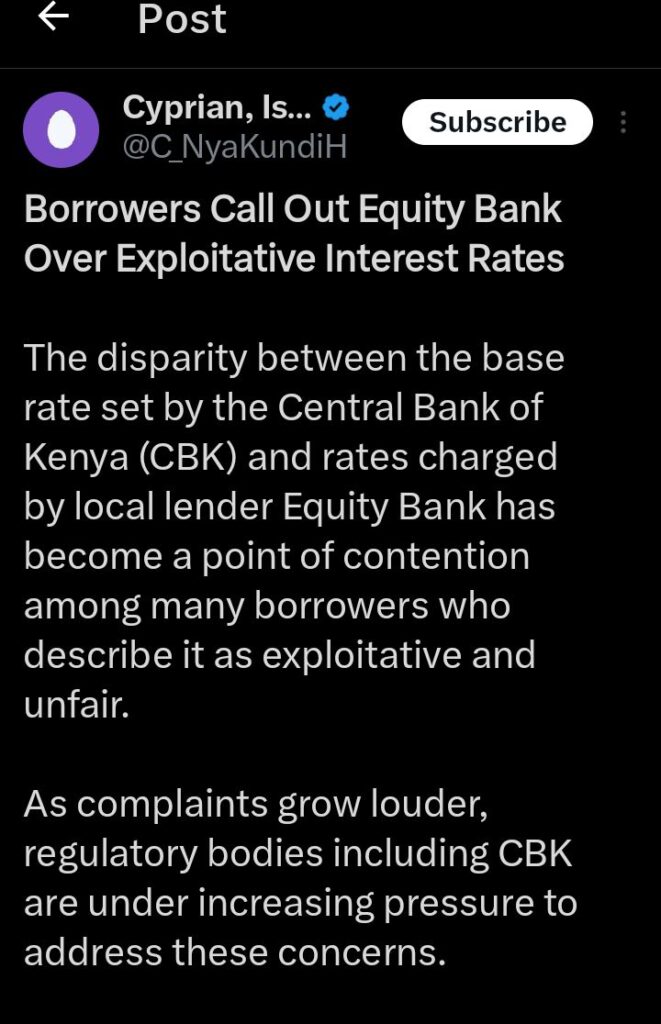
Cyprian Nyakundi, who has consistently fought for the rights of ordinary citizens, has amplified these complaints, urging regulatory bodies to step in and address the issue.
His efforts have shed light on the struggles of borrowers who feel trapped by what they see as unfair and predatory lending practices.
The growing outcry against Equity Bank has put the institution’s reputation on the spotlight.
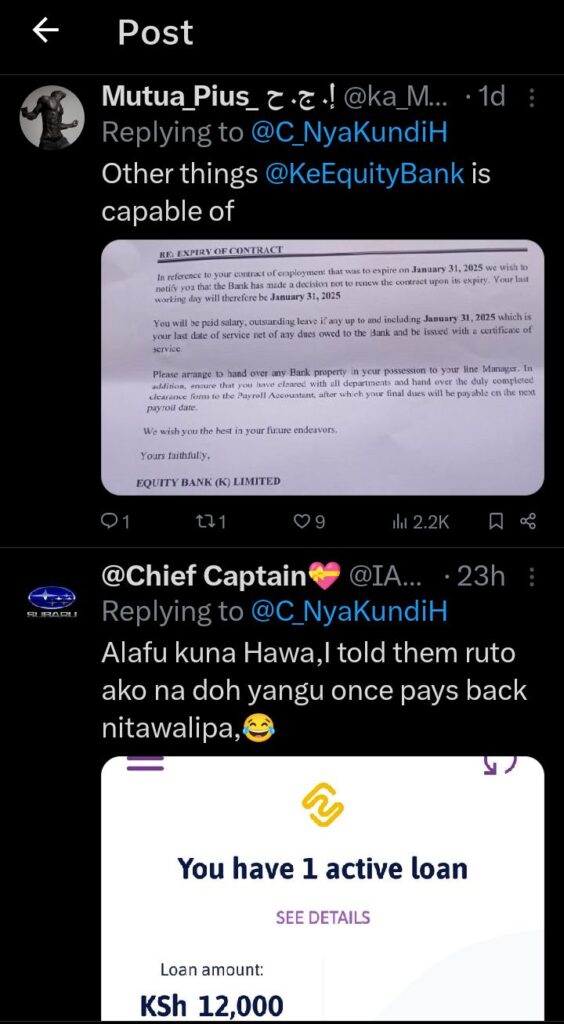
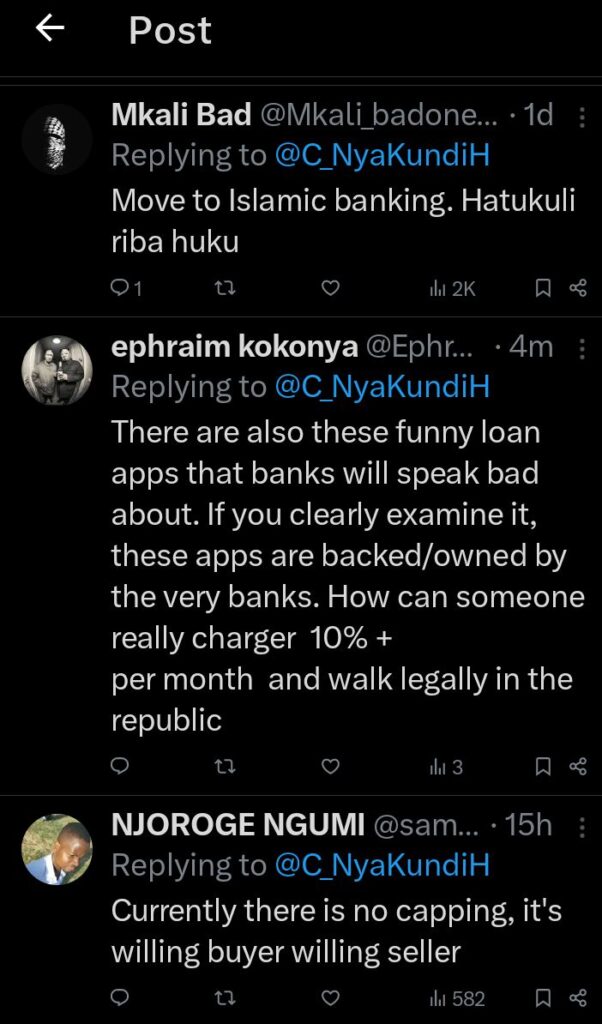
Many borrowers have taken to social media and other platforms to express their frustration, accusing the bank of prioritizing profits over the well-being of its customers.
One borrower, in a message to Cyprian Nyakundi, highlighted the stark difference between the CBK’s rate and Equity Bank’s charges, calling for an urgent discussion on the matter.
This sentiment has been echoed by countless others who feel that the bank’s practices are not only exploitative but also detrimental to the financial health of its customers.
Regulatory bodies like the CBK are being called upon to intervene and ensure that banks adhere to fair lending practices. The disparity in interest rates has raised questions about the effectiveness of current regulations and whether they are sufficient to protect borrowers from exploitation.
Cyprian Nyakundi’s exposure of this issue has brought much-needed attention to the plight of ordinary Kenyans who are struggling to repay loans with exorbitant interest rates. His advocacy has also sparked conversation about the need for greater transparency and accountability in the banking sector.
Equity Bank, once seen as a trusted financial partner for many, now faces a challenge to its reputation. The allegations of exploitative interest rates have not only damaged its image but also raised concerns about its commitment to serving its customers fairly.
It remains to be seen whether Equity Bank will take steps to address these concerns or if regulatory bodies will step in to enforce change. For now, the voices of borrowers grow louder, demanding fairness and an end to what they describe as unjust financial practices.














Add Comment