




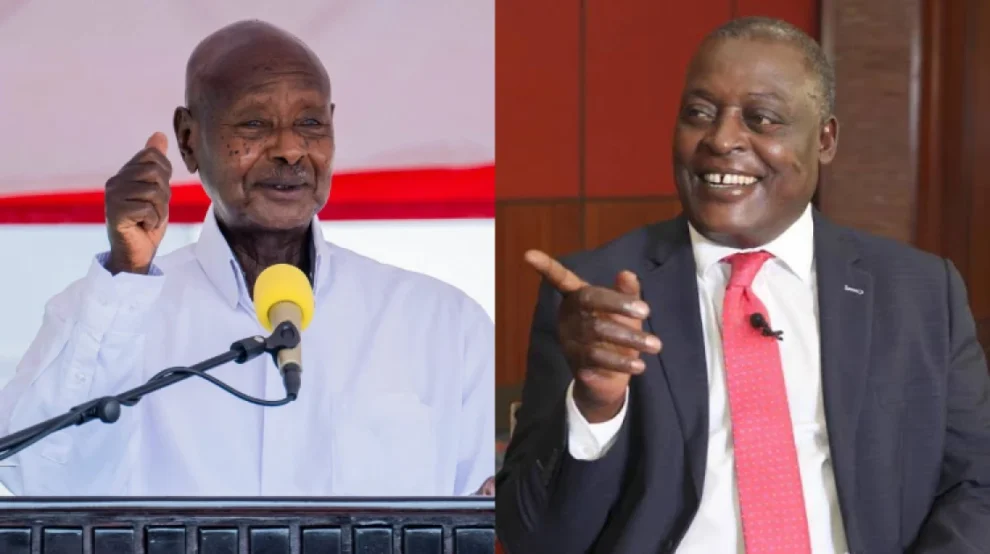

Ugandan President Yoweri Museveni has finally named the person who first warned him about a costly arrangement in which Uganda was buying its petroleum products through middlemen based in Kenya.
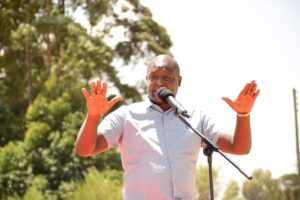
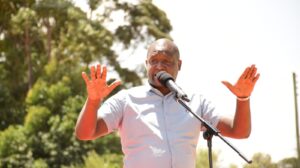
In a statement released to mark his 82nd birthday, Museveni said it was the late Kenyan politician Cyrus Jirongo who brought the issue to his attention back in 2019.
According to Museveni, Jirongo told him that Uganda was not dealing directly with suppliers but was instead relying on intermediaries operating out of Kenya. This meant the country was paying higher prices than necessary for fuel.
Museveni said he immediately instructed his then Energy Minister, Irene Muloni, to look into the matter and fix it. Despite that instruction, the arrangement continued for several more years.
The president first referred to the tip-off a few days earlier while breaking ground for a large fuel storage terminal in Mpigi District. At that event he mentioned a Kenyan “senator” who had woken him up to the problem, but he did not give a name. That vague comment set off speculation in Kenyan media, with some reports wrongly linking the story to former President Uhuru Kenyatta.
By naming Jirongo now, Museveni has cleared up the confusion. He also noted that Jirongo raised the issue long before William Ruto became president of Kenya and years before Kenya itself introduced a government-to-government fuel import system in 2023.
It is worth pointing out that Jirongo was never actually a senator. He served as a Member of Parliament for Lugari and briefly as Minister for Rural Development under President Daniel arap Moi.
He remained an influential figure in Kenyan politics for many years until his death in a road accident in December 2025.
Museveni explained that the middlemen problem was only properly resolved when Uganda signed a new supply deal with Vitol, a major global energy trading company, on 18 August 2023. Around the same time, Uganda changed its laws so that the Uganda National Oil Company became the sole importer of petroleum products.
The first direct fuel shipment under the new system arrived in July 2024.
The president said the change has brought clear savings. He gave figures showing that the premium on diesel fell from 118 dollars to 83 dollars per metric tonne, the premium on petrol dropped from 97.50 dollars to 61.50 dollars, and the premium on aviation fuel declined from 114.25 dollars to 79.25 dollars.
These numbers refer to the extra costs built into the supply price, not the final price paid by drivers at the pump.
Museveni also used the occasion to criticise what he called distortions by some Kenyan media outlets. Kenya’s Ministry of Energy responded by issuing a statement rejecting any suggestion of irregularities in the fuel trade between the two countries.
Even with the new commercial arrangements, Uganda and Kenya remain closely linked by geography. Most of Uganda’s fuel still arrives through the Port of Mombasa and travels inland along the shared oil pipeline.
The commercial middlemen may have been removed, but the physical route for the fuel has not changed.






Add Comment