






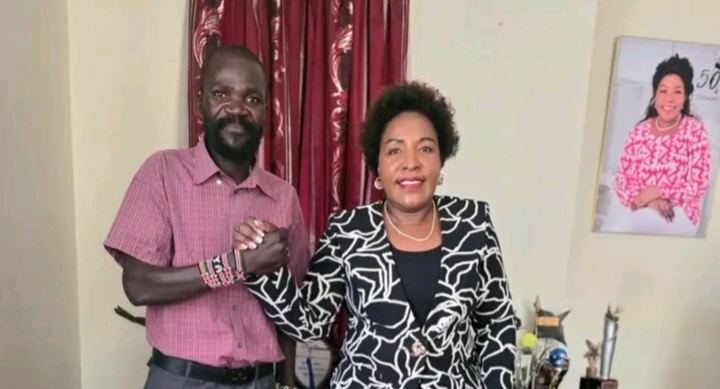

Nuru Okanga, a close ally and open supporter of Agnes Kagure in her bid for Nairobi governor, has come out with a sharp and highly personal attack on Homa Bay Governor Gladys Wanga.
In a video that has spread quickly online, Okanga accused Wanga of organising groups of young men who disrupted the Linda Mwananchi tour in Homa Bay County.
He claimed these actions caused chaos, injuries and even deaths during the event. What has drawn the strongest reaction is not only the accusation itself but the language Okanga used.
He made crude sexual remarks directed at the governor, telling her in plain street language that he would deal with her in a way that left little to the imagination and without protection.
The words were raw, public and aimed straight at a sitting woman leader.
This is not the first time Okanga has spoken in strong terms. He is known for his outspoken style and has previously thrown his weight behind Agnes Kagure, praising her background and saying she understands the struggles of ordinary people.
Kagure herself has posted about meeting him and calling him fiery and determined as they prepare for the coming campaigns. When a man who stands so close to a woman seeking high office chooses to attack another woman leader with sexual insults, questions naturally arise about the kind of politics being promoted.
Women who hold public office already face extra pressure. Adding sexual threats or crude language only makes that pressure heavier and sends a message that some people still believe such talk is acceptable when directed at female politicians.
The background to Okanga’s comments is the violence that hit the Linda Mwananchi gathering in Homa Bay. Reports from the organisers say people were injured, vehicles were damaged and at least two lives were lost.
Linda Mwananchi has since demanded that Wanga and other local leaders be investigated for their role or failure to stop the trouble. Wanga has responded by visiting the family of one of the victims and condemning political violence.
She has insisted that provocation and lawlessness have no place in society. In this tense atmosphere, Okanga’s video did not calm the situation. Instead it added fuel by turning a serious claim about security and public order into a personal and sexual attack.
Many Kenyans watching the clip have pointed out that this kind of talk lowers the level of political debate.
Accusing a governor of using goons is a serious charge that deserves proper investigation and evidence. Mixing that charge with sexual language distracts from the real issues of safety, free assembly and responsibility of leaders.
It also risks normalising disrespect toward women in power. Whether one supports Wanga or opposes her, the office she holds should command basic respect.
The same standard should apply to every woman who steps into public life, including those like Agnes Kagure who are still building their political platforms.
Okanga’s closeness to Kagure makes the moment more uncomfortable for her camp. Supporters of Kagure have presented her as a leader who cares about ordinary people, youth and the vulnerable. When her confidant uses language that demeans another woman, it creates a contradiction that is hard to ignore.
People will ask whether this is the tone that will define the campaigns ahead. Politics in Kenya is already heated enough without adding personal sexual insults.
Voters are looking for solutions to high living costs, poor services and insecurity. They are less interested in who can shout the crudest words.
The video has also drawn criticism from those who say it shows how quickly political arguments can slide into the gutter. Some have called on institutions that monitor hate speech and public order to take note.
Others simply expressed tiredness with the same pattern of accusations followed by personal attacks. In the end, the incident leaves a clear picture. A man closely linked to one woman politician has chosen to attack another woman politician with language that is both aggressive and sexual.
That choice does not strengthen any cause. It weakens the space for women in leadership and lowers the standard of public conversation at a time when the country needs better, not worse.














Add Comment