


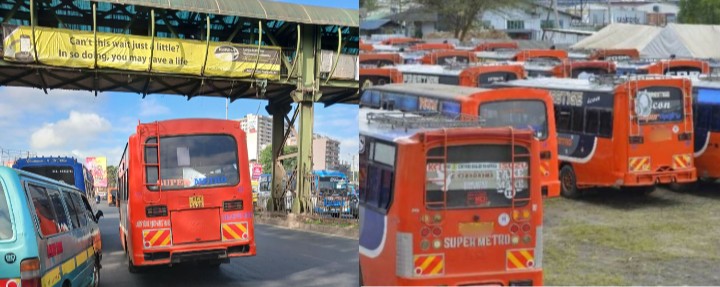

Cyprian is Nyakundi has once again put Super Metro under the spotlight after a daily commuter detailed how the company’s crew left him without his change at Ngara, Nairobi, on Friday morning.
The passenger, who boards Super Metro buses every day from Thika’s Ngoingwa area, said he paid his fare with a KSh1,000 note because he had no smaller denominations.
He made a point of alerting the conductor early that he would alight at Ngara so the balance could be ready.
When the bus reached the stop, the conductor refused to hand over the change and instead told him to continue into the city centre if he wanted his money.
The man explained he was already running late for work. According to his account, the conductor immediately climbed back inside and the driver accelerated away, taking the balance with them.
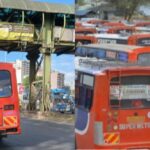
The vehicle in question is the red Super Metro bus registered KCX 141B. Photographs circulating with the complaint show the bus on a busy stretch of road, its branding unmistakable.
The passenger urged Kenyans to circulate the details and exercise caution when using Super Metro services.
This is not an isolated story. Super Metro has repeatedly found itself at the centre of complaints about how its crews handle money and passengers.
In March 2025, a passenger died after falling from a moving Super Metro bus along Thika Road during a dispute over a KSh30 fare difference.
That incident triggered nationwide outrage and was followed by the National Transport and Safety Authority suspending the company’s operator licence over a long list of violations, including expired inspection certificates, non-functioning speed limiters, unqualified drivers, and labour law breaches.
The company was ordered to present hundreds of vehicles for compliance checks and retrain dozens of drivers.Even before that fatal episode, Super Metro crews had faced disciplinary action for overloading.
The company’s own CEO previously confirmed that drivers and conductors caught carrying excess passengers face suspension or dismissal. Yet the pattern of confrontations over fare and change continues to surface with uncomfortable regularity.
For ordinary workers who rely on these buses to get to and from work, the issue goes beyond inconvenience. Losing KSh1,000 on a morning commute is not a minor inconvenience when wages are tight and time is limited. The insistence that a passenger must travel further than intended simply to recover his own money turns a routine journey into a power imbalance in which the crew holds the advantage.
Signalling a destination in advance, as this passenger did, should be enough. That it was ignored raises questions about training, supervision, and the incentives under which Super Metro crews operate.
Public transport in Nairobi already extracts a daily toll in time, comfort, and safety. When crews treat the change of large notes as optional, or as something passengers must chase into town, the system fails its most basic function: moving people reliably and fairly.
Super Metro markets itself as a structured, branded alternative to the older matatu free-for-all. Moments like the one at Ngara suggest the brand has not fully delivered on that promise.
The passenger’s account, amplified through Nyakundi’s platform, adds to a growing public record of friction between Super Metro and the people who keep its buses full every morning.







Add Comment