








A Kenyan man has been awarded Ksh 400,000 after successfully challenging a company that repeatedly contacted him with loan promotions despite never giving permission for his personal information to be used.
The ruling against Platinum Credit has drawn attention to growing concerns about privacy and the misuse of personal data by businesses across the country.
The dispute began when Samuel Kamau filed a complaint with the Office of the Data Protection Commissioner (ODPC). According to Kamau, he had been receiving numerous calls and text messages promoting loan products from Platinum Credit.
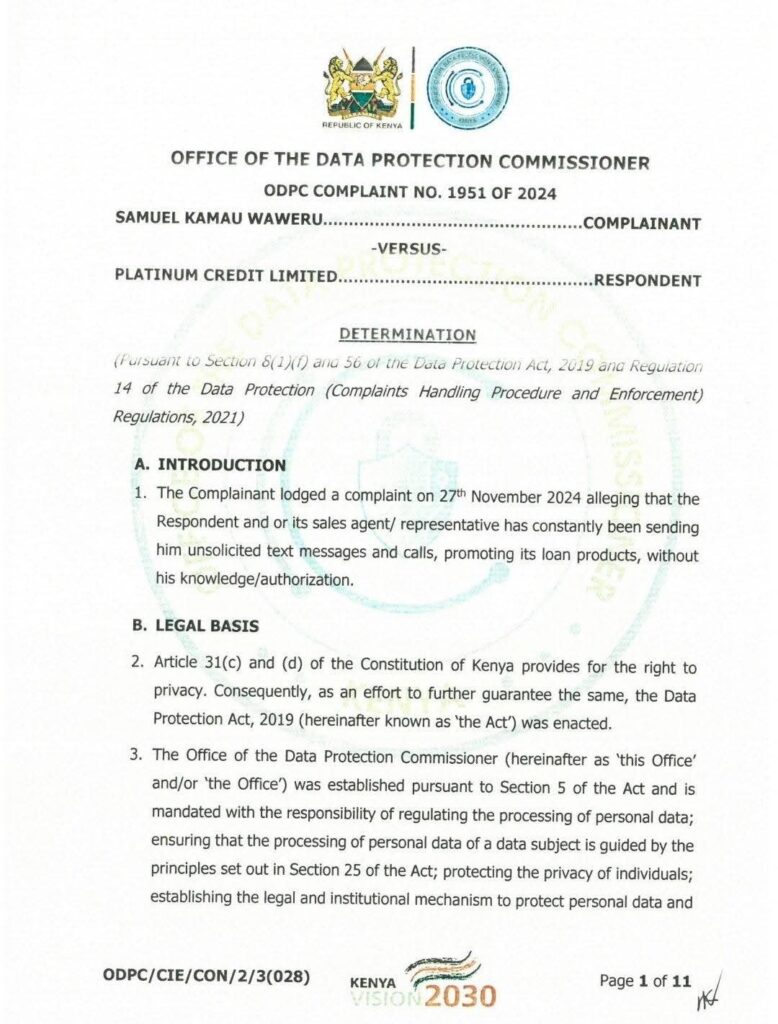
He maintained that he had never shared his phone number with the company and had never agreed to receive marketing communication from them.
During investigations, Platinum Credit attempted to distance itself from the calls by claiming that the individual who had contacted Kamau was not acting on its behalf. However, the investigation revealed otherwise.
Authorities established that the caller was indeed linked to the company, weakening its defense and strengthening Kamau’s complaint.
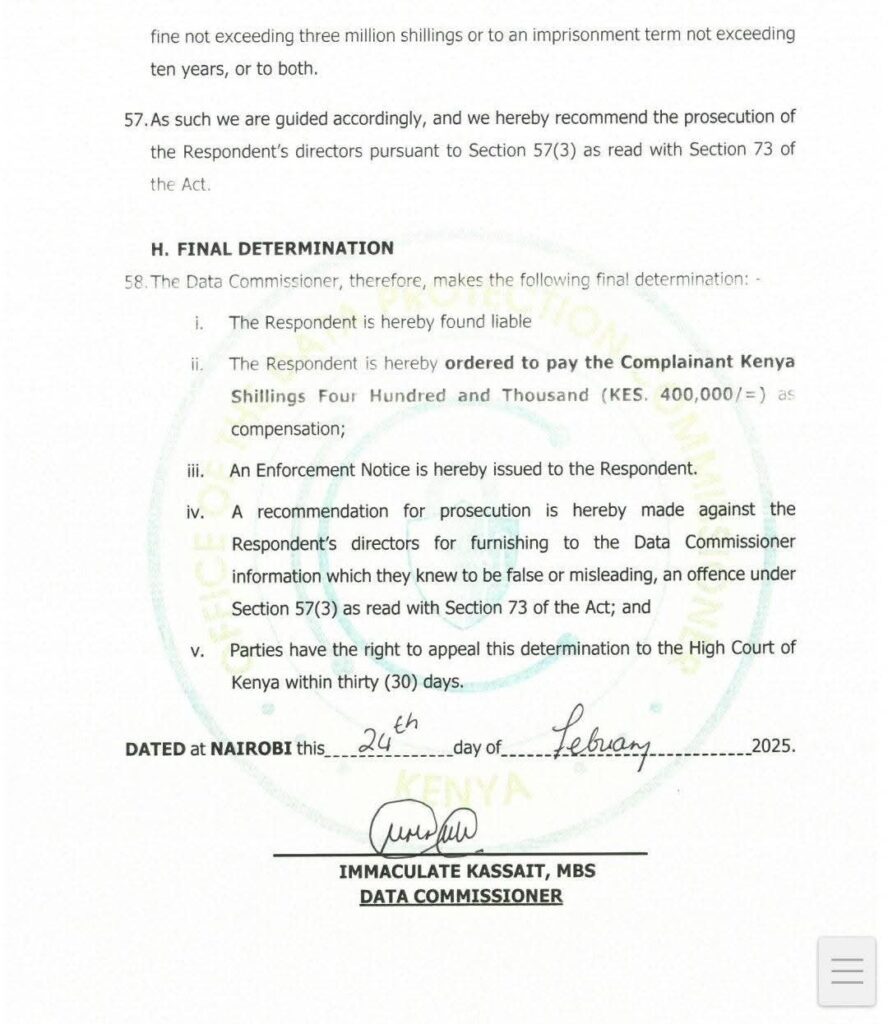
After reviewing the evidence, the Data Protection Commissioner concluded that Platinum Credit had unlawfully processed Kamau’s personal data.
As a result, the company was ordered to compensate him with Ksh 400,000. An enforcement notice was also issued, requiring corrective action.
In addition, the Commissioner recommended that the company’s directors be prosecuted for allegedly providing false information during the investigation.
The decision is significant because it goes beyond a dispute between one individual and one company. Many Kenyans regularly receive unsolicited marketing calls and text messages from lenders, insurance providers, and other businesses.
In many cases, people do not know how their phone numbers were obtained or whether their personal information was shared without their knowledge.
For years, such practices have frustrated consumers who feel their privacy is constantly being invaded. Unwanted calls and messages can disrupt daily life, cause stress, and create concerns about how personal information is being handled.
The ruling sends a message that companies cannot freely use people’s data without obtaining proper consent.
Kenya’s data protection laws require organizations to obtain clear permission before collecting or using personal information for marketing purposes.
The laws recognize that personal data belongs to the individual and should not be used without authorization. The Kamau case highlights the consequences that can follow when businesses ignore these requirements.
The compensation awarded is also notable because it demonstrates that violations of privacy rights can carry financial consequences. Companies that fail to respect data protection rules may face penalties that affect both their finances and their public image.
The recommendation to prosecute directors further shows that authorities are prepared to hold individuals accountable when misleading information is provided during investigations.
Kamau’s victory is likely to encourage more people to report similar experiences. It shows that ordinary citizens have legal avenues to challenge the misuse of their personal information.
More importantly, it reinforces the principle that privacy is a right that deserves protection. As awareness of data protection laws continues to grow, businesses may be forced to rethink how they collect, store, and use personal information.
The message from this ruling is clear: consent matters, and ignoring it can come at a costly price.














Add Comment