






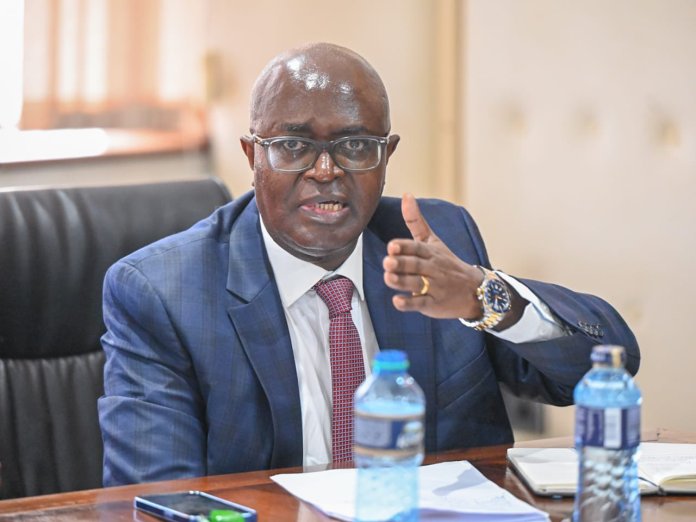

A Kenyan has filed a fresh High Court petition seeking to compel the Kenya Urban Roads Authority board to explain and produce records justifying Director-General Silas Kinoti’s continued occupation of the office following the alleged expiry of his second three-year term on June 18.
The suit by Francis Awino asks the court to examine the legal basis of Kinoti’s ongoing service and order disclosure of the original appointment letter, any renewal or reappointment instruments, board resolutions and related approvals.
The petition arrives roughly a month after a separate constitutional case filed at the High Court in Kiambu by Charles Omondi and Velma Ongalo.
That earlier petition, lodged on September 29, similarly questioned Kinoti’s authority to exercise the statutory functions of the office after the claimed end of his fixed term. The Kiambu court declined to certify the matter as urgent and scheduled a substantive hearing for November 16.
Awino’s case adds another layer of scrutiny to the same core issue of whether a valid, current mandate exists.
Kinoti was appointed substantive Director-General of KURA in June 2020 after serving in an acting capacity from 2015.
His first three-year term ran until June 2023. He then began a second three-year term that, according to the petitioners, expired on June 18, 2026.
By late September more than 100 days had passed without public production of a Gazette notice, board resolution, renewal letter or other instrument authorising continued service.
The new petition seeks precisely those documents so the court can determine the position under the applicable law.
Central to the challenges are amendments to the Kenya Roads Act passed in 2025.
The changes introduced a three-year tenure for the directors-general of KURA, the Kenya National Highways Authority and the Kenya Rural Roads Authority, with only one renewal permitted.
Petitioners argue the court must clarify how those provisions, including any transitional arrangements for serving officers, apply to Kinoti’s situation.
They also rely on a recent Court of Appeal decision holding that the expiry of a fixed-term public appointment does not create a legitimate expectation of automatic renewal.
The petitions do not claim that no supporting instrument exists. Rather, they assert that none has been furnished to the public or the applicants and that the documents, if they exist, are within the knowledge and possession of the KURA board, the Cabinet Secretary for Roads and Transport and related respondents.
The applicants therefore seek production of the records and, in the earlier case, conservatory orders restraining the exercise of certain statutory powers until a lawful mandate is demonstrated.
They emphasise that the challenge is not intended to halt the operations of the authority itself.
Public officers and state organs are required under the Constitution to observe the rule of law, transparency and accountability. Continued exercise of statutory authority after the pleaded end of a fixed term, without clear documentary support, raises questions about those principles.
The petitions ask the courts to resolve the uncertainty by requiring the production of the relevant instruments and by determining whether Kinoti presently holds a valid mandate.
KURA is responsible for the development, rehabilitation and maintenance of urban roads across the country.
Decisions taken by its Director-General affect contracts, payments, tenders and the daily management of significant public resources. Clarity on the legal foundation of the office is therefore a matter of public interest.
The two cases now pending place that clarity before the courts.
Awino’s petition specifically invites the High Court to examine whether the 2025 amendments permit continued service beyond the second three-year term and whether any formal board action extended or renewed the appointment.
The earlier Kiambu petition seeks declarations that the fixed term ended on June 18, 2026, subject to proof of any subsequent lawful instrument, and orders ensuring the functions of the office are exercised only under proper authority.
Neither petition has yet been finally determined.
The Kiambu matter is set for hearing in mid-November. The new case will follow its own procedural path. What is already clear is that the question of Kinoti’s continued stay in office has moved from internal administrative handling into open judicial examination.
The courts will now decide whether the documents exist, what they say, and what legal consequences follow for the tenure of the Director-General of the Kenya Urban Roads Authority.













Add Comment