





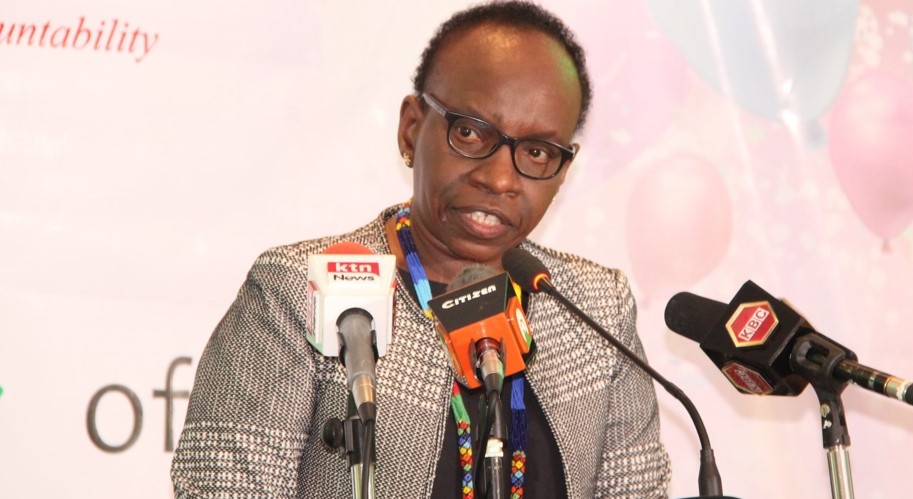

The government has failed to recover Sh4.2 billion in outstanding loans given to women and youth groups under the Uwezo Fund, Auditor-General Nancy Gathungu has reported.
This comes from the audited accounts of the fund for the 2024/25 financial year, which also show that a total of Sh8.1 billion in loans has been disbursed since the programme began in 2013.
The inability to collect a large share of that money has left serious questions about the future of the initiative.
Uwezo Fund was set up as a revolving fund to help women, youth and persons with disabilities start and grow small businesses. It forms part of Kenya’s Vision 2030 plans and is meant to support economic growth while helping reduce poverty. Loans are given out at the constituency level through local committees.
First-time borrowers can get between Sh50,000 and Sh100,000 under the Wezesha loan, while those who have repaid earlier loans can apply for up to Sh500,000 under the Endeleza product.
According to available figures, the fund has reached about 1.13 million members across the country. These include more than 54,000 women’s groups, over 27,000 youth groups and more than 2,000 groups for people living with disabilities.
It has also supported hundreds of thousands of individual beneficiaries. Yet the latest audit shows that a significant portion of the money given out has not been paid back.
Gathungu noted that some of the outstanding loans have remained unpaid for more than three years. This long delay has made it hard to confirm whether the amounts can still be recovered, or even whether the figures in the records are accurate and complete.
“The balance has been outstanding for over three years. In the circumstances, the recoverability, accuracy and completeness of the long-term outstanding loans could not be confirmed,” she stated in the report.
The audit also pointed to weaknesses in how the fund has been managed. Records showed gaps in documentation, approval processes and systems for tracking repayments.
In some constituencies, such as Muhoroni and Khwisero, individual loan accounts and details of who received the money were not properly kept. There were cases where groups got loans without clear evidence that the applications had been approved or that the required forms had been filled out.
These problems are not new. Earlier audits had already raised concerns about the fund’s inability to account fully for loans given out over the years and about weak internal controls at the constituency level. Some offices had even become inactive, which made follow-up on repayments more difficult.
Gathungu has previously warned that without better financial management policies, the fund risked serious trouble.
The Uwezo Fund was created with the hope of giving ordinary Kenyans, especially young people and women, a chance to build livelihoods through small enterprises.
The idea was that repayments would allow the money to be lent out again to more groups, creating a continuous cycle of support.
The growing amount of unrecovered loans, however, has created a large shortfall that affects this model. The Auditor-General has indicated that the effective management and recovery of the loans may not be achieved under the current controls.
Officials and lawmakers are expected to examine the findings more closely in the coming period.
The report underscores the gap between the original aims of the programme and the practical challenges of ensuring that public funds lent out for empowerment are returned so they can help others in future.
The situation leaves the fund facing pressure to improve its systems for tracking, approving and collecting loans if it is to continue serving its intended purpose.










Add Comment