






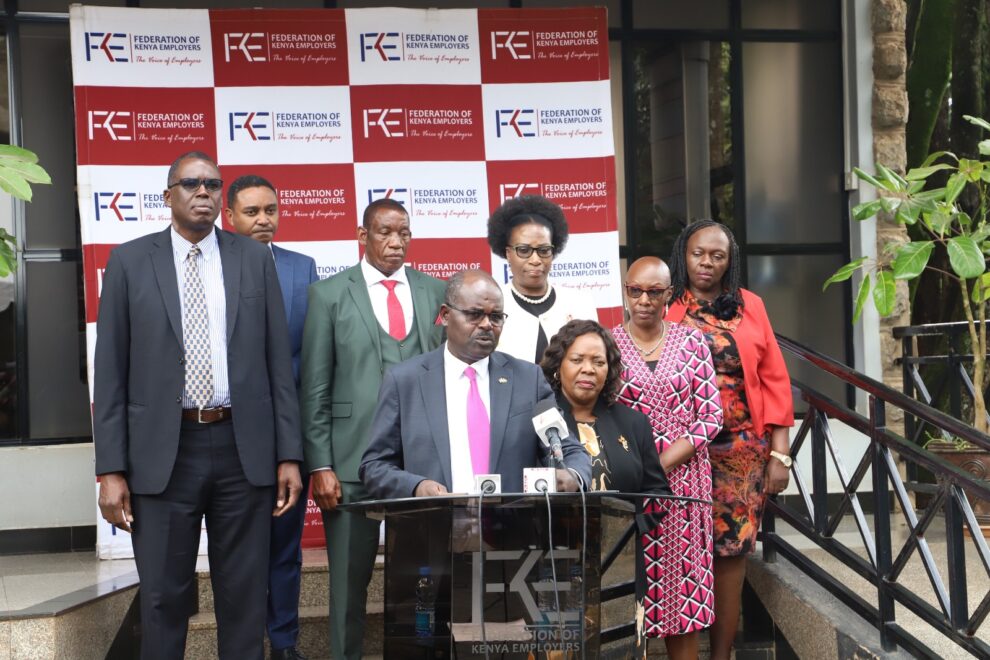

The Federation of Kenya Employers (FKE) has called for changes to Kenya’s social protection system to ensure workers in the informal sector can access support and savings programmes despite having irregular incomes.
FKE Executive Director Jacqueline Mugo made the call on Monday, October 5, 2026, during the 2026 National Social Protection Conference, where she urged the government and other stakeholders to find sustainable ways of financing social protection programmes.
Mugo said a large number of Kenyans working in the informal sector do not have regular access to social protection schemes.
She noted that the nature of informal employment makes it difficult for many workers to participate in systems that depend on regular salaries and contributions.
Among the proposals by FKE is the introduction of social protection financing specifically designed for workers in the informal sector.
The federation is also calling for digital and flexible contribution systems that would allow workers with irregular incomes to make payments whenever they are able to.Such a system would give informal workers greater flexibility instead of requiring them to make fixed contributions at set intervals.
This could be important for workers whose earnings change from one month to another depending on the availability of work and other economic conditions.
FKE is also proposing training programmes for people working in informal employment. The federation wants such programmes to provide workers with skills and employment opportunities that can help them become more resilient when they face economic difficulties or disruptions caused by events such as climate-related disasters.
The proposals come against the difference between formal and informal employment arrangements. Workers in the formal sector usually have identifiable employers, regular incomes and established systems through which statutory contributions and other protections can be administered.
Informal workers often operate without a conventional employer who can make regular contributions on their behalf.
They include people whose incomes may depend on daily business activities, casual work and other forms of self-employment.
The proposed changes could also affect existing social security programmes such as the National Social Security Fund (NSSF), particularly as the country seeks to expand contributory social protection to people outside formal employment.
NSSF has already introduced options aimed at allowing Kenyans without formal employment to save towards retirement. Those interested can register as Voluntary NSSF Members and make contributions directly through mobile money.
Under the voluntary arrangement, members can contribute Ksh200 each month or Ksh4,800 annually. NSSF also operates the Haba Haba na NSSF programme, which allows members to save flexibly on a daily basis, starting from Ksh25.
FKE’s proposal seeks to build on the need for wider access to such systems by making social protection more suitable for the realities faced by informal workers.
The federation’s call places emphasis on creating financing models that recognise the different income patterns of workers while ensuring they can continue contributing to social protection programmes.
For informal workers, greater access to social protection could provide support during periods when income is affected by economic or climate-related disruptions while also giving them an opportunity to build longer-term financial security.













Add Comment