





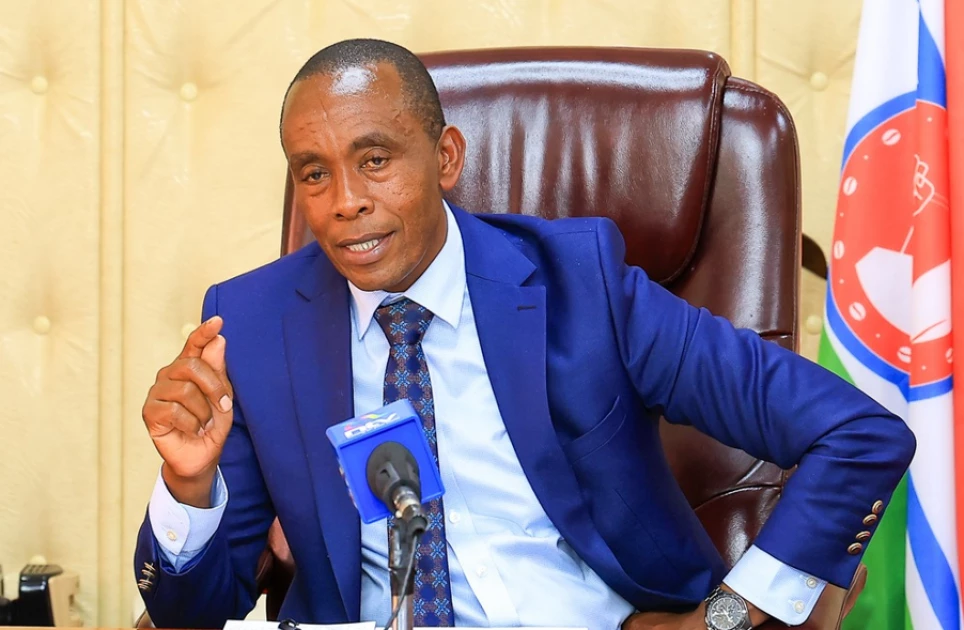

The Sh813 million asset recovery case involving Kiambu Governor Paul Kimani Wamatangi is set to return to the Milimani Anti-Corruption Court on Wednesday, September 30, 2026, when a ruling is expected in the long-running dispute.
The case was filed by the Ethics and Anti-Corruption Commission (EACC), which is seeking to recover Sh813,145,532.40 that it says was obtained through corrupt dealings. Wamatangi is listed as the first defendant alongside 13 others, including family members and companies linked to the case.
The EACC filed the suit at the High Court on October 31, 2025. The Commission claims the alleged transactions took place between the 2018/2019 and 2021/2022 financial years, when Wamatangi was serving as chairperson of the Senate Standing Committee on Roads, Transportation and Housing.
According to the Commission, Wamatangi used his position to influence the award of road construction and maintenance tenders to companies that it says were linked to him.
The contracts involved the Kenya National Highways Authority (KeNHA), Kenya Urban Roads Authority (KURA) and Kenya Rural Roads Authority (KeRRA).
The EACC further claims that investigations established that Wamatangi was the beneficial owner of companies that received the disputed payments.
The Commission alleges that ownership of some of the firms was moved to relatives and associates while Wamatangi remained a signatory to their bank accounts.
Five companies have been named in the case. They are Quick Fix Auto Garage Limited, King Realtors Company Limited, King Group Company Limited, King Construction Company Limited and Lub Plus Oil and Energy Company Limited.Court documents cited in reports indicate that King Construction Company received about Sh420.8 million from KeNHA, while Lub Plus Oil and Energy received about Sh246.5 million, also from KeNHA.
Other payments were reportedly made through KeRRA and KURA.The Commission alleges that the money was obtained through forged bid documents, false declarations of capacity and misrepresentation.
It wants the court to order the defendants to repay the money to the government, together with interest and damages for breach of public trust.
The EACC is also seeking orders to preserve funds and assets connected to the case, with the possibility of their eventual forfeiture if the court finds its claims established.
The dispute has also involved applications seeking to control the movement of the money while the case is being heard. In July 2025, the EACC obtained preservation orders over some of the accounts for six months.
After those orders expired, the Commission returned to court. On January 15, 2026, Justice Benjamin Musyoki issued interim orders stopping Wamatangi, his family members, the companies and their representatives from withdrawing, transferring or otherwise dealing with money held in five Family Bank accounts.
The orders were later extended on February 4 by Justice Hedwig Okwany, who was sitting in place of Justice Musyoki. The extension ran until March 17, 2026.
The court also directed the parties to exchange written submissions on the EACC’s application seeking to freeze the assets. At the same time, responses were allowed to an application by the first defendant seeking to have the case struck out.Wamatangi has denied the accusations and has criticised the EACC’s actions.
He has previously described a raid on his property as politically motivated and alleged that a senior EACC officer had vowed to damage his reputation.His legal team also indicated that it would challenge the Commission’s efforts to freeze the assets.
The Wednesday ruling will therefore be significant for the next stage of the case. It could determine the fate of the applications concerning the disputed accounts or address the application seeking to strike out the suit, depending on the matter listed for determination.
The EACC has described the case as one of its major asset recovery suits involving a sitting county governor.
The matter is separate from a criminal conviction and the scheduled ruling will not by itself establish criminal guilt. The court will instead determine the legal issues raised in the applications before it.
The case is among several matters the EACC has listed for determination during the week running from September 28 to October 2, 2026.












Add Comment