





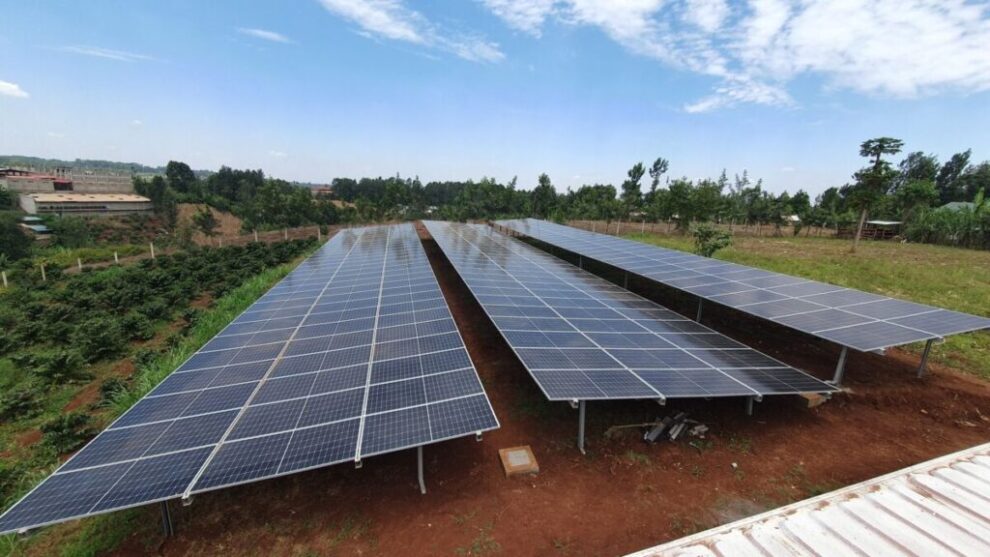

Solar power users in Kenya could now face extra costs if they feed excess electricity into the national grid without getting the required approval from Kenya Power.
The Energy and Petroleum Regulatory Authority (EPRA) has introduced a dumping surcharge targeting electricity that is supplied to the Kenya Power network without approval or a valid net-metering agreement.
The measure affects homes, businesses and other consumers that generate their own power and may have surplus electricity from their solar systems.
Under the amended 2023 tariff schedule, consumers who export electricity without the required approval will have the power treated as dumping.
They will then be billed using the applicable base tariff.The new requirement is linked to Kenya’s net-metering framework, which allows consumers who generate electricity for their own use to supply some of their surplus power to the national grid.
However, the arrangement requires an agreement with Kenya Power before electricity can be exported.
The Energy (Net-Metering) Regulations, 2024, provide for power systems with a capacity of up to one megawatt to supply excess electricity to the Kenya Power network.
Consumers using such systems are required to enter into a net-metering agreement before connecting their generation systems for export to the grid.
This means that having a solar power system does not automatically give a customer permission to send unused electricity into the national network. Consumers who want to export surplus power must follow the required approval and connection process.
Kenya Power has also warned consumers against unauthorised connections, pointing to possible safety concerns for its employees and risks to the wider electricity network.
The company has powers under the regulations to disconnect systems that threaten the safety, reliability or security of its distribution network.
The measures come at a time when solar and wind power are making up a growing share of electricity supplied during different periods of the day.
Kenya Power said on August 11, 2026, that variable renewable energy sources, mainly wind and solar, accounted for 34 per cent of the energy mix during daytime peak demand.
The company said the figure rose to 36 per cent during periods of low electricity demand. At the time, daytime peak demand stood at about 1,900 megawatts, while low-load demand was around 1,200 megawatts.
Kenya Power explained that changes in the amount of electricity produced by wind and solar systems can affect grid frequency and voltage.
When generation from these sources suddenly rises or falls, other electricity generators may need to adjust their output to keep the system stable.
The company said the increasing contribution of variable renewable energy creates challenges because production can change depending on weather conditions and other factors.
For households and businesses with solar installations, the new charges therefore place greater importance on following the approved process before exporting electricity.
Customers who only use solar power for their own needs are different from those seeking to supply surplus electricity to the Kenya Power network.
The regulations are intended to provide a formal way for consumers to participate in electricity generation while giving Kenya Power control over connections to its distribution system.
Consumers planning to export excess solar power will need to ensure that their systems meet the required conditions and that a valid net-metering agreement is in place.














Add Comment