






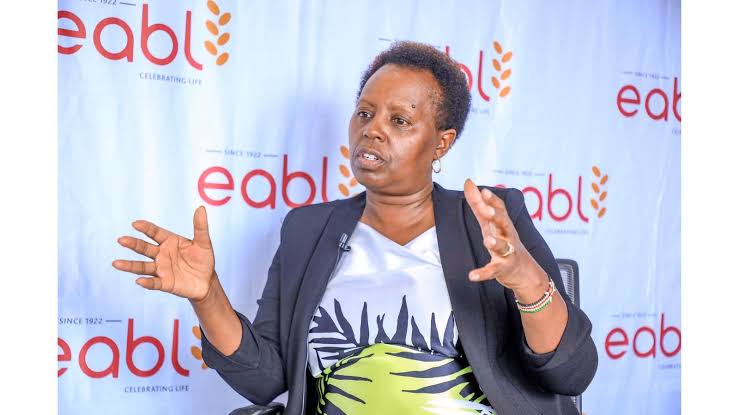

The Sh15.5 billion reserve fund CAK is demanding is not regulatory overreach. It is the bill for two decades of buried claims, a rigged tender offer and a distribution machine built to crush competitors.
East African Breweries Limited wants Kenyans to believe it is the victim of an overreaching regulator. That framing has been repeated dutifully in boardroom briefings, investor calls and now in the corridors of Parliament’s Finance Committee, where EABL and its incoming Japanese owner Asahi Group Holdings have described the Competition Authority of Kenya’s conditions on the Sh388.2 billion sale as unprecedented, unprocedural and unlawful.
It is a convenient story. It is also, on the documentary record, false.
The Competition Authority is demanding that EABL ring-fence Sh15.5 billion, four percent of the transaction value Asahi is paying for Diageo’s 65 percent stake, as a dedicated reserve for third-party claims that will still be alive after the British parent has banked its money and left the jurisdiction.
It also wants at least 20 percent of retail refrigeration space reserved for rival brands, a direct strike at the company-owned cooler network EABL has used for decades to control what Kenyans see on the shelf. Diageo’s response, delivered through a spokesperson, was that there is no basis whatsoever for either condition.
An ownership change does not erase claims. It erases the parent that could have been made to pay them.
What Diageo and EABL do not say, in any of their submissions to CAK or their public statements, is that almost every element the regulator is guarding against has already happened, has already been documented in court, or has already been fined by a regional competition body.
This is not a company defending itself against invented risk. It is a company trying to walk out of Kenya before the bill for its own conduct comes due.
A MARKET BUILT ON CHOKEHOLDS, NOT COMPETITION
EABL controls roughly nine in every ten beers sold in Kenya. That dominance was not accidental. CAK’s own merger review, laid out in a memorandum to the National Assembly signed by Director-General David Kemei, found that the company’s extensive distribution network, exclusive sales territories, product-placement arrangements and company-owned refrigeration equipment function together to foreclose rival manufacturers from key retail outlets, raise barriers to entry and reduce rivalry in markets that are already concentrated.
That is a regulator describing, in careful bureaucratic language, a company that decides which drinks Kenyans are allowed to find cold.
The refrigeration condition exists because EABL’s coolers are not neutral equipment. They are gatekeeping infrastructure, installed in bars and shops across the country on the understanding that only EABL and, soon, Asahi-branded products will occupy them.
A twenty percent carve-out for competitors is not a punishment. It is the minimum correction for a market where the dominant player has spent years deciding, cooler by cooler, who gets to compete at all.
BIA TOSHA: A DECADE OF STOLEN ROUTES AND A SUPREME COURT REBUKE
The clearest evidence that EABL’s dominance has a human cost sits in the ten-year fight with Bia Tosha Distributors. Bia Tosha paid roughly Sh38 million in goodwill for exclusive distribution rights across more than twenty lucrative Nairobi routes.
Kenya Breweries Limited, EABL’s operating subsidiary, later repossessed those routes. The dispute climbed the entire judicial hierarchy. In 2023 the Supreme Court reinstated High Court conservatory orders protecting Bia Tosha’s territory and directed the High Court to resolve contempt findings that had already been entered against EABL executives. Bia Tosha’s claim for lost profits runs to roughly Sh8 billion.
A separate attempt by Bia Tosha to freeze the Diageo-Asahi transaction itself was dismissed by the High Court in April 2026.
EABL and Asahi have seized on that dismissal as proof the underlying dispute is irrelevant to the sale. It is a selective reading.
The court declined to halt a share transfer over a commercial dispute; it did not declare the contempt findings resolved, the Sh8 billion claim settled, or the underlying conduct lawful.
Those matters remain open, against a company whose controlling shareholder is trying to exit before they are decided.
JILK CONSTRUCTION AND THE ARBITRATION NOBODY WANTS TO FINISH
A second live exposure sits with JILK Construction, which has pursued roughly Sh2.45 billion over civil works on EABL’s Kisumu brewery project under contracts dating to 2017 and 2018. The arbitration has been mired in allegations of conflicts of interest involving the arbitrator, claims that JILK’s demands were inflated from an original Sh163 million, and separate constitutional petitions alleging sexual harassment and abuse of female workers on the site.
JILK’s own attempt to halt the Asahi sale was dismissed by the High Court in June 2026, on the finding that the construction dispute was not sufficiently connected to the share transaction. Dismissed as a reason to block the sale is not the same as resolved as a claim against the company.
JILK is still owed money it has not been paid, over allegations EABL has not answered in public.
HEINEKEN’S OWN SUBSIDIARY CALLED EABL OUT, AND NAIROBI WENT QUIET
In April 2026, Kenya Wine Agencies Limited, majority owned by Heineken, filed a regulatory complaint with CAK accusing EABL of abusing its dominant market position through exclusive agreements that lock in distributors and suppliers and allow the company to dictate prices.
KWAL warned explicitly that an Asahi-owned EABL would only entrench those practices, and asked the regulator to impose conditions to protect smaller players.
Keroche Breweries and African Originals had raised similar concerns in earlier years, largely unheeded.
It took a Heineken-backed complainant, with the resources to be taken seriously, to force the issue onto CAK’s desk in the same window the Asahi deal needed clearance.
The dominant player’s own competitors told the regulator this deal would make things worse. CAK listened. Diageo called that unlawful.
THE COMESA FINE EABL WOULD RATHER KENYANS FORGET
EABL and Diageo insist there is no legal basis for treating the Asahi sale as anything other than a routine change of shareholder. Ten months before that argument was made to CAK, the COMESA Competition Commission concluded a four-year investigation into Diageo’s distribution agreements in Uganda, Eswatini and Zambia and found that they contained minimum resale price clauses, single-branding restrictions and territorial market allocation that breached regional competition law. Diageo settled for 750,000 US dollars in September 2025 and committed to strip the restrictive clauses from its contracts. The fine itself was trivial against Diageo’s global revenue.
What it established was not: an international regulator had formally found that Diageo’s African distribution playbook, the same playbook EABL runs in Kenya, is built on restricting competition rather than earning market share.
That finding landed less than three months before Diageo announced the Asahi sale. CAK’s insistence on a refrigeration condition and a claims reserve is not a novel theory of harm invented for this transaction. It is the same conduct COMESA already punished, applied to the one market, Kenya, where EABL’s grip is tightest and the exit was about to be cleanest.
THE BIGGER STORY: A SHAREHOLDER HEIST HIDING BEHIND A COMPETITION DISPUTE
The reserve fund fight has dominated headlines, but it is not the most damning part of this transaction. That distinction belongs to what Diageo did to its own minority shareholders on the Nairobi Securities Exchange, and what Kenya’s Capital Markets Authority let it get away with.
In October 2022, Diageo Kenya Limited launched a partial tender offer to lift its EABL stake from 50.03 percent to 65 percent, formally opening at Sh192 per share in February 2023.
The offer was oversubscribed. Diageo told the market and its regulators that the move reflected long-term commitment to EABL and confidence in East Africa’s growth. The CMA approved it.
The Nairobi Securities Exchange listed the additional shares. Fourteen months later, Diageo was negotiating to sell that same stake to Asahi at Sh590.51 per share, a premium of roughly 134 percent over the market price when the sale was announced.
Compare that with how Diageo treated shareholders everywhere else it has recently exited. When it sold its 80.4 percent stake in Guinness Ghana Breweries in July 2025, the transaction triggered a mandatory buyout offer to minority shareholders. When it sold Guinness Nigeria to Singapore’s Tolaram in October 2024, minority shareholders received a mandatory tender offer at a 63 percent premium over the market price.
Seychelles followed the same pattern. Only in Kenya did Asahi apply for, and receive, exemptions from the mandatory offer requirement from all three East African securities regulators.
The 35 percent of EABL held by ordinary Kenyan investors will get nothing beyond whatever the market happens to be trading at. No premium.
No offer. No exit alongside the controlling shareholder who is walking away enriched.
In Accra and Lagos, minority shareholders got a payday. In Nairobi, they got an exemption letter.
This is the substance of the petition filed by Nairobi shareholder Christine Irungu, which in June 2026 succeeded where Bia Tosha and JILK had failed. Justice Josephine Mongare of the Machakos High Court issued conservatory orders freezing the transaction entirely, restraining Diageo, EABL, Asahi and the regulators from completing, registering or giving effect to the sale pending a full hearing.
Irungu’s petition accuses the CMA of failing to protect minority shareholders from a control premium Diageo itself engineered through the 2022 to 2023 tender offer, and accuses CAK of failing to properly weigh the transaction’s effect on competition and the public interest.
The petition names Diageo Kenya Limited, Diageo Plc, EABL, Asahi, the CMA and CAK as respondents, with the Law Society of Kenya joined as an interested party. Those conservatory orders remain the single biggest obstacle standing between Diageo and its money.EABL’s response has been to write to Chief Justice Martha Koome, through its lawyers at Iseme, Kamau and Maema Advocates, warning that a cascade of parallel court cases across Nairobi and Machakos amounts to forum shopping that threatens Kenya’s reputation as an investment destination.
The company wants a single judge to manage every case touching the transaction, and wants the Competition Tribunal and Capital Markets Tribunal activated to take the disputes out of the ordinary courts altogether.
Read charitably, that is a company asking for orderly litigation. Read against the record, it is a company that has now lost in front of four different judges over four different theories, Bia Tosha, JILK, a first shareholder challenge by Shane Ngechu Irungu and 337 Frontier Capital, and finally Christine Irungu, and is now trying to change the venue rather than the facts.
GETTING PAID REGARDLESS
While the transaction sits frozen, Diageo is not waiting empty-handed. EABL declared a final dividend of Sh8.70 per share for the year ended June 2026, payable on 31 October to shareholders on the register as at 19 October, which puts Diageo in line for a further Sh4.47 billion even as the sale that is meant to end its Kenyan involvement remains stalled in court.
The National Treasury, for its part, is still counting on roughly Sh42 billion in capital gains tax whenever the deal eventually closes, a figure worth remembering the next time EABL frames CAK’s conditions as hostile to Kenya’s investment climate.
The state has its own multi-billion shilling stake in seeing this transaction handled properly, not rushed.
WHAT CAK GOT RIGHT
Strip away the outrage and EABL’s own numbers make the Authority’s case. This is a company with a 104-year operating history, in a market it dominates to the tune of ninety percent, that has been found by a regional competition regulator to have run restrictive distribution practices, that has a decade-old contempt finding against its own executives in the Bia Tosha matter, that owes an unresolved construction claim tangled up in harassment allegations, that was called out by a competitor backed by one of the world’s largest brewers, and that structured a shareholder premium so that only the outgoing multinational and the incoming one would benefit from it.
Diageo calling the reserve fund unprecedented is true only in the narrowest sense: Kenya has never before let a company with this specific accumulation of unresolved liabilities walk out the door without first being made to set money aside.
CAK started by asking for ten percent of the transaction value and settled on four percent after reviewing the actual scale of the claims against EABL.
That is not the posture of a regulator manufacturing a crisis. It is the posture of one that did the arithmetic and found it still uncomfortable for the company involved. Whether the reserve condition, the refrigeration carve-out and the Irungu petition survive the coming rounds of litigation is genuinely open.
What should no longer be treated as open is the premise EABL keeps repeating in every boardroom and every column inch it can buy: that it is the party being wronged here. The record says otherwise, in Sh8 billion increments.













Add Comment