






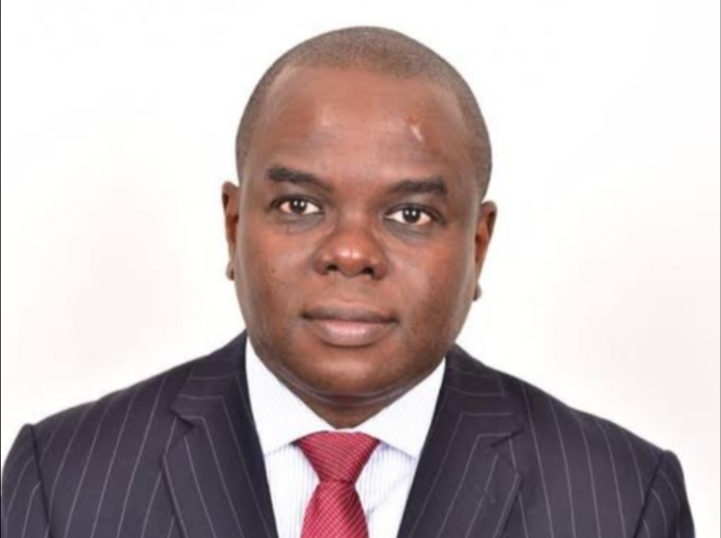

The Directorate of Criminal Investigations has fired back at Citibank Kenya, telling the High Court in a sworn affidavit that it is the bank, not the DCI, that is abusing the court process.
Detectives accuse the bank of filing frivolous applications designed to scuttle a criminal probe into how Sh261 million left Kiru Tea Factory’s accounts and ended up in the hands of people who, DCI now says, had no legal authority to borrow it in the first place.
The affidavit, sworn by Inspector Brian Musau on behalf of DCI Director Mohamed Amin, is the state’s answer to Citibank’s constitutional petition, in which the bank is trying to permanently block detectives from taking a statement from its Managing Director, Martin Mugambi.
The DCI wants the petition thrown out. Its filing does not merely defend the investigation; it reframes the entire case and discloses details Citibank’s own petition conveniently left out.
Citibank’s petition rests on the claim that DCI is unconstitutionally criminalising an ordinary commercial lending decision.
DCI’s response inverts that framing entirely. The agency told the court the bank has not shown the investigation to be vexatious, an abuse of process, or a violation of any constitutional right, and accused Citibank of doing exactly what it claims DCI is doing: misusing court procedure and trying to mislead the court.
That is a serious accusation to level at a global bank’s legal team in open court. It reframes eight months of Citibank litigation not as a principled constitutional stand but as a deliberate obstruction strategy, built, on DCI’s account, around procedural noise rather than substance.
Until now, public reporting had described the alleged offence in narrow terms: “negligently accepting a credit application.” Musau’s affidavit shows that framing was incomplete.
DCI says it is investigating conspiracy to defraud Kiru Tea Factory, falsification of records, unauthorised procurement of a bank loan, embezzlement of funds, and the fraudulent extension of a management agreement five distinct heads of inquiry, several of them squarely criminal.
The affidavit also rewrites the timeline. Coverage to date treated this as a case that emerged around June 2026, when search warrants became public.
But DCI’s own filings show the investigation is far older: inquiry file No. 58 of 2024 was opened after a complaint was received on June 11, 2024, two full years before Citibank’s petition.
Investigators obtained a court order on December 3, 2024, compelling the bank to produce the loan facility agreement, term sheet, corporate guarantee and the instructions authorising transfer of the loan proceeds. According to Musau, Citibank did not comply.
If accurate, that means the bank sat on a document-production order for roughly a year and a half before the standoff became public.
Kiru Tea Factory is owned by more than 8,000 farmer-shareholders, and DCI says the disputed loan was repaid using proceeds from tea sales money that would otherwise have gone to those farmers as bonuses.
If that detail holds up, the actual victims of this dispute are thousands of smallholder growers who effectively financed the repayment of a facility investigators say was procured by people with no authority to borrow on the factory’s behalf.One sequence in the affidavit deserves more scrutiny.
On June 15, 2026, investigators met Citibank representatives to discuss the concerns behind the summons. The very next day, DCI withdrew that summons by letter.
Yet Citibank filed its constitutional petition seeking a permanent shield roughly a month later. DCI’s affidavit does not explain why a bank that had just watched a summons withdrawn would then escalate to the High Court for blanket protection against future onesnunless Citibank expected, or had already been told, that fresh summonses were coming once investigators finished reviewing what the June 15 meeting produced.
Musau also pushes back on a specific claim in Mugambi’s own affidavit that he was unaware of the offences under investigation. DCI says the allegations were clearly disclosed in the 2024 miscellaneous application and in the summons itself, and that Mugambi’s claimed confusion is unfounded.
The bank’s CEO is not merely resisting a routine interview, in other words; DCI is telling the court he has been on notice of the specific criminal allegations for well over a year.
The most damaging material in the affidavit is the most checkable. DCI says the facility agreement for the Sh261 million loan was signed by Stephen Githiga who, according to Kiru’s official CR-12 company records, was not a registered director of the factory and therefore had no legal authority to bind it to a loan.
The board resolution that purportedly authorised the borrowing was approved, DCI says, by five individuals Michael Kamotho, Stephen Githiga, John Wandurwa, Yvonne Njoki and Francis Chege none of whom appear as registered directors on Kiru’s CR-12 filing. Supporting documents were executed by the same non-directors. A CR-12 is a public, searchable extract from the Registrar of Companies.
It is precisely the document a bank’s know-your-customer and credit-authorisation process exists to check before releasing two million dollars. DCI’s position is blunt: had Citibank done that basic check, it would have known the people signing for Kiru had no authority to sign for Kiru.
The agency grounds this in the Companies Act, 2015, which restricts the power to commit a company to financial obligations to its duly authorised directors and officers. If DCI’s account of the CR-12 mismatch survives cross-examination, it turns this from a dispute about process into a dispute about a fundamental failure a global bank’s credit desk allegedly either not pulling the one public document that would have stopped this loan, or pulling it and disbursing anyway.
Citibank’s petition is built entirely on procedure: rights to fair administrative action, equality before the law, protection of property. DCI’s affidavit is built entirely on documents: an inquiry file number, a miscellaneous application number, a compliance order the bank allegedly ignored, and a company registry extract that, if DCI’s reading is correct, exposes exactly who signed for a loan they had no power to take.
A court weighing those two arguments against each other is not just deciding whether Mugambi has to sit for an interview. It is deciding whether a bank can use eight months of high-priced constitutional litigation to keep a two-year-old, document-based fraud file from ever being tested.
Kiru Tea Factory itself has now asked to join the case as an interested party, arguing through its own advocate that the petition seeks to shut down an investigation that arose from its own complaint, and that the factory is best placed to speak to what actually happened to its money.
That application, alongside the substantive petition, is set to be heard on September 17.There remain open questions Citibank has not answered.
If, as DCI states, a court order compelled production of the facility agreement, term sheet, corporate guarantee and transfer instructions in December 2024, why on DCI’s account were those documents not produced, and what is Citibank’s version of that compliance history?
Did Citibank’s credit and KYC teams check Kiru’s CR-12 record before disbursing the loan, and if so, what did that check show about the authority of Stephen Githiga and the other signatories DCI now says were not registered directors?
Why did Citibank proceed to file a sweeping constitutional petition in July 2026, a month after DCI had already withdrawn the specific summons that petition was framed around?
Given DCI’s account that farmers’ bonus proceeds were used to repay the loan, has Citibank made any assessment of harm to Kiru’s 8,000-plus smallholder shareholders and if not, why not?
Citibank has not, as of this update, publicly responded to the specific claims in Musau’s affidavit the CR-12 mismatch, the 2024 inquiry file, the alleged non-compliance with the December 2024 production order, or the sequence between the June 16 summons withdrawal and the July petition.














Add Comment