






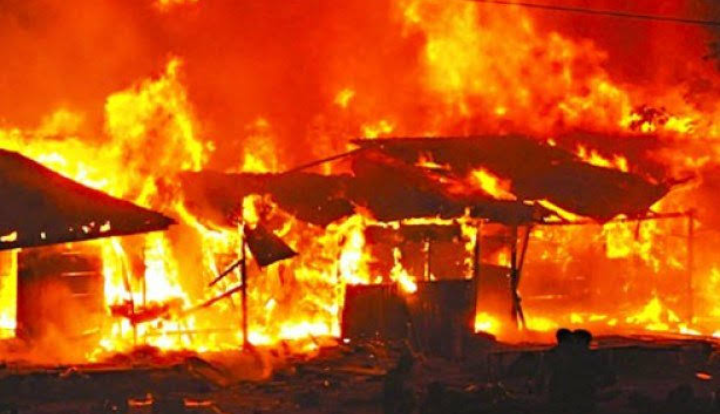

In recent days, a series of troubling fire incidents have struck multiple schools across Kenya, raising serious concerns about student safety and property damage.
The latest in this alarming trend occurred at Bukhalalire Secondary School in Busia and Ortum Boys in West Pokot, where dormitory fires broke out, causing significant destruction but thankfully no injuries.
These incidents occurred just a day after a similar fire gutted the dormitories at Njia Boys High School in Meru.
This growing pattern of school fires follows the tragic blaze at Hillside Endarasha Academy in Nyeri County, which took place a few weeks ago and claimed the lives of 21 students.
The Hillside incident was one of the most devastating school fires in Kenya in recent years, drawing nationwide attention and prompting calls for better safety measures in educational institutions.
In addition to these incidents, just days ago, a fire broke out at Isiolo Girls High School, where three students were injured in the chaos.
This adds to the list of recurring fires that have now spread across different regions of the country, from Meru to Busia to West Pokot.
Parents, students, and education stakeholders are now voicing growing concerns over the safety of students and the security protocols in place in boarding schools.
Investigations into these fires have been launched by local authorities, including the Directorate of Criminal Investigations (DCI), to determine whether there are underlying causes, such as arson or negligence.
Despite these efforts, the recurrence of fires has only intensified fears, with many wondering whether preventive measures are being adequately implemented.
In some cases, electrical faults have been suspected, but in others, arson by students or external individuals cannot be ruled out.
The Ministry of Education has been facing increasing pressure to take immediate action. Measures such as installing fire alarms, enforcing stringent security checks, and conducting regular fire drills have been proposed.
However, the effectiveness of these interventions will depend on their consistent implementation across the country’s many schools.
Education Cabinet Secretary Ezekiel Machogu has already issued directives for schools to ramp up their safety protocols, but much more needs to be done to reassure parents that their children are safe in school dormitories and classrooms.
In addition to the physical damage caused by these fires, the psychological impact on students is a growing concern.
Many students are reported to be living in fear, especially those who have witnessed or been affected by these incidents.
School life, which is supposed to provide a safe environment for learning and personal growth, is instead becoming a source of anxiety and distress for many.
The fires have also brought attention to the conditions of school infrastructure in Kenya. In many boarding schools, overcrowded dormitories and outdated electrical systems pose significant risks.
Schools with limited financial resources struggle to maintain the high safety standards needed to prevent such tragedies.
This has prompted some to call for government intervention and investment in upgrading school facilities across the nation.
Looking forward, it is essential that the government, school administrators, and the community collaborate to address this crisis.
While it is crucial to investigate and punish any individuals responsible for these fires, preventive measures must be prioritized to avoid further loss of life and property.
In the wake of the Hillside Endarasha tragedy, a national conversation on school safety is urgently needed to protect the students who are the future of Kenya.
Kenyans remain hopeful that a solution will be found to prevent further incidents.
Nonetheless, until significant changes are made, the fear of another catastrophic fire looms over the nation’s schools.














Add Comment