

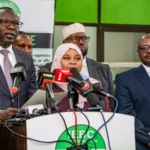




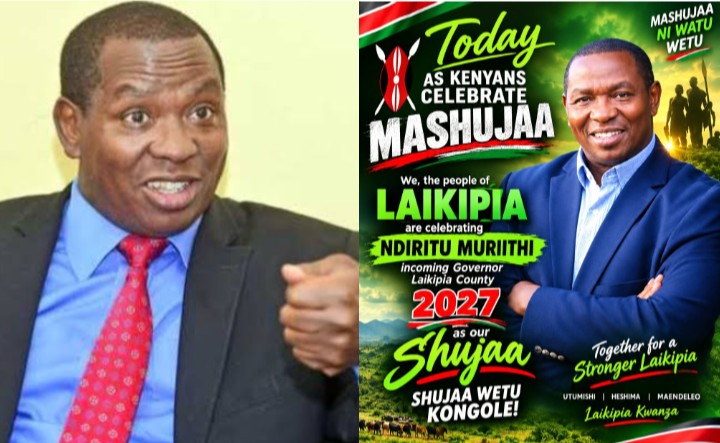

Ndiritu Muriithi sits at the top of Kenya’s tax collection body while eyeing a return to Laikipia’s top job. As Kenya Revenue Authority Board Chairman, he urges Kenyans to pay their taxes on time.
As a former governor and current aspirant, he talks about integrity, economic growth, and fair leadership.
Yet reports suggest he has drawn a firm line when it comes to settling his own political bills.
The Dual Role
Muriithi served as Laikipia Governor from 2017 to 2022. He won as an independent after missing the Jubilee ticket, then lost the seat to Joshua Irungu in 2022.
In late 2024, President William Ruto appointed him KRA Board Chairman. He took the oath in December 2024 and has spoken about making the authority more professional, fair, and service-oriented.
He has backed tax amnesty programs and called for systems that make compliance easier.
At the same time, he has returned to politics. In August 2026 he declared he would contest the Laikipia governorship again in 2027 on the Reform Party of Kenya ticket.
In late September 2026 he was elected unopposed as the party’s leader. His message centres on manufacturing, industrial parks, and inclusive leadership rather than ethnic politics.
The Influencer Reports
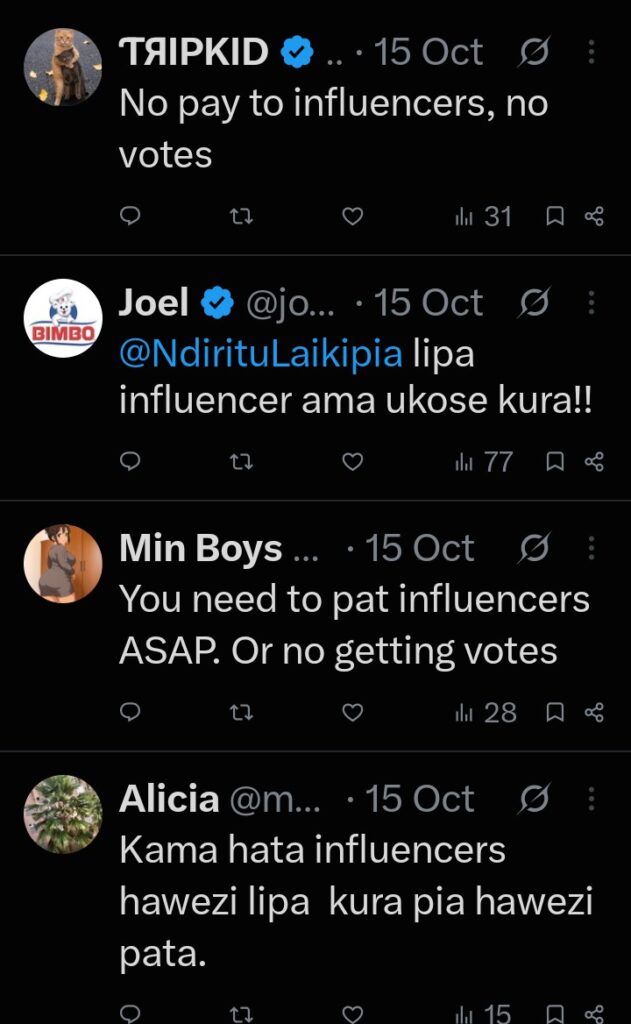
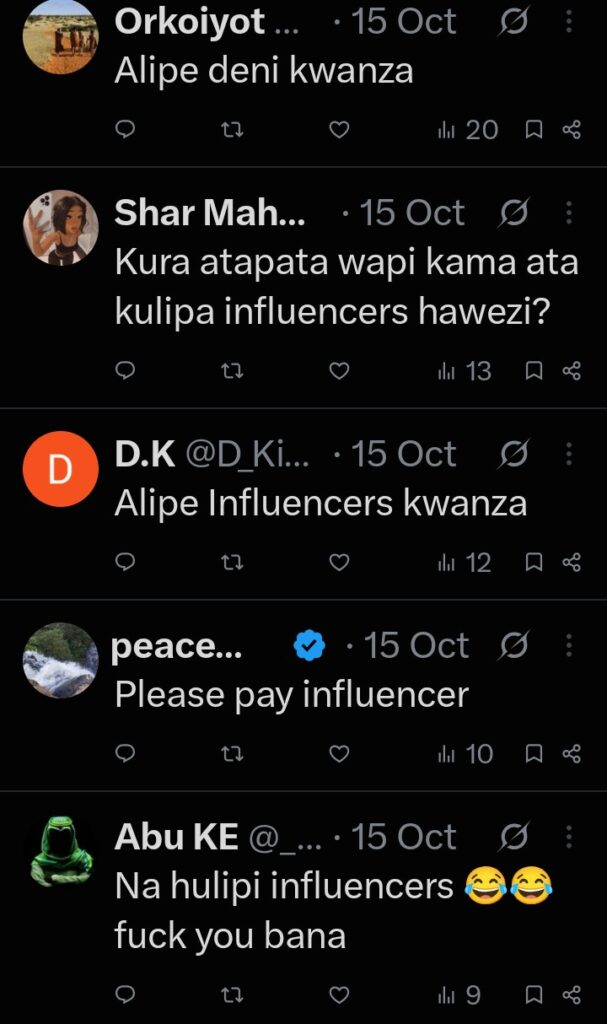
In early October 2026, social media posts accused Muriithi and his party of failing to pay digital influencers who promoted his election as party leader and his political rebranding.
Accounts claimed the creators amplified the news but were left unpaid.
One post from Kenyans Against Injustice tagged the KRA Chairman and called for intervention, saying paying influencers was where he “draws a red line.”
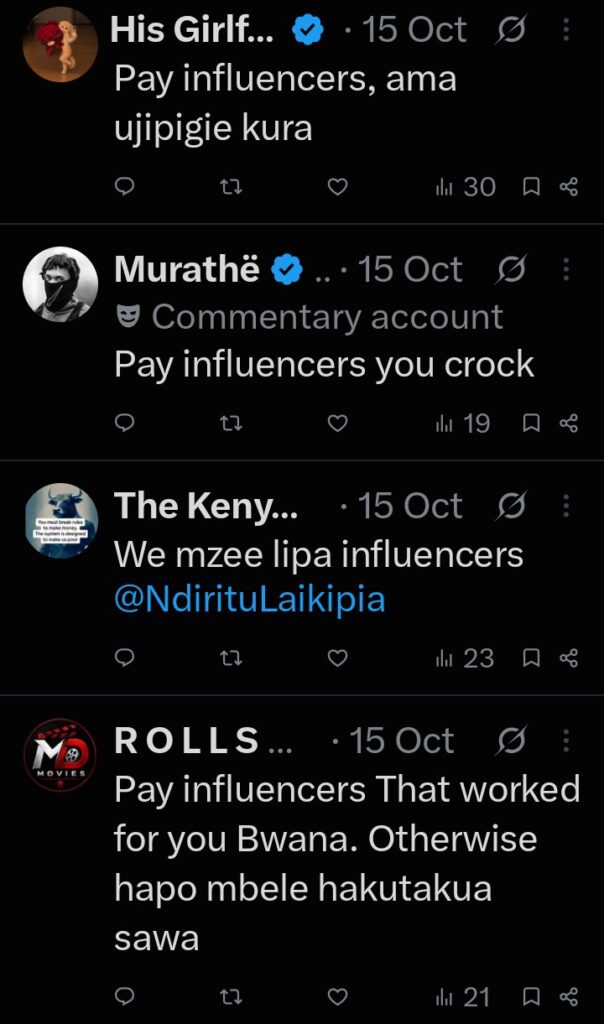
Muriithi, his party, and KRA have not issued a public response. They landed at a sensitive moment. Influencers have become a standard part of political communication, especially among younger Kenyans. When payments are disputed, the disagreement often becomes public.
The Contradiction
This is where the irony bites. Muriithi heads the body that collects taxes from ordinary Kenyans and businesses. He has stressed the need for people to meet their obligations. In the past he has also criticised political handouts, arguing that the money often comes from diverted public funds and that leaders who rely on them usually have weak development records.
Some residents have previously called him stingy for the same reason.
A man who collects public revenue and preaches against free money now faces claims that he has not paid the young people hired to sell his political message.
For a governor aspirant who promises competent and inclusive leadership, unpaid private political debts raise questions about reliability and consistency





Add Comment