








The government’s use of emergency spending powers has reached a four-year high, with the Office of the Controller of Budget (CoB) raising concerns over the growing reliance on Article 223 of the Constitution to finance public expenditure.
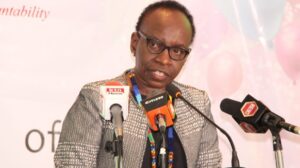
Controller of Budget Dr Margaret Nyakang’o reported that the government approved a record Ksh209.37 billion under the provision during the 2025/2026 financial year, raising questions about budget planning and the management of public funds.
Article 223 allows the government to spend money on urgent and unforeseen needs that were not included in the approved national budget.
However, the latest figures show that the provision is increasingly being used to meet spending demands across government institutions.
Of the Ksh209.37 billion approved during the financial year, Ksh187.90 billion went towards recurrent expenditure, while Ksh21.47 billion was allocated to development expenditure.
The figures represent the highest amount approved under Article 223 over the past four financial years.
The increase comes despite the Treasury’s commitment to reducing government spending, with the Controller of Budget warning that there has been little progress towards fiscal consolidation.
The figures also show a sharp rise compared with previous financial years. In 2022/2023, the Treasury approved Ksh103.68 billion under Article 223, but only Ksh69.2 billion was disbursed.In 2023/2024, approvals dropped to Ksh65.4 billion, with actual expenditure standing at Ksh19.2 billion.
The following financial year, 2024/2025, saw approvals rise to Ksh72.24 billion, of which Ksh66.56 billion was utilised.
The latest increase has raised concerns within the budget oversight office over both the frequency of requests and the nature of the expenses being funded through the constitutional provision.
Assistant Director of Budget Implementation Stephen Otieno said some of the spending requests were linked to routine government operations rather than urgent and unforeseen needs.
“Our concern is that some of them are related to day-to-day operations, so our concern was the rising use rather than the increase, as well as the nature of some of the operations that were being funded,” Otieno said.
Nyakang’o questioned why government institutions were increasingly turning to Article 223, noting that some entities had initially included the expenses in their budgets but failed to receive the required funding.
She explained that such institutions later seek money through the emergency provision when they find themselves unable to continue operating without it.
The Controller of Budget also raised concerns about county investment conferences organised to attract investors, arguing that the investment bodies involved operate outside the existing Public Finance Management (PFM) Act.
Nyakang’o said the bodies were not recognised as legal entities under the Act and did not report on their investment forums, making it difficult to establish how their activities were accounted for.
Parliamentary expenditure has also emerged as a concern, with Nyakang’o saying her office has limited visibility into how the National Assembly spends its annual allocations from the Exchequer.
She noted that the CoB relies on budget limits and expenditure reports submitted to the office, while the Auditor-General has the mandate to examine the details behind expenses categorised under other costs.
The concerns underline the challenges facing public spending oversight as the government continues to rely on additional funding outside its original budget allocations.










Add Comment