




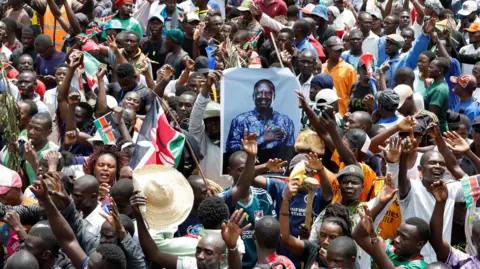

A recent investigation by BBC Africa Eye has raised serious questions about the events that took place during Raila Odinga’s farewell ceremony at Kasarani Stadium on 16 October 2025.
The report focuses on the fatal shootings of three mourners and links those deaths to the Police Escort Unit, the elite team normally responsible for protecting the president.
According to the findings, the three people who lost their lives were standing between 60 and 160 metres away from the area where clashes broke out near the VIP pavilion.
This distance is important because it challenges earlier claims that the victims were part of a crowd trying to force their way past the security perimeter.
The investigation examined more than 1,500 photographs and video clips from the day.
After reviewing this material, the journalists concluded that the three mourners were not close enough to the disturbance to pose an immediate threat that would justify the use of live bullets.
The Police Escort Unit is trained and equipped for close protection work. Its presence at a public mourning event, and the decision to fire live rounds in a crowded stadium, has left many people asking whether the response was proportional.
Families of the deceased and ordinary Kenyans who attended the ceremony have been waiting for a clear explanation of how the shootings occurred.
The BBC report does not claim to have all the answers, but it does present evidence that contradicts the initial police narrative.
Kenya has a long history of debates over police use of force during large public gatherings. When live ammunition is used and civilians die, public trust is damaged. In this case the victims were mourners paying their last respects to a major political figure.
The fact that they were far from the main point of conflict makes the deaths even harder to accept for many observers.
The investigation has already prompted fresh calls for an independent inquiry.
Civil society groups and opposition figures want to know exactly who gave the order to open fire, what rules of engagement were in place that day, and whether any officers have been held accountable.
Official statements so far have been limited, and the full details of the internal police review, if one exists, have not been made public.
Three families are still grieving. Hundreds of others who were present that afternoon carry memories of panic and confusion. The questions raised by the investigation will not disappear quietly. They point to a wider need for clearer rules on when and how armed units may use lethal force in crowded public spaces.
Until those questions receive transparent answers, the events at Kasarani will remain a painful and unresolved chapter in recent Kenyan history.










Add Comment