






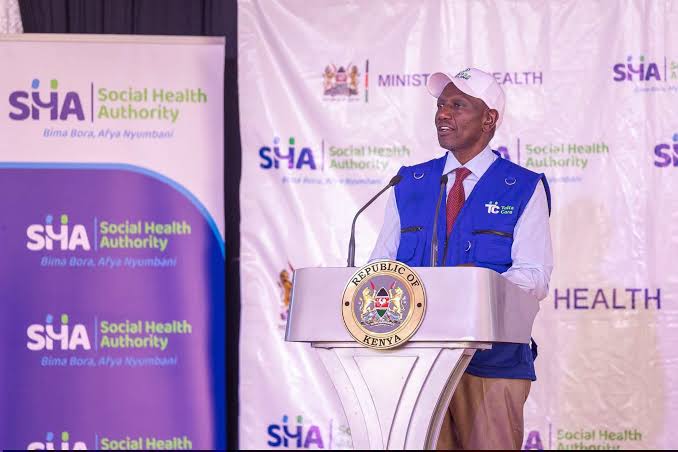

The government’s decision to move health facilities from the Social Health Authority (SHA) Provider Portal to a new Health Management Information System (HMIS) has reopened questions about the cost, design and accountability of the country’s new health insurance system, with activist and Busia Senator Okiya Omtatah having raised concerns about the programme long before the latest digital transition.
Omtatah was among petitioners who went to court in 2024 seeking to stop the rollout of the Social Health Insurance Fund and challenging the procurement of the Integrated Healthcare Information Technology System meant to support universal health coverage.
The petitioners questioned the legality of the rollout and the Sh104.8 billion technology contract awarded to a consortium led by Safaricom.
The Sh104 billion figure has since remained at the centre of the public debate. In April 2026, Omtatah again questioned the cost of the SHA system, saying the government had indicated that the software was worth Sh104 billion.
President William Ruto has disputed the description that Sh104 billion was simply spent by the government to buy the system, saying the platform operates under a fee-for-service arrangement.
That difference is important. The Sh104 billion figure should not automatically be described as money that disappeared from public coffers. It relates to a long-term technology arrangement involving the development and operation of the healthcare information system.
The original contract was structured around a 10-year investment and recovery period and included equipment, connectivity, cloud services and other technology infrastructure.
Even so, the questions surrounding the project have not gone away. In March 2026, the High Court upheld the legality of the Social Health Insurance Fund but found that the October 2024 rollout violated Kenyans’ right to health because of disruptions in access to essential services.
The court also faulted the lack of public transparency surrounding the Sh104 billion procurement.
Against that background, the latest changes are likely to attract scrutiny. Health Cabinet Secretary Aden Duale announced that health facilities would move from the existing SHA Provider Portal to HMIS, initially setting September 30 as the deadline and warning facilities that failed to migrate could lose access to the system. The government said the new platform would improve patient verification, claims processing and the fight against fraud.
However, the September deadline was not maintained. On October 1, the Ministry of Health extended the migration period by one month, giving facilities that had not completed the process until October 30 to make the switch.
Duale said the extension was intended to provide additional time and technical support and assured the public that patients would continue receiving services during the transition.
The change therefore raises a straightforward accountability question. If the previous system was developed at such a significant cost and was expected to support the country’s universal healthcare programme, Kenyans deserve a clear explanation of what is being replaced, what remains usable, what the transition is costing and who owns the technology and data involved.
The government has pointed to fraud control as one reason for strengthening digital systems. Facilities have faced tighter verification requirements, including biometric checks, as authorities seek to prevent fraudulent claims.
Those measures can help protect public funds, but accountability cannot end with individual hospitals or healthcare workers accused of abusing the system.
The bigger issue is whether the entire health financing and technology framework is delivering what citizens were promised.
Millions of Kenyans contribute to the scheme expecting access to medical care when they need it. For them, changes in portals and digital platforms are not merely technical matters.
A failed verification, delayed approval or system problem can mean a patient waiting for treatment or a family being forced to find money it does not have.
Omtatah’s earlier court challenge therefore remains part of the wider record surrounding SHA.
His concerns were not simply about opposing health reform. They included questions about the legal basis of the system, the procurement process and the large technology contract. Some of those questions have since been examined by the courts, with the High Court raising concerns about transparency in the procurement.














Add Comment