



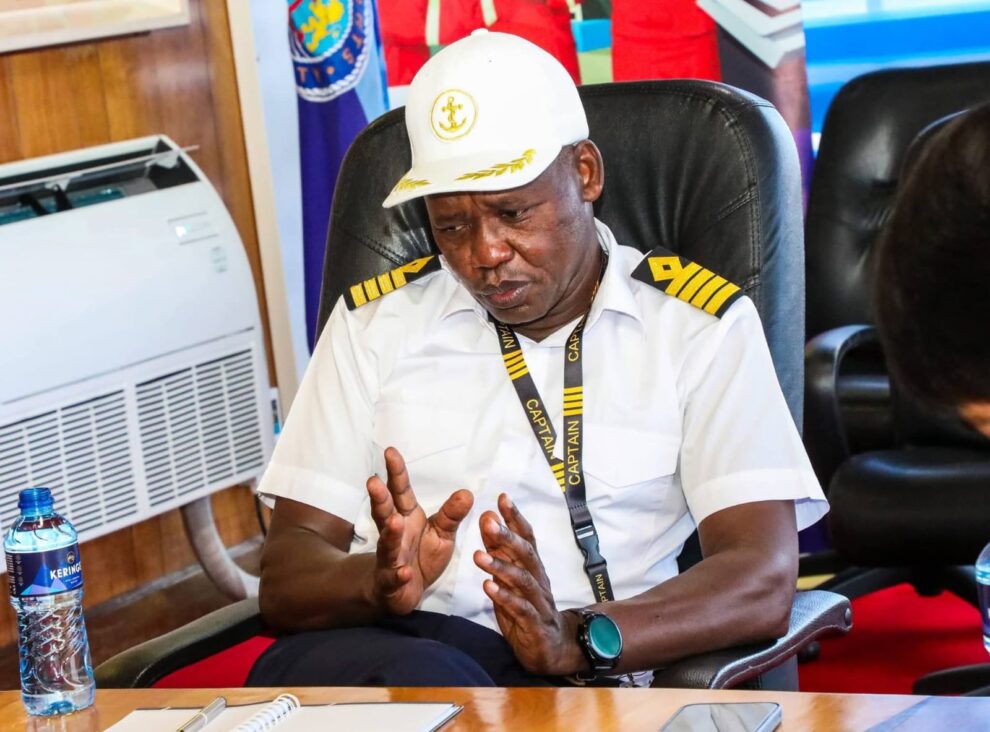

Members of Parliament have raised serious concerns over a multi-billion shilling road project at the Port of Mombasa while questions continue to grow about the legal status of the Kenya Ports Authority managing director, Captain William Ruto.
Captain Ruto has been at the helm of the authority since March 2023. His three-year appointment, made by the then Transport Cabinet Secretary, ended on 9 March 2026.
Six months later he remains in office, signing contracts and receiving a salary. Two separate petitions filed in the High Court in Mombasa now ask the court to determine under what legal authority he continues to hold the position.
One of the petitioners, Francis Awino of Bunge la Mwananchi, has asked the court to suspend him from office and freeze his salary payments until the matter is resolved.
The court has already certified one of the applications as urgent. The legal difficulty is compounded by a change in the law. In December 2025 the Government Owned Enterprises Act came into force and repealed the earlier statute under which Captain Ruto was appointed.
Under the new law, the chief executive of such an enterprise is supposed to be competitively recruited and appointed by a properly constituted board. Public records show that the Kenya Ports Authority board still lacks the required independent directors.
The National Treasury advertised for those positions earlier this year, listing the authority among the bodies that needed them.
While the tenure question sits before the courts, the National Assembly’s Transport and Infrastructure Committee visited the port this week and focused on another matter: a contract to widen Port Road from the Gantry Workshop to Gate 18/20.
The tender, valued at Sh8.344 billion including VAT, was awarded to a joint venture of Stecol Corporation and Miliki Development Company. Committee members were troubled by the unit cost. Depending on whether the road is measured at 1.4 or 1.8 kilometres, the price works out at between Sh4.6 billion and nearly Sh6 billion per kilometre.
Committee chairman George Kariuki told officials the figures had already attracted public suspicion and demanded the full tender documents.
He said Parliament would push for a special audit. Ruaraka MP Tom Kajwang questioned whether the authority had the legal power to commit such large sums of internal revenue without going through the National Treasury and the National Assembly.
Captain Ruto has previously defended the project, describing it as a specialised transport interchange rather than an ordinary road. He has pointed to the need for an elevated section because of an existing fuel pipeline and operational buildings that could not be removed.
Critics note, however, that large portions of the budget are allocated to variations, contingencies and preliminary items, including site offices for the contractor.
By the end of June 2025 the project was only 1.2 percent complete, yet more than a fifth of the contract sum had already been paid out. By June 2026 the authority reported progress of 49.3 percent.
The contractors themselves have also drawn attention. Stecol Corporation, the lead partner, is a rebranded successor to a firm previously blacklisted by the African Development Bank over a road contract in Uganda.
Its local partner has little public record of large civil works. Neither fact proves wrongdoing, but members of the committee say it underlines the need for full disclosure of the bidding process.
These issues now sit alongside earlier questions about other large contracts awarded during Captain Ruto’s tenure. Taken together, they leave the authority facing both a court challenge over its leadership and parliamentary scrutiny of how public money is being spent on one of the country’s most important pieces of infrastructure.







Add Comment