





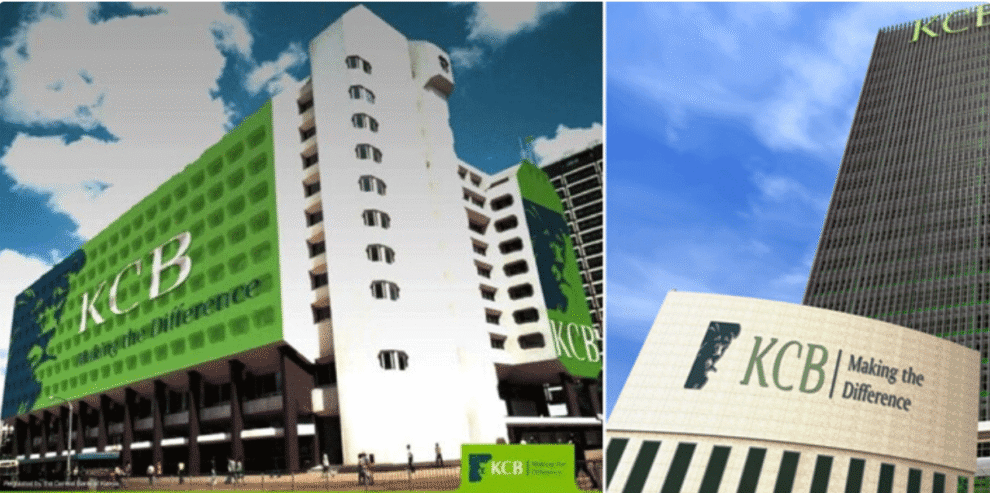

The elationship between Powel Ochieng Oyugi and KCB Bank was not just that of a customer and a financial institution. It was also a landlord and tenant arrangement.
Powel operated his stitching workshop from premises owned by KCB. He paid rent quarterly and in advance, meaning every three months he was required to have the full amount ready before he could continue operating.
Powel occupied two units, each going for fifty-five thousand shillings. For every quarter, he was expected to pay three hundred and thirty thousand shillings.
However, records shared online indicate that he was billed four hundred and sixty-five thousand shillings for the next quarter.
This was a significant increase that came at a time when his business was already facing difficulties.
The trouble began when a business transaction with a partner in India collapsed.
This affected Powel’s ability to meet his financial obligations, including the rent owed to KCB. Instead of working out a payment plan or offering some form of relief, the bank moved to recover what it was owed through auctioneers.
What followed was the seizure of Powel’s business assets. His stitching machines, valued at nine hundred and fifty thousand shillings, were taken. Branding machines worth two hundred thousand shillings were also carted away.
Even office tables valued at fifteen thousand shillings were not left behind. In total, assets worth one point two million shillings were seized from his workshop.
The auctioneer who took the items later valued them at only two hundred thousand shillings. This means that equipment worth over a million shillings was disposed of at a fraction of its worth.
For a small business owner, this represented a complete loss of the tools needed to earn a living and rebuild.
This sequence of events has raised questions about how financial institutions handle customers who fall into difficulty.
While banks have a right to recover has left one entrepreneur without the means to continue his trade. The loss of his machines meant the end of his ability to generate income from stitching and branding work.
The case has attracted attention online, with many people expressing concern about the treatment of small business owners by large institutions.
Some have called for support to help Powel rebuild his life and business. Others have questioned whether alternative measures could have been taken before resorting to auctioneering.
For those who wish to assist Powel in his recovery, contributions can be sent through MPESA to 0792354903 under the account name Powel Ochieng Oyugi.
The appeal is not about assigning blame but about helping a fellow Kenyan get back on his feet after a devastating financial setback.
KCB Bank has not publicly commented on the matter. However, the events as shared paint a picture of a business relationship that ended with one party losing everything while the other recovered its dues.










Add Comment