






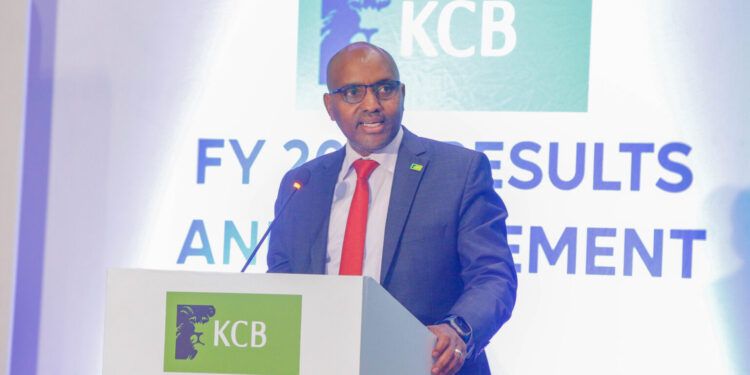

Questions over the working environment at Kenya Commercial Bank (KCB) have intensified following the death of senior executive Rosemary Koech Kimwatu, with a human rights group demanding an independent investigation into both the circumstances of her death and claims of a toxic workplace culture at the bank.
The Alliance for Human Rights Activists has called for a full investigation, saying all physical and electronic evidence connected to Kimwatu’s death should be preserved.
This includes emails, system logs, audit trails and internal communication records. The group has also challenged the reported conclusion that Kimwatu died by suicide and threatened mass action outside KCB headquarters if its demands are not addressed within 72 hours.
Kimwatu, who was KCB Group’s Head of Data Protection, was found dead at her home in Ngong on August 2, 2026. She was a mother of four and had spent close to two decades building a career in law, fintech, public policy and technology before joining KCB in June 2022.
What has made the matter more serious are accounts from current and former employees who claim that workplace pressure at the bank goes beyond ordinary demands associated with a high-pressure financial institution.
They have described public criticism, excessive workloads, humiliation and an atmosphere in which employees allegedly feel afraid to challenge senior managers.
Kimwatu herself had raised concerns with KCB’s Human Resources department in May, about three months before her death.
In her complaint, she raised serious accusations against Group Chief Risk Officer Faith Basiye, including claims of bullying, public humiliation and excessive workload.
She also alleged that Basiye had worked with her estranged husband to have her committed to a mental health facility.
The complaint was reportedly copied to Group CEO Paul Russo and Managing Director Annastacia Kimtai. This now raises a crucial question: what happened after Kimwatu formally reported her concerns?KCB has not publicly released details showing whether the complaint was investigated, who handled it or what conclusions were reached.
That lack of clarity has left employees, colleagues and members of the public demanding answers.
Leaked emails have also emerged in which Kimwatu reportedly described her relationship with her boss in deeply negative terms and made claims involving Basiye and her estranged husband.
Those claims require proper investigation rather than speculation, but their existence makes the handling of Kimwatu’s earlier complaint an issue that cannot simply be ignored.
The concerns being raised also appear to extend beyond Kimwatu. Current and former employees from different branches, including Kencom, Voi, Industrial Area and Kisii West, have reportedly described workplace pressure and management practices they consider intimidating.
Some accounts describe workers breaking down under pressure, while others claim young employees have left because of difficult working conditions.
The most worrying issue is the alleged culture of silence.An organisation can have policies against harassment and still fail its employees if workers do not believe those policies will protect them.
KCB has whistleblowing procedures and confidential channels through which employees can report misconduct. However, the growing complaints raise questions about whether those mechanisms are trusted by the people they are meant to protect.
Claims that a workplace environment contributes to a person taking their own life are particularly serious and cannot be established simply through employee accounts or leaked correspondence.
That is precisely why an independent investigation is necessary. It should establish what happened, examine Kimwatu’s complaints, assess how they were handled and determine whether any workplace factors played a role in the events surrounding her death.The issue also goes beyond one employee or one manager.
If workers at a major bank genuinely believe that reporting mistreatment can put their careers at risk, then the institution has a serious organisational problem that requires attention.
A workplace built around fear may still meet financial targets, but that does not make it healthy. Employees who are constantly under pressure can become exhausted, disengaged and afraid to speak.
Eventually, that can affect morale, staff retention and even customer service.
KCB now faces an important test of accountability. The bank must address the specific concerns raised by Kimwatu, explain how her complaint was handled and respond to the wider claims coming from current and former employees.
Silence may protect an institution from difficult questions for a short time, but it does not make those questions disappear. The death of a senior employee and the serious workplace complaints surrounding it demand facts, transparency and an investigation that employees and the public can trust.












Add Comment