






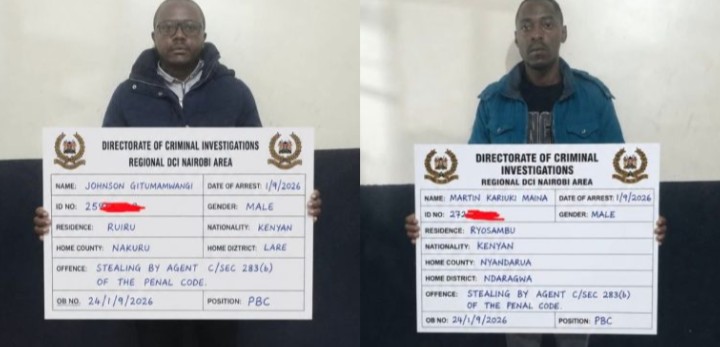

Two directors of Flexitech Group Limited, the firm behind Kenya’s FlexPay save-now-buy-later platform, now sit in custody after detectives rounded them up over the alleged theft of KES 31.2 million belonging to a major but unnamed retail chain.
The arrests add fresh fuel to months of mounting customer fury over delayed withdrawals and vanished support.
Martin Kariuki Maina and Johnson Gituma Mwangi were picked up in Roysambu, Nairobi, by Directorate of Criminal Investigations officers.
The DCI says the pair acted as agents for the retailer, collecting cash from shoppers who had already bought and collected goods at several of the chain’s branches.
That money was meant to be handed straight over. Instead, investigators claim, Maina and Gituma, working with others still at large, diverted the funds for themselves.
“The funds had been entrusted to the suspects for onward remittance to the retailer,” the DCI stated.
“However, detectives established that the two, acting jointly with other suspects still at large, allegedly diverted the funds for their own use.”
Both men are expected to appear at the Milimani Law Courts on charges of stealing by agent under Section 283(b) of the Penal Code.
Detectives say the hunt for additional suspects continues.The timing is brutal. For months FlexPay users have flooded forums and app stores with complaints about money trapped on the platform and products that never arrive despite full payment. Google Play reviews paint a grim picture: withdrawals that stretch far beyond promised timelines, unanswered support tickets, and silence from the company.
In July one customer reported a KES 15,000 refund requested in June still missing. Others described completing their savings goals only to wait weeks for refunds that never came. Similar stories surfaced earlier in the year.
Those complaints matter because of how FlexPay actually works. The company markets a “save now, buy later” service that lets customers reserve goods from partner merchants and pay in instalments before collecting them. It also runs goal-based and group savings products.
FlexPay insists it is neither a lender nor a financial institution, merely a payment facilitation and savings platform. That pitch positioned it as a cleaner alternative to buy-now-pay-later schemes that load consumers with debt.
Founded in 2017, FlexPay sold investors on a simple idea: many African consumers do not need more credit. They need a digital version of the old lay-by system.
By September 2023 the company claimed more than 600 merchant partners and over 200,000 customers. Users could sign up via the app or in-store and spread payments over an agreed period.
Co-founder Richard Muchomba told TechCrunch at the time, “We just digitised it.” FlexPay said it took a 5 percent commission and had raised $785,000 from Acacia Group, LoftyInc, Expert Dojo, Google Black Founders Fund and Renew Capital.
It made TechCrunch’s Startup Battlefield 200 cohort and talked of expansion into Uganda and Nigeria.
Gituma, one of the two men now under arrest, was publicly named by the company in 2023 as co-founder and chief operating officer. FlexPay has since broadened its offering.
The app now promotes FlexPay Goals for individual targets and FlexPay Chama for group savings. Its own terms of service state that the company is responsible for resolving complaints about payments, failed transactions and customers’ savings balances.
The DCI case centres on money allegedly collected for a retailer, not the customer withdrawal backlog. Investigators have not said whether the two problems are linked.
Maina and Gituma remain in custody while the search for the rest of the alleged network continues.













Add Comment