






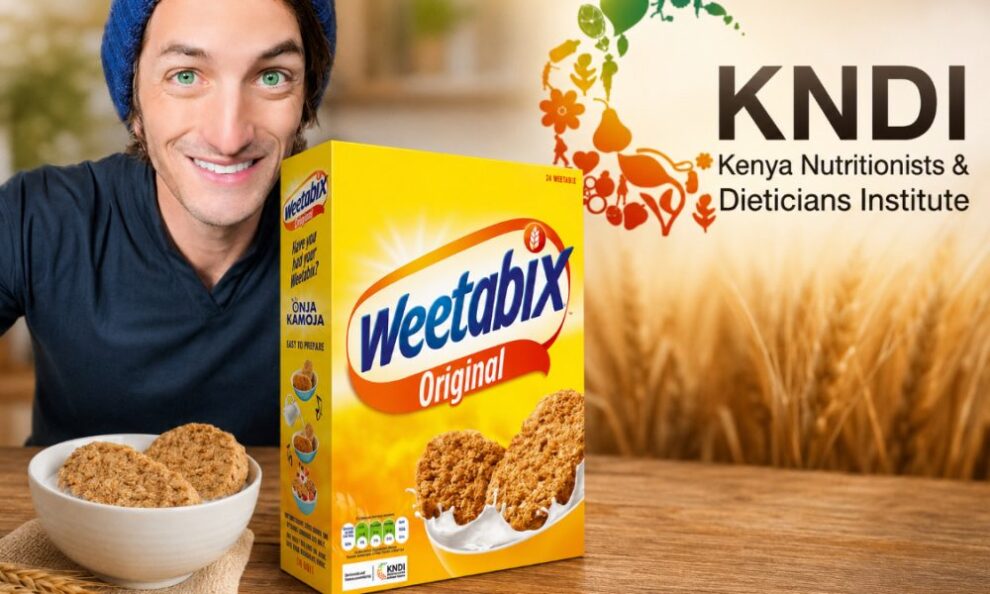

A legal battle now before the High Court has raised serious questions about a government agency, a popular breakfast cereal brand, and a certification mark that millions of Kenyans have trusted for years without knowing how it was created or who benefited from it.
At the centre of the dispute is the Kenya Nutritionists and Dieticians Institute (KNDI), a state agency established to regulate nutrition and dietetics professionals.
According to a constitutional petition filed by the Consumers Federation of Kenya (COFEK) on August 3, 2026, the institute may have stepped far beyond its legal mandate by endorsing food products and collecting money from manufacturers in exchange for allowing them to display its seal.
For more than three years, Kenyan shoppers have seen Weetabix packages carrying a green label marked “KNDI Endorsed.” Many consumers viewed the seal as an official government-backed certification similar to quality marks issued by recognised regulators.
However, COFEK argues that KNDI has no legal authority to certify food products and that responsibility belongs to the Kenya Bureau of Standards (KEBS).
The petition claims that KNDI has collected tens of millions of shillings from companies participating in the endorsement programme while products that did not subscribe to the scheme received no such recognition.
This has raised concerns about whether the endorsements were based purely on public health considerations or whether they became a source of revenue for the institute.
The matter gained further attention after COFEK wrote to Health Cabinet Secretary Aden Duale on July 15, requesting an audit of products carrying the KNDI endorsement. Days later, the federation also contacted Weetabix, asking the company to explain whether any payments had been made in exchange for the seal and to consider removing the endorsement from its packaging.
Instead of directly addressing the payment question, Weetabix responded by stating that it had relied on KNDI’s assessment and could not be held responsible if the institute acted outside its legal powers.
The company also threatened legal action against COFEK over the allegations.
KNDI has maintained that its endorsement programme is legitimate. In correspondence cited by COFEK, the institute defended its actions and pointed to an internal assessment that reportedly awarded Weetabix a score of 97.35 per cent for wholesomeness.
The institute also disclosed that the cereal received approval as far back as March 15, 2023, meaning the endorsement has been in place for more than three years.
That revelation has intensified scrutiny. If COFEK’s claims are proven, the endorsement scheme would have operated for years without a clear legal framework, allowing a state agency to generate income from private companies while presenting consumers with what appeared to be an official mark of approval.
Brookside Dairy, which has also been named in the case over a similar endorsement, has largely remained silent. Its limited public response has done little to answer questions about how the programme operated and whether companies paid for the right to display the seal.
The petition also shines a spotlight on KNDI’s leadership. COFEK argues that the institute has previously faced governance concerns and alleges that its chief executive has remained in office far longer than the term envisioned under the law.
The federation has called for a special audit by the Auditor General to establish how much money was collected through the endorsement programme and how those funds were used.
Justice Gregory Mutai has already allowed the matter to proceed on an urgent basis during the court recess, underlining the public interest surrounding the case.
Parties have been directed to file their responses before the matter returns to court on September 24, 2026.While the court will determine whether KNDI acted within its powers, the case has already exposed deeper concerns about transparency, accountability and consumer protection.
For many Kenyans who trusted the endorsement without questioning its origin, the dispute serves as a reminder that official-looking seals can carry significant influence over purchasing decisions.
The unanswered questions now facing KNDI, Weetabix and other parties involved are not only about legality but also about trust, and whether consumers were given the full picture behind a seal that appeared to carry the weight of government authority.













Add Comment