





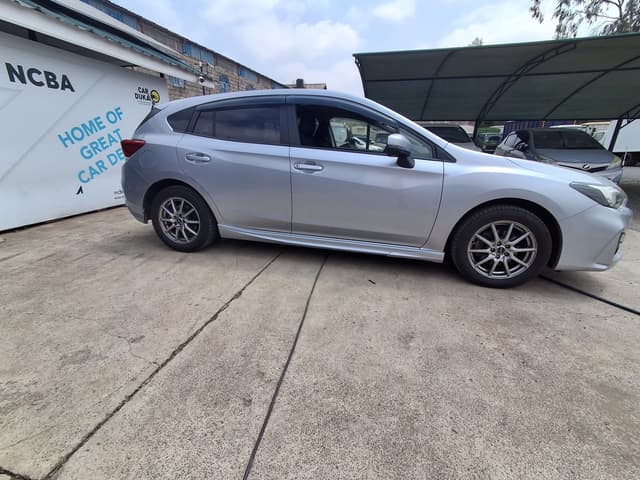

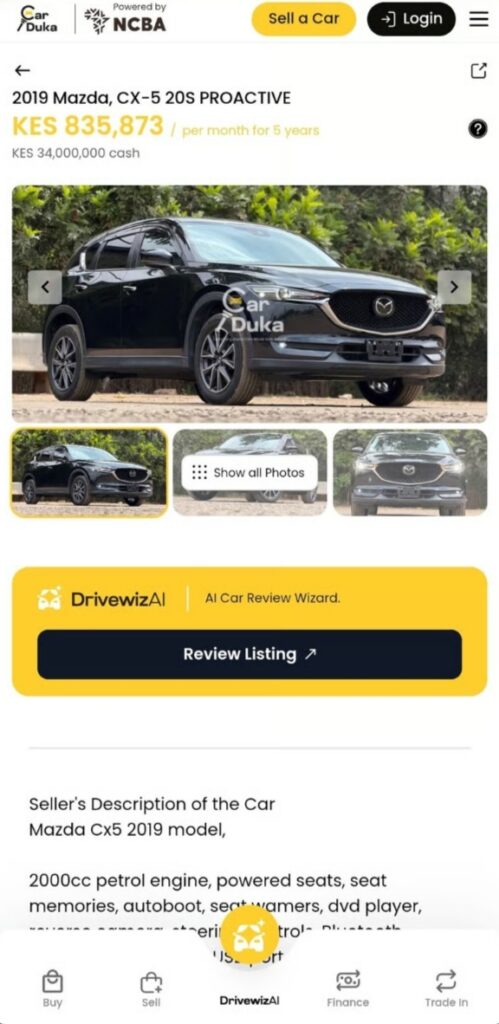
A vehicle listing on NCBA’s CarDuka platform has triggered widespread scrutiny after a repossessed 2019 Mazda CX-5 appeared with a price tag of KSh34 million and monthly repayments of KSh835,873 over five years.
The listing quickly caught public attention because the amount was far beyond the expected market value of the vehicle.
Although some people later suggested the intended price was KSh3.4 million and that an extra zero had been entered by mistake, the incident has raised deeper questions about the systems used by one of Kenya’s leading financial institutions.
At first glance, the issue may appear to be a simple typing error. However, many observers believe the controversy goes beyond a misplaced digit.
CarDuka is not just an ordinary online marketplace. It is the platform through which NCBA disposes of repossessed vehicles after customers default on asset finance loans.
That makes accuracy, transparency and accountability essential because every listing involves assets that were once owned by borrowers who may have spent years making repayments before losing their vehicles.
The appearance of a KSh34 million price for a six-year-old Japanese SUV has left many wondering how such a listing could pass through the platform without being detected.
If such a major pricing error can make its way onto a live website, customers are asking what other mistakes could occur behind the scenes during the repossession and resale process.
The incident has also revived concerns that have been raised by borrowers over the years regarding vehicle repossessions. Some customers have previously claimed they faithfully serviced their loans for years before falling into temporary financial difficulties, only to lose their vehicles shortly afterwards.
Others have complained that once a vehicle is repossessed, the costs begin increasing rapidly through towing fees, storage charges, auctioneer costs, valuation expenses and legal fees.
Several borrowers have also alleged that even after clearing loan arrears, they were informed they needed to settle the entire outstanding balance before their vehicles could be released.
Others have claimed they received conflicting information from different departments while storage charges continued accumulating. Such complaints have fuelled concerns about whether borrowers receive fair treatment once the repossession process begins.
Another area that continues to attract public interest is how repossessed vehicles are valued before they are sold.
Some former borrowers have questioned whether they receive sufficient information about how the final selling price is determined and whether the disposal process is conducted with enough transparency.
The KSh34 million Mazda listing has only added to those concerns, with many arguing that confidence in the platform depends on accurate valuations and reliable quality control systems.
The controversy also comes against the backdrop of other challenges that have faced NCBA in recent years.
The bank has previously been linked to several fraud cases involving employees and contractors accused of abusing access to customer accounts and banking systems.
One former employee was charged over the alleged theft of more than KSh52 million from customer accounts. Other investigations have involved claims of fraudulent activities connected to dormant accounts, contractors with privileged system access and the Fuliza platform.
While these incidents involved different individuals and separate investigations, they have contributed to ongoing public debate about internal controls and oversight.
NCBA has also faced regulatory action from the Office of the Data Protection Commissioner. In separate rulings, the regulator directed the bank to compensate customers after confidential information was disclosed to unauthorised individuals.
One matter involved customer information being shared with people who were no longer employees of the bank, while another involved bank statements repeatedly being sent to the wrong email address despite the bank having been informed of the mistake.
These findings have further raised concerns about how customer data and internal systems are managed.
The latest controversy has also emerged at a time when the bank is navigating significant changes in its ownership structure.
The institution, which has long been associated with the Kenyatta and Ndegwa families following the merger between Commercial Bank of Africa and NIC Group, is in the process of being acquired by South Africa’s Nedbank in a deal valued at more than KSh100 billion.
The transition marks one of the biggest changes in the bank’s history.
Whether the Mazda listing was the result of human error or a system failure remains a question that only NCBA can answer. However, customers believe the bank should publicly explain what quality assurance measures are in place before vehicle listings are published, whether repossessed vehicle valuations are independently verified, how many other listings may have contained pricing errors and what safeguards exist to protect borrowers throughout the repossession and resale process.
For many borrowers, losing a repossessed vehicle is not simply about surrendering a car. It often represents years of financial sacrifice and repayments.
That is why even a single mistake on a platform handling repossessed assets can undermine public confidence.
The KSh34 million listing may eventually be corrected or removed, but the questions it has raised about transparency, operational controls and accountability within NCBA’s asset finance business are unlikely to disappear anytime soon.










Add Comment