







The Sh9,353 Man: Inside Safaricom’s Widening Chasm Between the Agents Who Built M-Pesa and the Boardroom That Cashes In On It.
As the average M-Pesa agent’s take-home fell to its lowest point in the platform’s history, Safaricom handed shareholders a record Sh80.13 billion dividend, awarded its chief executive Sh324.5 million, and gifted senior managers Sh707.5 million in free shares all funded, in large part, by a mobile money empire the agent network built with its own capital, floats and storefronts.
An M-Pesa agent who ran a full shift every day for a year managing float risk, guarding cash, fielding fraud attempts and keeping the lights on took home, on average, Sh9,353 a month in the year to March 2026.
That is the lowest monthly average in the eighteen-year history of the service, according to figures agents themselves can calculate from Safaricom’s own disclosures.
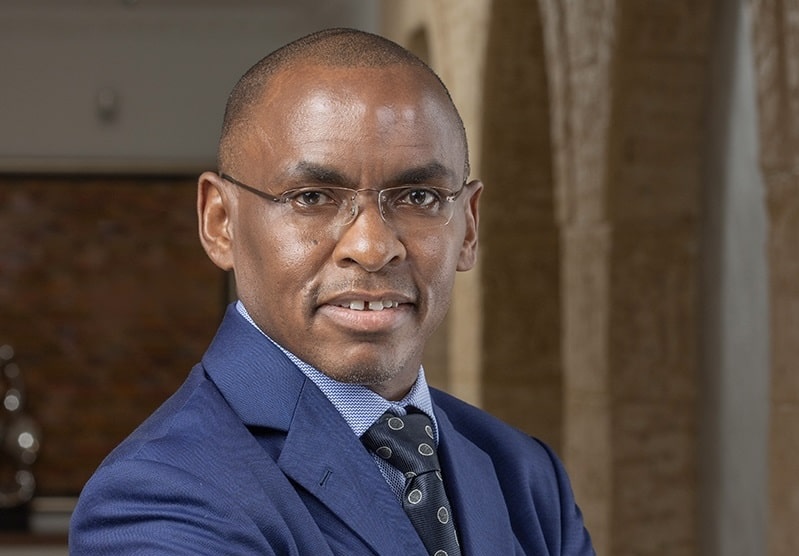
It is less than what many of their customers pay in monthly rent.In the same twelve months, the company that owns the platform they serve told a very different story to its shareholders: a record Sh95.6 billion group net profit, a record Sh80.13 billion dividend payout, and a chief executive whose total pay package climbed to Sh324.5 million comfortably the highest of any listed company boss in Kenya.
Two ledgers, one platform, one year. This is the story of how they diverged, and why.
THE ARITHMETIC SAFARICOM DOESN’T PUT IN A PRESS RELEASE
Safaricom’s own disclosures make the mechanics almost embarrassingly simple.
The total pool of M-Pesa commissions paid out to agents stood at Sh37.38 billion in the year to March 2026 essentially flat against Sh37.27 billion the year before, and actually Sh444.8 million below the Sh37.82 billion peak reached in 2024.
Over the same three-year window, Safaricom added 70,995 new agents to the network, pushing the total to 333,011 outlets, up from 298,890 a year earlier and nearly double the 173,000 recorded in 2020.
Do the division and the pattern is unavoidable: a commission pool that has been held flat or trimmed divided among a rapidly multiplying number of claimants.
The average payout per agent has been driven down not by a shrinking pie, but by a swelling guest list at the same table.
Average annual agent earnings peaked in 2016 at Sh145,768, when Safaricom paid Sh14.68 billion to just 100,744 agents.
A decade of aggressive agent recruitment later, the payout per outlet has fallen by more than 23 percent even as the underlying platform has become vastly larger and more profitable.
Safaricom frames this expansion as a financial-inclusion success story deeper reach, more access points, a wider net for the underbanked.
What the company does not say in its investor briefings is that the same expansion functions as a built-in mechanism for suppressing per-agent earnings while the headline commission expense on its books barely moves.
More outlets for the same money is not neutral. It is a transfer of margin away from the last-mile workforce and toward whoever controls the pool size.
“The commission pool has been held broadly flat while the agent base has been allowed, even encouraged, to swell.”
Pattern evident in Safaricom’s own FY2026 disclosures on M-Pesa agent commissions
MEANWHILE, UPSTAIRS: A RECORD YEAR FOR EVERYONE EXCEPT THE PEOPLE AT THE COUNTER
While the agent commission pool contracted in real terms, Safaricom’s own results for the year to March 2026 were the strongest in the company’s 25-year history.
Group net profit attributable to shareholders rose 36.9 percent to a record Sh95.6 billion.
Kenya-only net income, the business unit the agent network directly serves, jumped 24.7 percent to Sh119.1 billion. Service revenue crossed Sh400 billion for the first time in the Kenyan business alone.
The board responded by nearly doubling shareholder returns: a total dividend of Sh2.00 per share, up 66.7 percent on the prior year, worth Sh80.13 billion in aggregate the largest payout in Safaricom’s history.
Chief executive Peter Ndegwa’s personal remuneration rose in step, climbing to Sh324.5 million from Sh294.2 million, a package built on a Sh105.4 million basic salary, an Sh118.5 million bonus, and Sh69.2 million in vesting performance shares.
Combined with chief financial officer Dilip Pal’s Sh147.5 million, the two executives together drew a record Sh472 million up 10.6 percent on the year, and driven overwhelmingly by share-based awards rather than cash.
Ndegwa’s personal shareholding in the company grew from 8.74 million shares to 12.1 million over the same period.
Below the top two, a wider circle of senior managers collected 20.1 million free shares worth Sh707.5 million at current prices, part of an employee performance scheme that has been running for years.
None of this is improper disclosure it is all sitting in Safaricom’s own annual report, filed exactly as the law requires.
What it exposes, when set beside the agent commission numbers from the same twelve months, is a company whose internal reward structure has decisively decoupled from the fortunes of the retail network that keeps its cash economy running.
THE MACHINE THAT IS QUIETLY CUTTING OUT ITS OWN MIDDLEMEN
The deeper story is not simply that Safaricom kept the commission pool flat. It is that the company’s own product strategy is actively routing transaction volume away from the agents who depend on cash-in, cash-out float business and toward digital rails that pay Safaricom directly without an agent ever touching the money.
Lipa na M-Pesa revenue, the till-number payment system used by merchants, grew 21.7 percent to Sh9.3 billion in the year to March 2026. Pochi la Biashara, the small-business wallet product, surged 86 percent to Sh4 billion and its merchant base doubled past 2.1 million, overtaking Lipa na M-Pesa business tills as the preferred tool for micro-enterprise.
Every shilling that moves through Lipa na M-Pesa or Pochi is a shilling that no longer needs an agent to withdraw or deposit it.
Customers who once pulled cash from an agent to pay for food, school fees, rent or fares now pay merchants directly from their wallets cutting the agent out of a transaction chain the agent’s own outlet used to anchor.
The Central Bank’s own data confirms the scale of the shift: cash flowing through mobile money agents nationwide fell by a historic Sh344.9 billion in the nine months to September 2025, the sharpest contraction since M-Pesa’s 2007 launch, even as the number of active agents grew 24.3 percent and transaction counts kept climbing.
Kenyans are transacting more often, in smaller amounts, and increasingly without ever routing the money through a physical outlet.
M-Pesa overall still moved a staggering Sh41.68 trillion in the year to March 2026 about 2.4 times Kenya’s entire GDP and M-Pesa remains Safaricom’s single largest revenue line at Sh182.74 billion, or 45.6 percent of Kenyan service revenue.
The platform has never been more central to the company’s earnings.
The agents who built its physical footprint have never captured a smaller share of the value it generates.
SURVIVAL BY MULTI-HOMING NOT BY CHOICE
Faced with monthly commission income that barely covers rent and an attendant’s wage, agents have not waited for Safaricom to fix the model. Many now run Airtel Money and bank agency services for Equity, KCB and Co-operative Bank under the same roof, chasing whatever transaction flow they can find outside the M-Pesa pool.
Central Bank data shows nearly 90,000 registered bank agents by the end of 2024, more than 90 percent of them concentrated in just three lenders.
On social media and in business forums, agents have separately complained of dealers threatening to withdraw their operating lines over commission levels too thin to justify keeping the till open a grievance that predates the FY2026 numbers and has only sharpened as the per-agent average has kept falling.
Airtime commissions, once a reliable supplementary income, have followed a parallel decline: Sh9.41 billion in the year to March 2026, a modest recovery from a record low of Sh8.1 billion the year before but still well short of the Sh11.42 billion peak reached in 2018.Falling voice usage, cheaper data bundles, messaging apps like WhatsApp, and direct digital top-ups have steadily eroded the scratch-card trade that once padded an agent’s daily earnings.
Diversification, for the agent on the ground, is not a growth strategy. It is a survival tactic against a core product whose economics are being engineered against them from aboveWHO ACTUALLY DECIDES THE NEXT CEO
The timing of one further disclosure deserves scrutiny. Safaricom’s notice for its Annual General Meeting on July 31, 2026 proposes amending the company’s Articles of Association to let Vodafone Kenya Limited formally nominate the group’s chief executive, so long as it holds more than half of Safaricom’s issued share capital a threshold already crossed since Vodacom Group’s stake climbed to a controlling 55 percent.
The board would retain formal appointment power, but the nomination pipeline itself would run through the foreign shareholder bloc.
That governance shift lands in the same reporting season as the record dividend, the record CEO pay packet, and the record-low agent commission a coincidence of timing that nonetheless illustrates where the balance of power inside Kenya’s most valuable listed company continues to consolidate, and where it does not.
THE UNCOMFORTABLE BOTTOM LINE
None of the individual figures in Safaricom’s FY2026 disclosures are hidden. The agent commission data, the CEO pay, the dividend, the free share awards, the Lipa na M-Pesa growth all of it sits in filings the company is legally obliged to publish.What Safaricom has not done is publish the one number that would make the comparison impossible to avoid: the ratio between what its average agent earned last year and what its chief executive did.
On the disclosed figures, that ratio runs to roughly 2,900 to 1 a chief executive’s single year of pay equal to nearly three millennia of an average agent’s earnings at last year’s rate.
Safaricom will continue to describe its 333,011-strong agent network as the backbone of financial inclusion in Kenya, and in raw reach, it is.
But reach and reward have visibly parted ways.The record year Safaricom just reported was built substantially on a mobile money franchise that agents financed with their own capital and staffed with their own risk.
The record dividend, the record executive pay, and the record share awards were the returns on that franchise.
The record-low commission was the agents’ share of it. Kenyans running M-Pesa shops from Mandera to Mombasa are, in effect, subsidising one of the most profitable telecom-fintech operations on the continent and being paid a shrinking wage for the privilege.
KEY FIGURES: THE TWO LEDGERS, FY2026
2024 agent count is an approximate back-calculation from Safaricom’s disclosed year-on-year growth rates; not separately published by the company.
Fiscal Year (to March)Avg. Agent Annual CommissionM-Pesa Agent CountSafaricom Group Net ProfitShareholder Dividendb2024Sh144,355~262,000 n/a (pre-Ethiopia turn)
Sh1.20/share2025Sh124,720298,890~Sh57bn (est.)
Sh1.20/share2026Sh112,244333,011Sh95.6bn (record)
Sh2.00/share (Sh80.13bn)
Sources: Safaricom PLC FY2026 Annual Report and results disclosures; Central Bank of Kenya mobile money agent data; Business Daily and Nation Media Group reporting on agent commissions and CBK transaction data; Safaricom AGM notice, July 2026.









Add Comment