






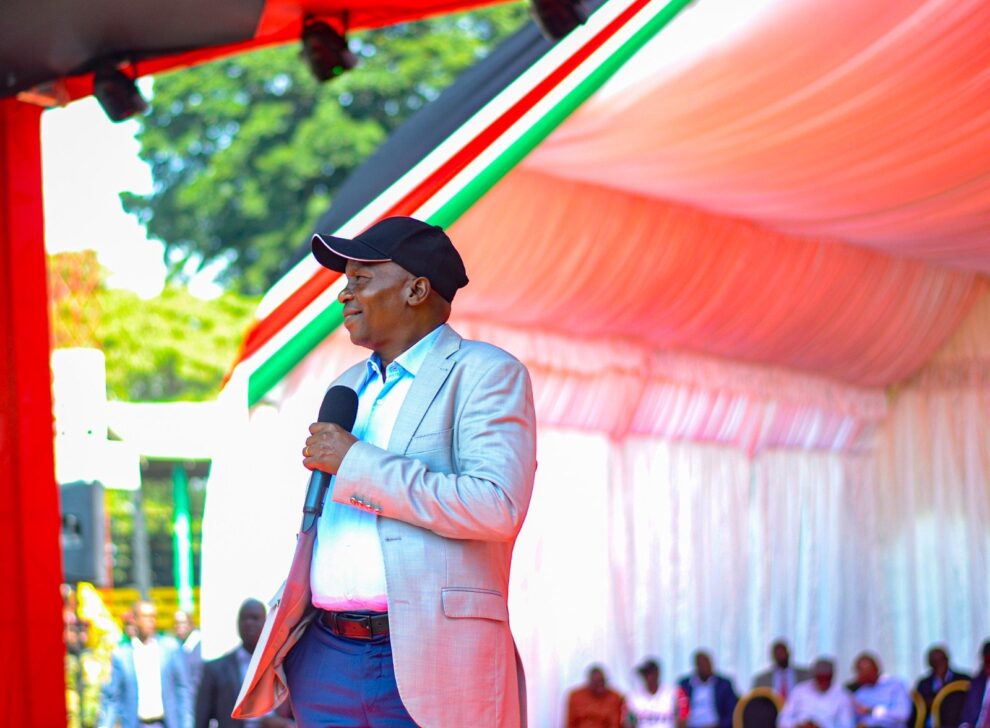

A brief exchange between Deputy President Kithure Kindiki and a beneficiary of the National Youth Opportunities Towards Advancement (NYOTA) programme has once again put the spotlight on how government-funded youth initiatives are managed.
During an engagement with beneficiaries, a young woman informed the Deputy President that she had received Ksh19,000 instead of the promised Ksh22,000.
Kindiki appeared surprised and responded that it was a “technical error” that would be addressed.
While the explanation may have appeared straightforward, the incident has raised wider concerns about the reliability of government disbursement systems. For many young Kenyans, Ksh3,000 is not a small amount. It can cover transport costs, daily meals, internet access, or other basic needs.
When beneficiaries receive less than what they were promised, the impact is felt immediately in their daily lives.
The NYOTA programme was introduced as a key initiative to support young people by providing financial assistance and creating opportunities for economic growth.
Many beneficiaries joined the programme with the expectation that the funds would help them start businesses, improve their skills, or meet pressing financial needs. Any discrepancy in payments therefore undermines confidence in a programme that is meant to empower the youth.
The concern goes beyond a single beneficiary. The incident has triggered questions about whether others may have experienced similar shortfalls without reporting them. If one person publicly raised the issue, there is a possibility that others may also have received less than the expected amount.
This is why many Kenyans are now demanding greater transparency in the management of the programme.
Government officials often point to technical challenges when problems emerge in public projects. However, repeated references to system errors can create the perception that accountability is lacking.
Citizens expect payment systems to be properly tested and verified before funds are released. They also expect immediate action whenever irregularities are detected.
The government now faces the task of proving that the issue was indeed an isolated error and not a sign of deeper weaknesses in the disbursement process.
This can only be achieved through a thorough review of payments and clear communication with beneficiaries. Every person enrolled in the programme deserves confirmation that they received the full amount allocated to them.
For Kenya’s youth, the issue is about more than money. It is about trust. Programmes such as NYOTA are presented as solutions to unemployment and economic hardship.
When promised support falls short, even by a few thousand shillings, confidence in those programmes is weakened.
The government must therefore move quickly to correct any errors, account for every shilling, and reassure young people that the support promised to them will reach them in full.














Add Comment