




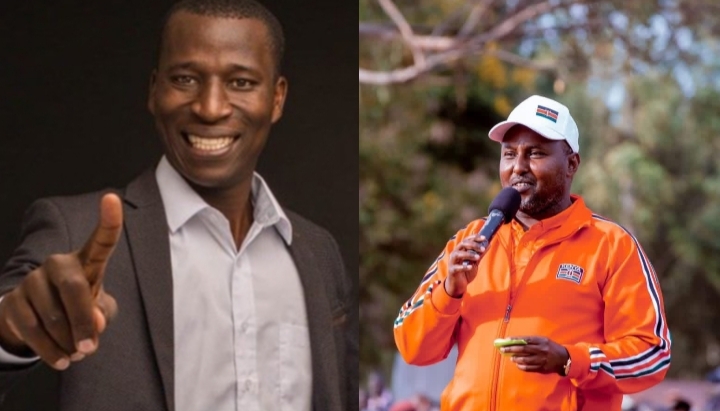

Prominent political commentator and blogger Cyprian Nyakundi has ignited a firestorm of scrutiny by publicly questioning the authenticity and impact of a recent high-profile charitable gesture by Suna East Member of Parliament, Junet Mohamed.
The controversy centers on a KSh 10 million pledge that the ODM stalwart made during a Women Empowerment Harambee, an event that has since been overshadowed by pressing questions from the very constituents it was meant to serve.
While the cameras captured a moment of grand political philanthropy, the reality on the ground, as articulated by concerned residents and highlighted by Nyakundi, paints a starkly different and troubling picture.
At the well-publicized Suna East Women Empowerment Harambee, Hon. Junet Mohamed stood before the nation and proudly announced a substantial contribution of KSh 10 million, presenting it as a powerful boost for local women’s groups.
The event was a spectacle of political support, with ODM leadership present contributing at least 35 million on camera, reinforcing the narrative of a party deeply invested in grassroots empowerment.
However, the celebratory mood has quickly evaporated, replaced by a wave of skepticism and urgent, unanswered questions from the very people who were supposed to be the beneficiaries.
Residents have now reached out to media and civic leaders, including Nyakundi, demanding to know the tangible outcome of this significant financial declaration.
The core of the discontent is a simple yet damning set of queries: Where did the KSh 10 million go?
Who received it? Which specific women’s groups have benefited, and what concrete projects can now be seen on the ground?
These are not hostile questions from political opponents, but legitimate demands for accountability from citizens who watched their leader make a grand promise on a public stage.
The feeling of being used as political props is palpable, with one resident’s comment, “Ama mwenye pesa alichukua yote after hii sarakasi?” translating to a cynical suspicion that the entire event was mere theatrics, with the funds disappearing into thin air once the cameras stopped rolling.
This incident raises serious questions about the nature of political philanthropy in Kenya, where public harambees often serve as a platform for performance rather than genuine change.
The concerns are not isolated, as seen in the public comments on Nyakundi’s post. A comment from Bethwel Mania struck a chord by referencing “camera tricks” and comparing the actions to those of “Kasongo,” a well-known political figure synonymous with empty promises and public deception.
The implication is clear: the electorate is tired of being entertained with grand gestures that yield no results, and they are beginning to see through the carefully staged performances of their leaders.
Even as the criticism mounts, a lone voice, Rop Gilly, attempted to defend the process, stating that “paper work is now going on to disperse the funds to respective groups.” However, this defense rings hollow for many who are all too familiar with the bureaucratic delays that often serve as a convenient smokescreen for non-action.
The public is weary of the “Kenyan way of doing things,” as another commenter put it, a cynical reference to a system where resources are distributed inequitably, and empowerment is often a hollow promise.
The burden of proof now lies squarely on Junet Mohamed and his team to provide a transparent and verifiable account of how the KSh 10 million is being utilized.
The people of Suna East have moved beyond passive acceptance; they are demanding evidence, insisting that promises made on camera must translate into visible, tangible benefits for their communities.













Add Comment