






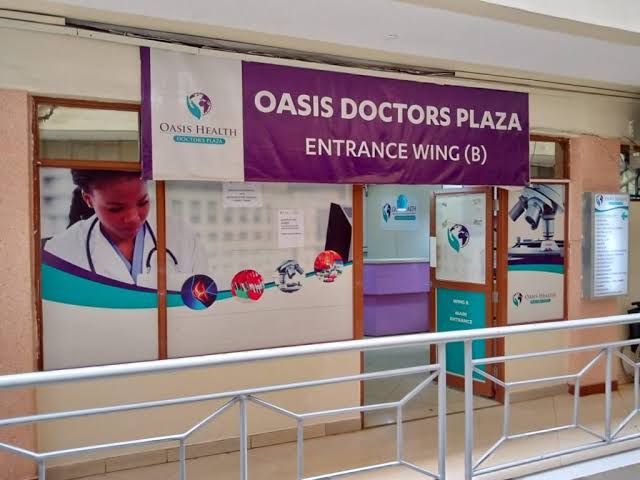

Oasis Healthcare Group Limited, a private hospital network founded by orthopaedic and trauma surgeon Dr. Col (rtd) Kepher Odhiambo Mak’Anyengo, has come under scrutiny following complaints from current and former staff at its Oasis Multi-speciality Hospital in Kakamega.
The concerns centre on abrupt terminations, unpaid terminal benefits, delayed salary payments and broader claims about working conditions at the facility.
According to accounts shared by affected workers, several employees had their contracts ended on 27 November 2025 without prior notice or payment in lieu of notice.
Nearly a year later, some of those former staff members say they have still not received their outstanding dues despite repeated efforts to engage management and resolve the matter.
The workers state that they hold employment records, termination letters and payslips that support their claims, and that attempts at amicable settlement have produced little progress.
A number of them have turned to the courts in search of redress.Those still employed at the Kakamega hospital report facing their own difficulties.
Staff members describe salary payments that arrive late or inconsistently, creating practical problems for meeting household and personal obligations.
The pattern of delays has been cited alongside the unresolved terminal dues of former colleagues as evidence of ongoing administrative shortcomings in how the hospital manages its workforce.
Leadership of the group includes founder Dr. Mak’Anyengo, Group Chief Executive Officer Dr. Kenneth Samuel Odhiambo, Chief Operations Officer Abala Maxwell, Head of Governance and Strategy Omondi Battista, and Group Chief Medical Officer Dr. Isaac Masoni.
While the specific role of each senior official in the Kakamega complaints has not been established, their positions place them at the centre of questions about employee welfare and management accountability within the organisation.
Beyond the financial issues, former staff have described the working environment as toxic, with limited opportunities for professional growth and insufficient attention to staff welfare.
These accounts portray a workplace in which employees who once contributed to patient care now find themselves struggling to secure the basic employment rights and earnings they believe are owed to them.
The contrast is particularly stark given the nature of the institution: a healthcare provider whose business depends on the labour of the very people now raising these grievances.
In a detailed letter sent to Cyprian Nyakundi, the affected workers outlined the sequence of events and the difficulties they have encountered.
They noted that the terminations of 27 November 2025 left many without immediate income and that subsequent efforts to recover terminal benefits have met with limited response.
The letter also highlighted that salary delays continue to affect those remaining at the facility.
The writers emphasised that they are not seeking sympathy but accountability and respect for workers’ rights, and they offered to provide supporting documentation to substantiate their concerns.
The complaints raise practical questions about how a hospital group organises its human resources and meets its contractual obligations to staff.
Employment law in Kenya requires notice or payment in lieu of notice in most cases of termination, and terminal benefits are generally expected to be settled within a reasonable period.
Persistent salary delays can also create significant hardship for employees who depend on regular income. Whether the situation at Oasis Multi-speciality Hospital reflects isolated administrative lapses or a more systemic problem remains a matter for further clarification by the group’s management.
As of now, the leadership of Oasis Healthcare Group has not issued a detailed public response addressing the specific allegations of unpaid dues, the circumstances of the November 2025 terminations, or the reports of ongoing salary delays.
The workers’ willingness to share documentation and pursue legal channels suggests that the matter is unlikely to disappear quietly. For an organisation that presents itself as a provider of specialised medical care, the ability to manage its own employment relationships with fairness and consistency is likely to remain under examination by those directly affected and by observers of labour practices in the private healthcare sector.














Add Comment